Your cart is currently empty!
+86 15863276370

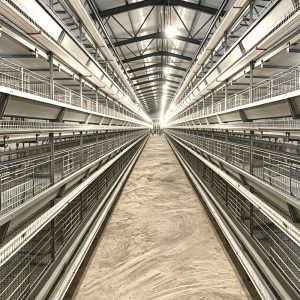
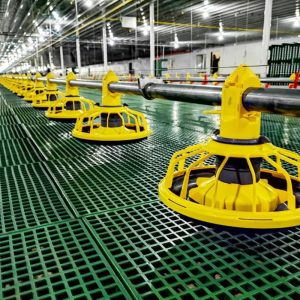
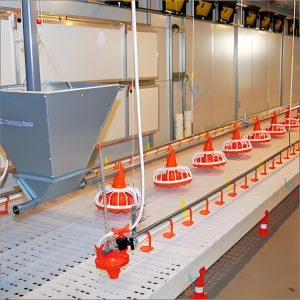
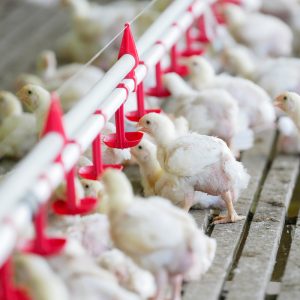
Southeast Asia’s poultry sector is shifting from backyard farming to commercial production, creating strong demand for floor rearing equipment. Indonesia, Vietnam, and the Philippines represent the region’s most promising markets.
Indonesia has the largest broiler population but faces fragmentation. Success requires affordable semi‑automated systems and local after‑sales support. Vietnam’s market is more structured, with growing interest in tunnel ventilation and cooling pads due to hot climates. Partnering with local integrators is effective. The Philippines shows rapid adoption of all‑in/all‑out systems; government loans for small farmers make entry via leasing models attractive.
Key strategies: offer tiered pricing (basic to fully automated), provide installation training, and establish quick‑response service networks. Customizing equipment for tropical conditions (corrosion‑resistant materials, higher dust tolerance) builds trust and repeat orders.
Share this:
Other Posts
-
Labor Substitution Effect of Automated Feeding Systems: Empirical Evidence of Labor Savings from Manual Bag Handling to Pneumatic Conveying
This study quantifies labor savings when replacing manual bag feeding with automated pneumatic conveying in a 10,000-bird broiler farm. Manual feeding involves lifting, carrying, tearing, and scattering 25–40 kg bags daily. Two full‑time workers spend 6–8 hours per day on these tasks, equivalent to 2,080–2,600 working hours annually per worker. Automated feeding uses a silo,…
-
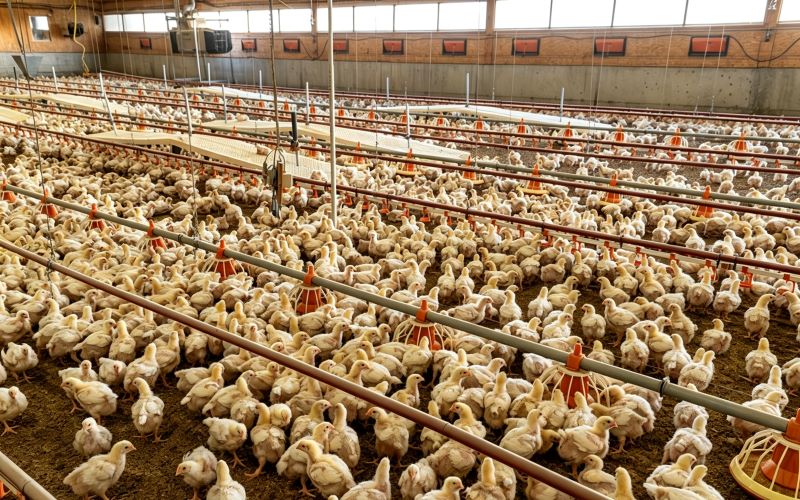
Seasonal Stocking Density Management in Poultry Farming: Dynamic Matching of Bird Density and Heat Load Under Different Temperature Conditions
Stocking density is a critical management factor affecting animal welfare, environmental control efficiency, and production performance in commercial poultry farming. During seasonal temperature changes, maintaining the appropriate bird density becomes increasingly important because heat production from flocks directly influences the internal climate of poultry houses. A seasonal stocking density adjustment model evaluates the relationship between…
-
How does precision feeding in automated poultry farming systems save money?
Manual feeding in broiler houses often leads to uneven feed distribution and significant waste—up to 10% of total feed. Automated feeding systems solve this with precision. Using sensors and timers, they deliver exact portions based on bird age and weight, ensuring consistent intake across the flock. This accuracy reduces feed waste by 5–10%, directly cutting…
-
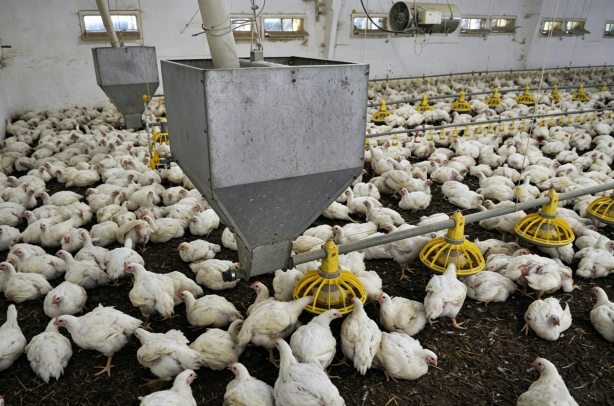
How Automatic Feeding Systems Reduce Labor Dependency in Poultry Farms: From Feed Handling to Smart Farm Management
Automatic feeding systems help poultry farms reduce labor dependency and improve feeding consistency. This article analyzes the transition from manual feeding to semi-automatic and fully automated systems, covering feed handling, transportation, distribution, and management processes. By improving operational efficiency and standardization, automation provides long-term value for modern poultry production.
Product Categories
Subscribe To Product News
Leave your email address and receive our latest product updates