Your cart is currently empty!
+86 15863276370

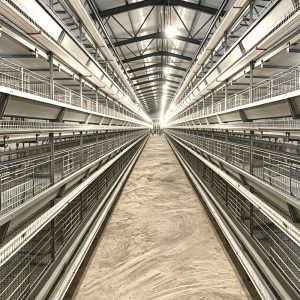
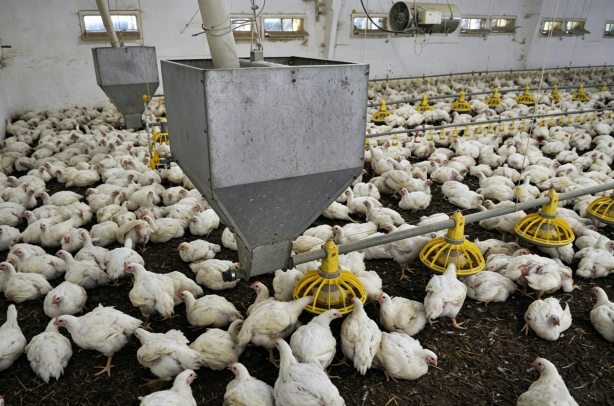
Labor shortages and rising labor costs are becoming important challenges for modern poultry farms. Traditional feeding processes usually involve multiple manual tasks, including feed transportation, bag handling, feed distribution, feeding adjustment, and cleaning. As farm scale increases, these repetitive operations require more labor and management effort.
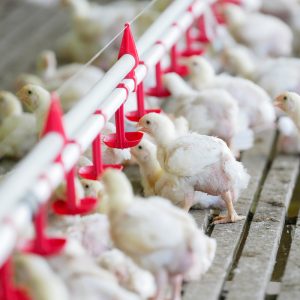
Automatic feeding systems provide a more efficient solution by reducing dependence on manual feeding activities. The labor reduction process can be divided into three stages: manual operation, semi-automatic assistance, and fully automated feeding management.
In traditional feeding methods, workers need to move feed bags, transfer feed, distribute it to feeding areas, and regularly check feeding conditions. These tasks require significant time and physical effort, especially in medium and large-scale farms.
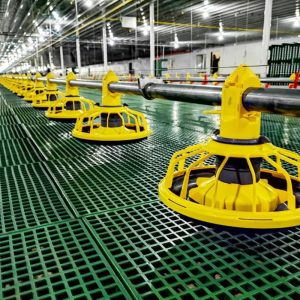
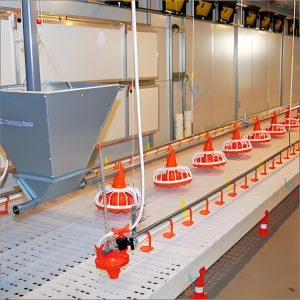
Semi-automatic systems reduce part of the workload through equipment support, such as feed storage and transportation systems. Fully automated feeding systems integrate feed silos, conveying equipment, feeding lines, and control systems to deliver feed according to preset schedules, allowing workers to focus more on monitoring, maintenance, and farm management.
The value of automation is not only labor reduction but also improved feeding consistency. Automated systems can provide more stable feed distribution, reduce operational differences, and support standardized farm management.
The actual benefits depend on farm size, equipment configuration, poultry house design, and management practices. Therefore, selecting a suitable feeding automation solution requires comprehensive planning based on production needs.
As poultry farming continues to develop toward smarter production, automatic feeding systems will play an important role in improving efficiency, reducing labor dependency, and supporting long-term farm development.
Share this:
Other Posts
-
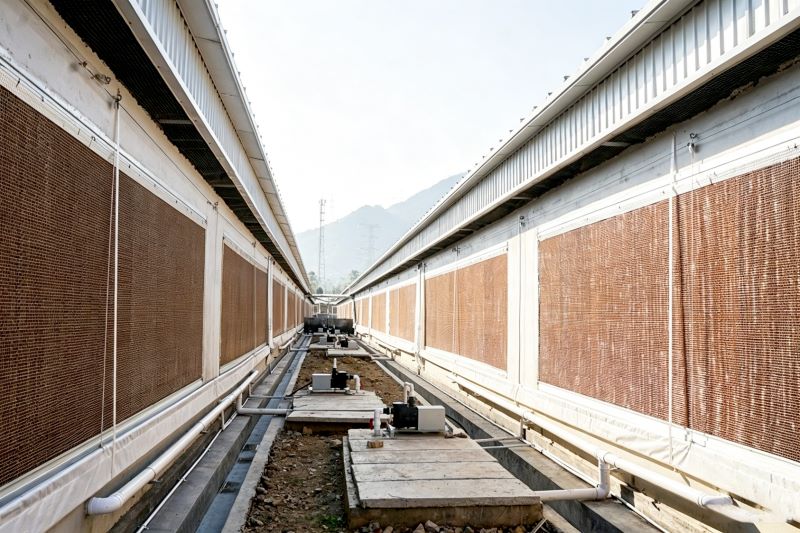
Synergistic Optimization of Cooling Pad Expansion and Water Quality Management: Strategies for Improving Evaporative Cooling Efficiency in Hot and Humid Regions
In tunnel-ventilated poultry houses, evaporative cooling pad performance directly impacts bird welfare and productivity during summer. Two critical factors determine system effectiveness: proper pad sizing and water quality management. Pad Sizing Principles Pad area should be determined by total tunnel fan capacity, not house dimensions. Industry standard recommends one square foot of six-inch pad for…
-
Hello world!
Welcome to WordPress. This is your first post. Edit or delete it, then start writing!
-
Is Automation Upgrade Worth It? An ROI Analysis Model and Calculation Case for a 10,000-Bird Broiler Farm
This study builds an ROI model to evaluate automation upgrades for a 10,000-bird floor rearing farm. The model compares total investment (equipment + installation) against annual savings from labor, feed, medication, and mortality reduction. Key inputs: automated feeding system cost – 12,000;manuallaborcost–12,000;manuallaborcost–15/hour; feed waste reduction – 7%; mortality decrease – 2%; medication saving – 20%. Calculation:…
-
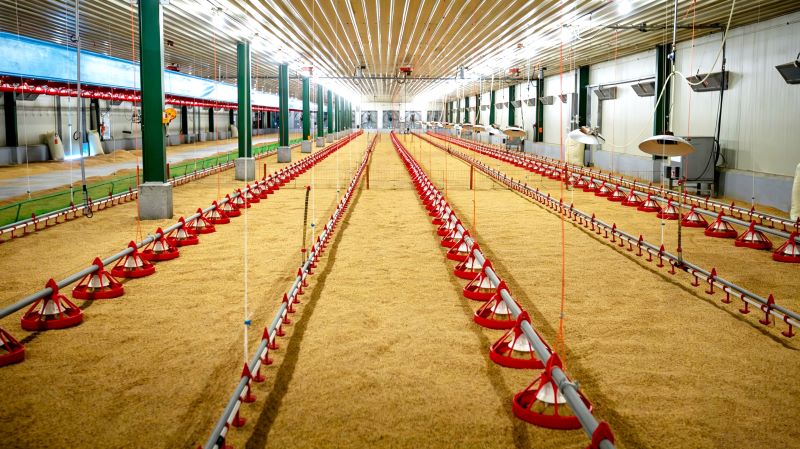
Poultry House Orientation and Heat Stress Reduction: East–West vs North–South Layout Impact on Solar Heat Gain
Poultry house orientation is a fundamental design parameter that directly affects thermal comfort, ventilation efficiency, and broiler performance. In commercial poultry production systems, improper building orientation can significantly increase solar heat gain and raise the risk of heat stress, especially in hot climate regions. An east–west oriented poultry house is typically more exposed to direct…
Product Categories
Subscribe To Product News
Leave your email address and receive our latest product updates