Your cart is currently empty!
+86 15863276370

For broiler breeder farms, egg collection remains one of the most labor-intensive tasks. Manual collection requires workers to walk through the house multiple times daily, bending and reaching into each nest. For a 10,000-bird flock, manual collection typically consumes 4–6 labor hours per day. At a farm with 50,000 breeders, that translates to 20–30 hours of daily labor dedicated solely to gathering eggs.
Automated nest boxes with integrated egg collection belts change this equation entirely. Eggs roll gently onto conveyor belts and are transported directly to the collection room—eliminating repetitive bending and walking. Field data shows that automated collection reduces egg-related labor by 70–75%. A 20,000-bird farm that previously required 12 hours of daily manual collection can reduce this to approximately 3 hours for system monitoring and maintenance.
The labor savings translate directly into cost reduction. If manual collection requires 2–3 full-time workers at $15/hour, annual labor costs exceed $60,000. Automated systems reduce this by up to 75%—saving $45,000 or more per year. Breakage rates also drop significantly, from 1.8% to 0.4% in documented cases, further improving profitability.
For most operations, the investment in automated nest boxes pays for itself within 2–3 years through labor savings alone. Beyond cost, automation also improves egg hygiene, reduces human-bird contact, and frees skilled workers for higher-value tasks like flock health monitoring and feed management.
Ready to calculate your farm’s potential savings? Contact us for a customized ROI analysis.
Share this:
Other Posts
-
Empirical Analysis of the Effect of Sealed Feed Bins on Feed Mold Control
Feed mold contamination is a major concern in poultry farming, leading to nutrient loss and health risks. This study evaluates the effectiveness of sealed feed bins in controlling mold development under practical farm conditions. A comparative trial was conducted over 90 days in two identical broiler houses. House A used conventional open feed storage, while…
-
Automatic Poultry Feed Line Blocking Problems: 6 Common Causes and Troubleshooting Solutions
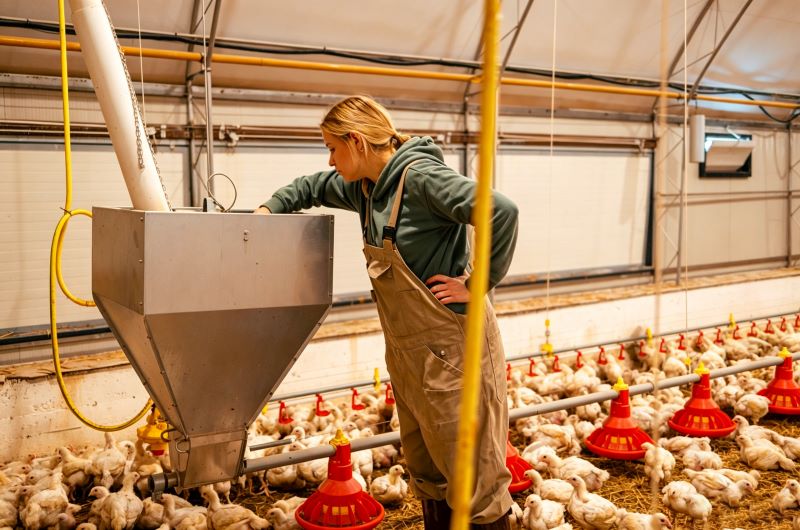
Automatic feeding systems are widely used in modern poultry farms to improve feeding efficiency and reduce labor dependency. However, feed line blockage can interrupt feeding operations and affect farm productivity. This article analyzes six common causes of automatic poultry feed line blockage, including feed quality issues, material accumulation, mechanical component wear, improper installation, electrical problems,…
-
Global Cage-Free Poultry Equipment Market Outlook 2026–2030: Growth Opportunities in the Middle East and Southeast Asia
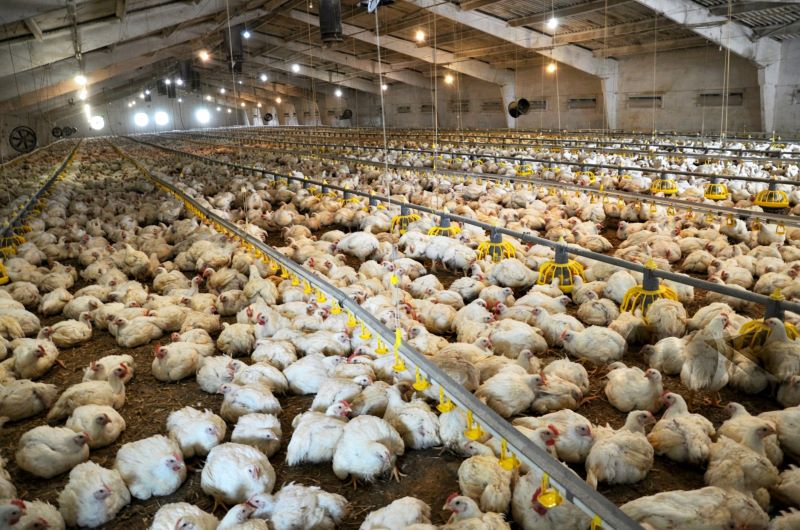
The global poultry industry is entering a new stage of modernization, with increasing demand for efficient, automated, and sustainable farming solutions. This article analyzes the development opportunities of cage-free poultry equipment markets from 2026 to 2030, focusing on the Middle East and Southeast Asia. It explores regional differences in production needs, climate challenges, labor conditions,…
-
Equipment + Service” Model: The Next Growth Driver in Biosecurity Equipment Market
As disease outbreaks become more frequent, poultry farms are shifting from buying standalone biosecurity equipment to seeking integrated solutions. The “equipment + service” model is emerging as a key growth driver in this space. This model combines hardware—such as automated disinfection channels, air filtration systems, and smart access controls—with value-added services like biosecurity audits, sanitation…
Product Categories
Subscribe To Product News
Leave your email address and receive our latest product updates