Your cart is currently empty!
+86 15863276370

Feed augers (screw conveyors) are the core of automated feeding systems, moving feed from silos to feeder lines. The three most common diameters for poultry are 45mm, 60mm, and 75mm. Correct selection impacts delivery efficiency and system longevity.
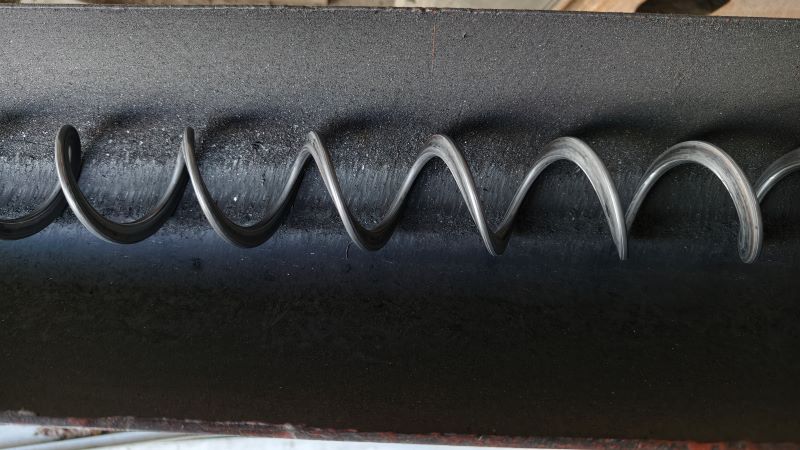
45mm Auger – Small Farms or Main Feed Line
Delivers 250–500 kg/h. Suitable for farms under 5,000 birds, or as a main transfer line from silo to intermediate hopper. Not recommended for full‑house distribution.
60mm Auger – Medium Floor Rearing
Delivers 500–800 kg/h. Ideal for 8,000–15,000 birds. Offers a balance between cost and performance for most commercial floor rearing operations.
75mm Auger – Large Commercial Houses
Delivers 1,000–2,000+ kg/h. Supports 15,000–30,000+ broilers or 120 meters of feeder line for layers. Most economical choice for large farms.
Quick FAQ
Can I use a 60mm auger for a 20,000‑bird house? Not recommended – you would need two 60mm lines or upgrade to 75mm.
Does feed type matter? Yes. Pellets flow easier than mash; for mash, choose one size larger.
Selection Summary
| Diameter | Bird capacity | Typical use |
|---|---|---|
| 45mm | <5,000 | Transfer only |
| 60mm | 8,000–15,000 | Medium floor rearing |
| 75mm | 15,000–30,000+ | Large commercial |
Need a matching auger drive motor? Check our feed auger motor guide. (Link to your related product page)
Share this:
Other Posts
-
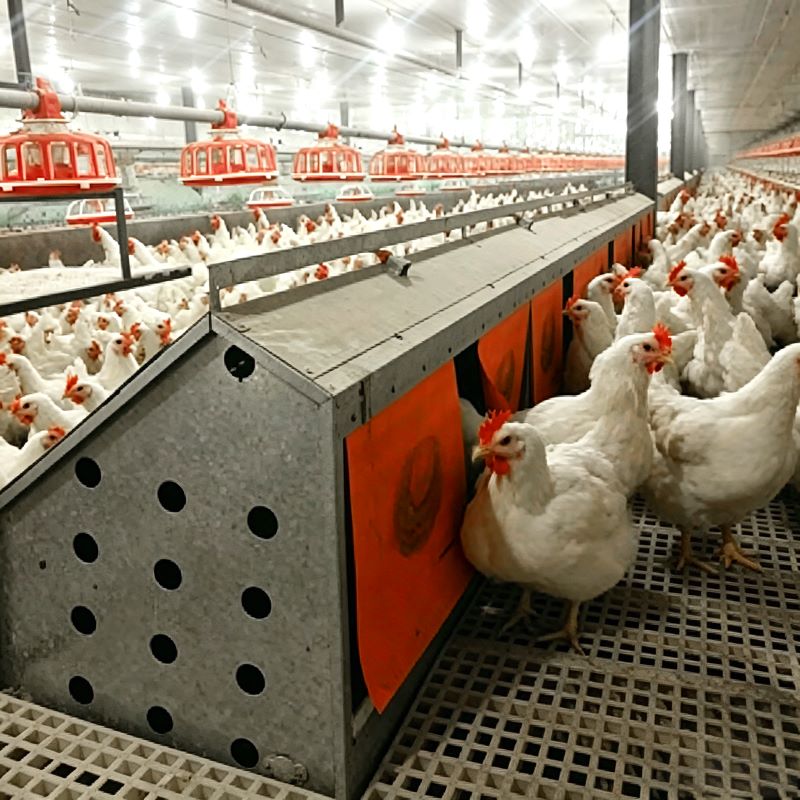
Manual Egg Collection vs. Automated Systems: How Much Labor Cost Can a Nest Box Save You?
For broiler breeder farms, egg collection remains one of the most labor-intensive tasks. Manual collection requires workers to walk through the house multiple times daily, bending and reaching into each nest. For a 10,000-bird flock, manual collection typically consumes 4–6 labor hours per day. At a farm with 50,000 breeders, that translates to 20–30 hours…
-
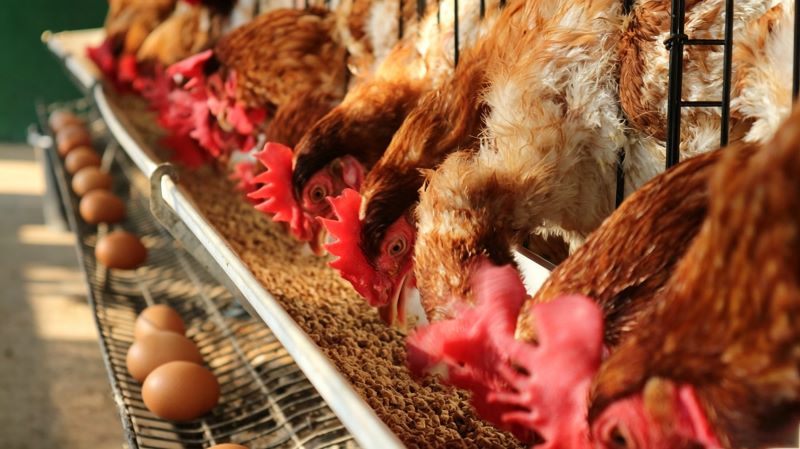
Manual Feeding vs Precision Feeding Systems in Poultry Farming: Efficiency, Cost, and Feed Conversion Comparison
Feed management is one of the most critical factors affecting productivity and cost efficiency in poultry farming. Traditionally, manual feeding has been widely used due to its simplicity and low initial investment. However, with the development of automation technology, precision feeding systems are increasingly replacing manual operations in modern poultry houses. Manual feeding relies heavily…
-
Techno-Economic Assessment of Tunnel Ventilation Retrofitting: Pathways for Transitioning Conventional Houses to High-Airflow Systems
Conventional poultry houses often struggle with heat stress during summer, leading to reduced feed intake and higher mortality. Tunnel ventilation retrofitting offers a proven solution. The technical pathway involves installing high-capacity fans at one end, evaporative cooling pads at the opposite end, and sealing side inlets to create uniform 2–3 m/s airflow. This system lowers…
-
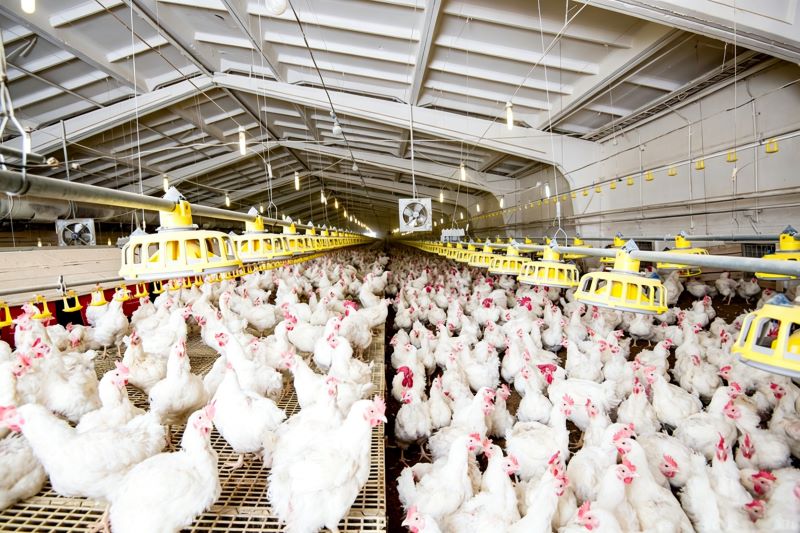
How to Improve Broiler Feed Conversion Ratio: The Synergy of Precision Feeding and Smart Environmental Control
Feed conversion ratio (FCR) is the most critical metric in broiler production—feed accounts for 60–70% of total costs. Improving FCR by just 0.1 can save over 6 tons of feed per 10,000 birds annually. This article examines how precision feeding and smart environmental control work together to achieve this gain. Precision Feeding: Right Amount, Right…
Product Categories
Subscribe To Product News
Leave your email address and receive our latest product updates