Your cart is currently empty!
+86 15863276370

During extreme heat, the sequence in which poultry cooling equipment operates can affect both cooling performance and energy use. A staged control strategy is generally more effective than turning every device on at the same time.
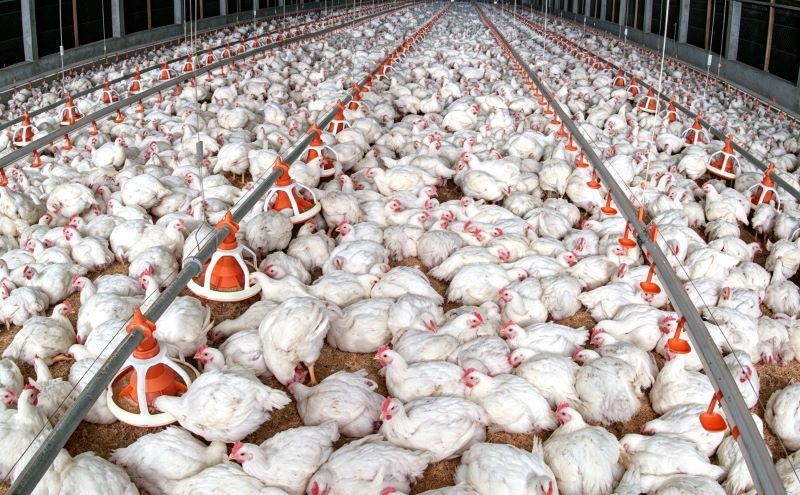
Stage 1: Increase ventilation.
When indoor temperature begins to rise, tunnel or longitudinal ventilation should be increased first. Exhaust fans remove hot air and improve air movement around the birds. Fan capacity should be adjusted according to house temperature, stocking density, and required airflow.
Stage 2: Evaluate evaporative cooling conditions.
When ventilation alone cannot maintain the target indoor environment, evaporative cooling pads can be activated. Their effectiveness depends strongly on outdoor relative humidity and airflow. In humid weather, excessive water use may provide limited additional cooling, so humidity and temperature should be monitored together.
Stage 3: Apply multi-stage cooling.
During extreme heat, additional tunnel fans and cooling pads can operate through staged control. Temperature sensors and environmental controllers can automatically adjust fan speed, cooling stages, and operating intervals according to changing conditions.
The key principle is simple: establish sufficient airflow before relying on evaporative cooling. The exact temperature and humidity thresholds should be determined according to local climate, house design, bird age, ventilation capacity, and equipment specifications.
Share this:
Other Posts
-
Comparative Cost Efficiency Model of Poultry Farm Labor Savings: Europe vs Middle East Market Analysis
Labor cost structure is one of the most critical variables influencing investment decisions in commercial poultry production systems. This study presents a comparative cost efficiency model for a 10,000-broiler farm, focusing on labor savings potential and automation adoption differences between Europe and the Middle East. In European poultry markets, labor costs are relatively high due…
-
Synergistic Design of Floor-Level Inlets and Ridge Outlets: An Airflow Optimization Scheme Combining Natural and Mechanical Ventilation
Effective ventilation is critical for poultry house air quality. This scheme integrates floor-level inlets with ridge outlets, blending natural and mechanical forces. Floor-level inlets, placed along side walls near the litter, allow fresh air to enter at bird level. Ridge outlets, installed at the roof peak, enable warm, stale air to rise naturally. During mild…
-
Optimizing Maintenance and Spare Parts Inventory: Preventive Strategies to Reduce Environmental Control System Failures
Environmental control systems are critical for poultry house performance. Unplanned fan or sensor failures during heat waves can cause catastrophic losses. A preventive maintenance strategy significantly reduces this risk. Key elements include: scheduled inspections of fans, motors, and belts every 500 operating hours; calibration checks for temperature and humidity sensors monthly; and cleaning of cooling…
-
Nighttime Feeding and Light Regulation Strategies: Behavioral Intervention to Avoid High-Temperature Periods and Impacts on Growth Performance
High ambient temperatures suppress feed intake in broilers, reducing growth and feed efficiency. Nighttime feeding combined with adjusted light schedules offers an effective solution. By shifting feeding to cooler evening and early morning hours, birds consume more feed when heat stress is minimal. A light regimen of 4 hours light, 2 hours dark during nighttime…
Product Categories
Subscribe To Product News
Leave your email address and receive our latest product updates