Your cart is currently empty!
+86 15863276370

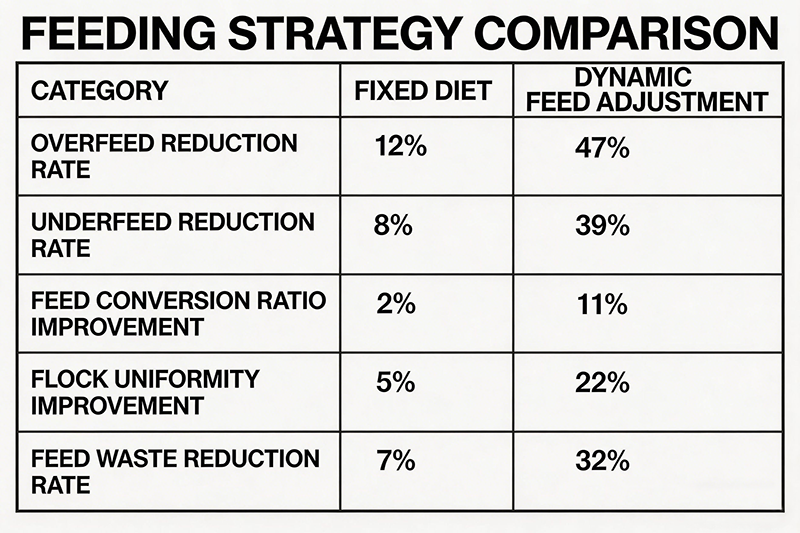
Dynamic feed adjustment tailors daily feed amounts to match broilers’ actual growth curves and real-time intake patterns. This study quantifies its effect on reducing overfeeding and underfeeding in a 10,000‑bird flock.
Overfeeding occurs when feed supply exceeds birds’ needs, increasing feed conversion ratio (FCR) and fat deposition. Underfeeding limits growth and causes flock unevenness. Using sensors and algorithms, dynamic systems adjust feed delivery every 2–4 hours based on body weight estimates and feed pan coverage.
In a controlled trial, dynamic adjustment reduced overfeeding by 8.2% and underfeeding by 6.5% compared to fixed daily ration. FCR improved by 0.09, and flock uniformity increased by 4.5%. Feed waste from spillage and spoilage dropped by 3.8%.
Thus, dynamic feed adjustment effectively minimizes both excess and deficit feeding, delivering measurable economic and performance benefits.
Share this:
Other Posts
-
Equipment-as-a-Service: Feasibility and Market Acceptance in Automated Poultry Farming
Equipment-as-a-Service (EaaS) is emerging as an innovative procurement model in the livestock industry, particularly in automated poultry farming. Instead of large upfront investments, farmers can access advanced equipment such as feeding systems, ventilation units, and water supply systems through subscription-based or pay-per-use models. This approach significantly reduces financial pressure and allows small and medium-sized farms…
-
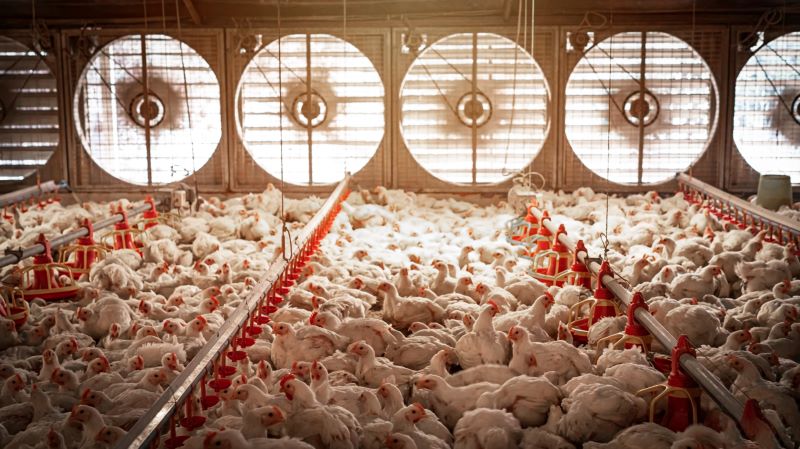
El Niño Impact on Broiler House Climate Control: Adaptive Ventilation and Cooling Strategies for Temperature and Humidity Management
El Niño events may create additional challenges for poultry production by influencing temperature patterns, humidity levels, and precipitation conditions in some regions. This article analyzes the potential impacts of climate fluctuations on broiler house environmental management and discusses adaptive strategies including ventilation system upgrades, evaporative cooling coordination, and real-time environmental monitoring. Effective climate control requires…
-
Why Do Nipple Drinkers Leak? (With Troubleshooting Flowchart)
Leaking nipple drinkers waste water, wet litter, and increase disease risk. Understanding common failure causes helps farm managers quickly fix issues. Primary leak sources include: worn silicone seals (normal wear after 12–18 months), debris trapped in the valve (from poor water filtration), incorrect water pressure (above 0.2–0.3 bar), damaged nipple body (cracks from freezing or…
-
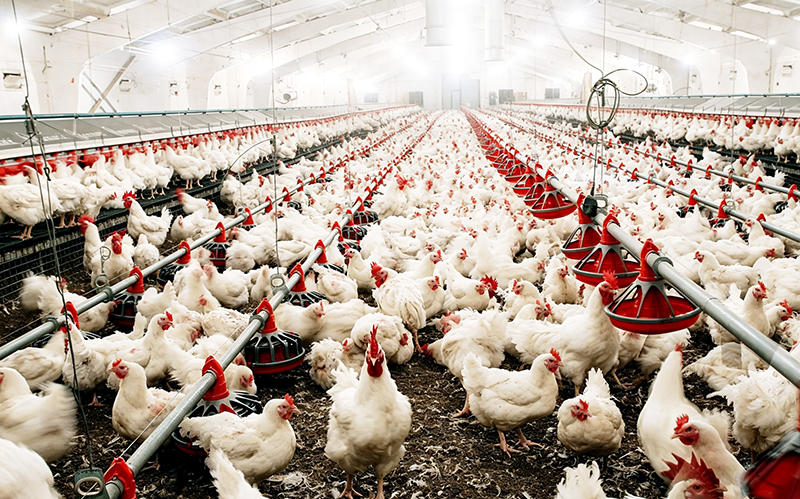
Flock Uniformity and Group Management in Poultry Farms: Improving Heat Distribution and Environmental Control
Flock uniformity is an important factor in poultry house management. Significant differences in body weight can create uneven feeding requirements and differences in individual heat production. Grouping birds by size or production stage can help farmers manage these variations and improve environmental control, although the actual effect depends on flock density, climate, ventilation, and management…
Product Categories
Subscribe To Product News
Leave your email address and receive our latest product updates