Your cart is currently empty!
+86 15863276370

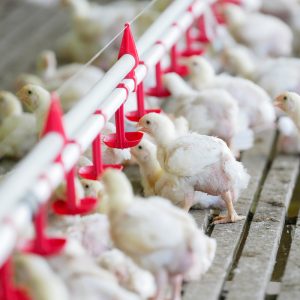
Birds of different body sizes do not necessarily have the same feed intake, metabolic activity, or heat production. When large variations in body weight occur within the same group, the distribution of heat and resource demand across the poultry house can become less uniform.
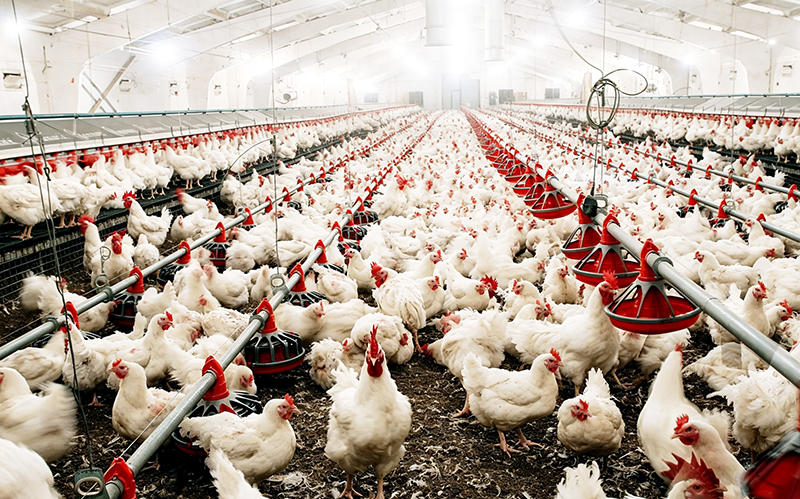
Flock grouping and uniformity management provide a practical way to address this variation. By separating birds according to body weight, age, production stage, or management requirements, farmers can create more consistent groups and adjust feeding, stocking, and environmental settings accordingly.
Better flock uniformity can also make ventilation management more predictable. Heat and moisture generated by birds must be removed through an appropriate air exchange system. When bird distribution and stocking conditions are more consistent, airflow planning and environmental monitoring can become easier to manage.
However, grouping should not be considered a standalone method for controlling heat stress. Poultry house temperature, relative humidity, ventilation rate, air velocity, stocking density, and bird health all influence thermal conditions.
A practical management strategy is to regularly monitor body weight, flock uniformity, feed intake, temperature, humidity, and ventilation performance. These data can help identify areas where management adjustments are needed.
For commercial poultry farms, combining flock uniformity monitoring with appropriate feeding equipment, ventilation systems, and environmental controls can support more stable flock management and more consistent house conditions.
Share this:
Other Posts
-
Semi-Automatic vs. Fully Automatic: Investment Payback and Decision Reference
Based on 2025-2026 international industry data, the choice between semi-automatic and fully automatic upgrades hinges on production scale and capital strategy.Semi-automatic lines offer a lower entry barrier, with initial investments typically 35-60% lower than fully automatic counterparts. For instance, in sectors like block making, semi-automatic machines cost $25,000-$50,000 versus $80,000-$150,000 for full automation. While requiring…
-
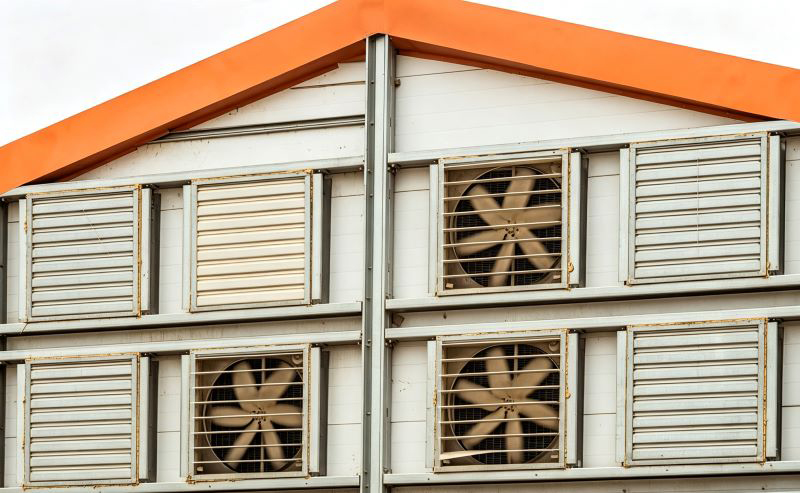
Integrated Poultry Cooling Systems: Combining Fans, Cooling Pads, Fogging and Smart Climate Control
An integrated poultry cooling system combines ventilation fans, evaporative cooling pads, fogging equipment, sensors, and climate controllers to improve environmental management. System configuration should be adapted to local climate conditions. Dry-hot regions may benefit more from evaporative cooling, while hot-humid environments require careful humidity management and sufficient ventilation. ROI evaluation should include equipment investment, energy…
-
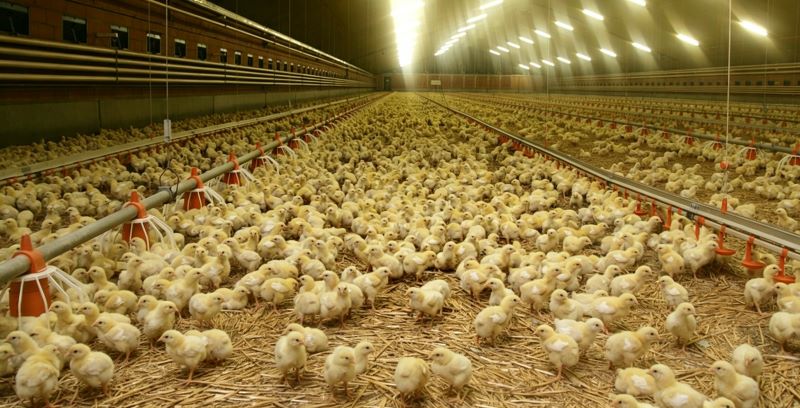
Predictive Climate Control in Poultry Farming: Using Weather Forecast Data to Reduce Heat Stress Risks
Heat stress management is one of the most important challenges in modern poultry production, especially in regions experiencing frequent extreme temperature events. Traditional environmental control systems mainly respond after temperature changes occur, while predictive climate control combines weather forecast data with automated equipment management to improve farm preparedness. A predictive control model uses external weather…
-
Equipment Depreciation and Technology Iteration: A Lifecycle Cost Analysis Model for Automated Floor Rearing Systems
Automated floor rearing systems require a lifecycle cost perspective beyond initial purchase price. Depreciation—spreading equipment cost over its usable life—and technology iteration—rapid upgrades in sensors, controls, and software—shape total ownership expense. A robust analysis model includes five phases: acquisition, installation, operation, maintenance, and residual value. Shorter technology cycles (e.g., every 3–5 years) accelerate depreciation but…
Product Categories
Subscribe To Product News
Leave your email address and receive our latest product updates