Your cart is currently empty!
+86 15863276370

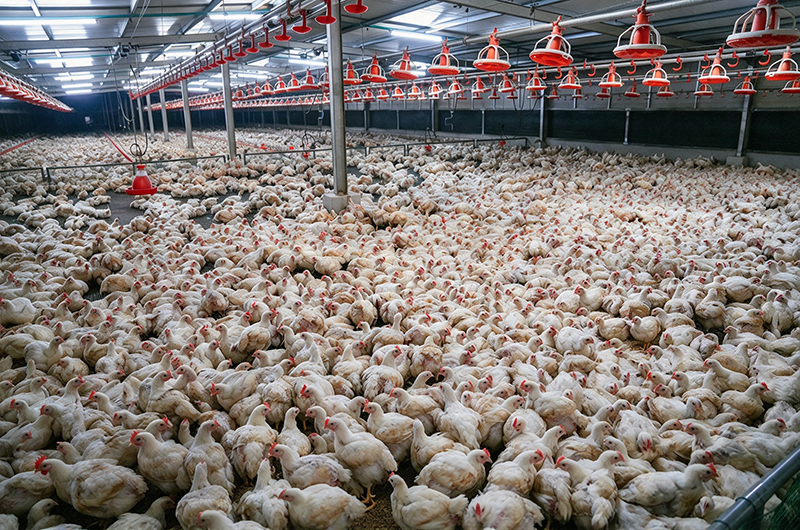
How Nutritional Requirements Change as Broilers Grow
Broiler chickens require different nutrient balances at different growth stages. Starter diets support early development, while grower and finisher diets are designed to meet the needs of continued growth and body-weight gain. Energy, protein, amino acids, and other nutrients should be balanced according to bird age, genetics, and production objectives.
Using the same diet throughout the entire production cycle may not match the changing requirements of the flock. A well-planned phase-feeding program helps align nutrient supply with these changes.
Understanding the Link Between Phase Feeding and FCR
FCR is calculated by dividing the total feed consumed by the total live-weight gain during a defined period. A lower FCR generally indicates more efficient feed conversion when measurement methods are consistent.
Phase feeding may improve feed utilization by reducing the gap between nutrient supply and the birds’ requirements. Nevertheless, introducing more feeding phases does not automatically produce a better FCR. Results depend on diet quality, the timing of feed changes, environmental conditions, and flock health. The additional cost and complexity of changing diets should also be considered.
How Automatic Feeding Systems Support Feed Management
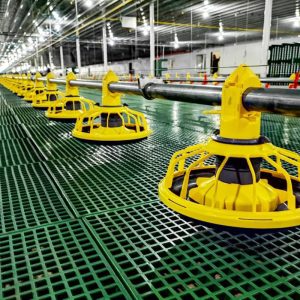
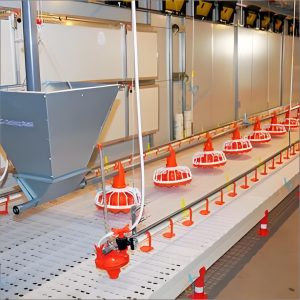
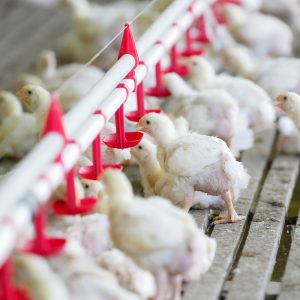
Automatic feeding systems help deliver feed consistently throughout the poultry house and reduce the need for repeated manual distribution. Proper feeder adjustment, sufficient feeding space, and routine equipment inspections help maintain access to feed.
Automation supports the implementation of a feeding program, but it cannot replace appropriate nutritional formulation or flock monitoring. Feed intake and body-weight data remain essential for evaluating performance.
Practical Considerations for Broiler Farms
To assess whether a feeding strategy is effective, farm operators should record feed consumption and weight gain for each flock and production cycle. Comparisons are most useful when bird genetics, housing conditions, and measurement methods are similar.
Share this:
Other Posts
-
Seasonal Stocking Density Management in Poultry Farming: Dynamic Matching of Bird Density and Heat Load Under Different Temperature Conditions
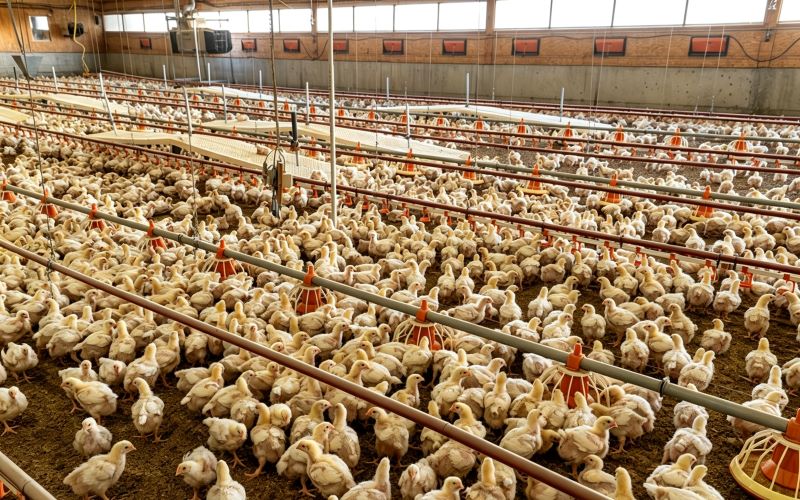
Stocking density is a critical management factor affecting animal welfare, environmental control efficiency, and production performance in commercial poultry farming. During seasonal temperature changes, maintaining the appropriate bird density becomes increasingly important because heat production from flocks directly influences the internal climate of poultry houses. A seasonal stocking density adjustment model evaluates the relationship between…
-
Linking Payback Period to Feed Savings: A Model for Automated Feeding Systems
The payback period of automated feeding systems directly correlates with feed savings achieved. A simple model expresses payback (months) = equipment cost / (annual feed saving × feed price). For a 10,000-bird house, automated feeders typically cut waste by 5–10%, saving 6–12 tons of feed yearly. At $450/ton, that equals $2,700–$5,400 annual saving. With equipment…
-
Optimizing Maintenance and Spare Parts Inventory: Preventive Strategies to Reduce Environmental Control System Failures
Environmental control systems are critical for poultry house performance. Unplanned fan or sensor failures during heat waves can cause catastrophic losses. A preventive maintenance strategy significantly reduces this risk. Key elements include: scheduled inspections of fans, motors, and belts every 500 operating hours; calibration checks for temperature and humidity sensors monthly; and cleaning of cooling…
-
Synergistic Design of Floor-Level Inlets and Ridge Outlets: An Airflow Optimization Scheme Combining Natural and Mechanical Ventilation
Effective ventilation is critical for poultry house air quality. This scheme integrates floor-level inlets with ridge outlets, blending natural and mechanical forces. Floor-level inlets, placed along side walls near the litter, allow fresh air to enter at bird level. Ridge outlets, installed at the roof peak, enable warm, stale air to rise naturally. During mild…
Product Categories
Subscribe To Product News
Leave your email address and receive our latest product updates