Your cart is currently empty!
+86 15863276370

1. Understanding the True Cost of Labor
Foreign workers are part of the workforce in many Middle Eastern industries, but labor costs vary considerably by country and job. An hourly rate of US$8–12 can be used as an illustrative assumption for financial modeling, not as a regional wage benchmark. Employers should also consider recruitment, accommodation, transportation, overtime, training, and staff turnover where applicable.
Labor availability is another consideration. Recruitment delays, employee turnover, and the need for consistent daily routines can affect farm operations. However, these risks differ between locations and employers.
2. Comparing Manual and Automated Poultry Systems
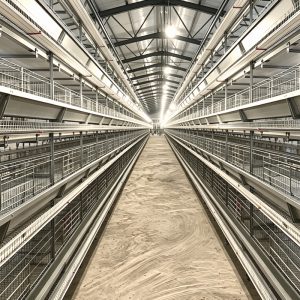
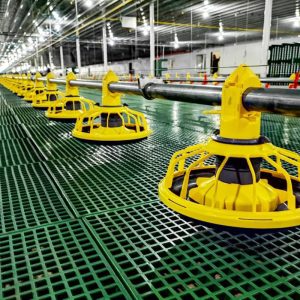
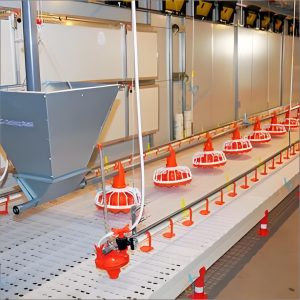
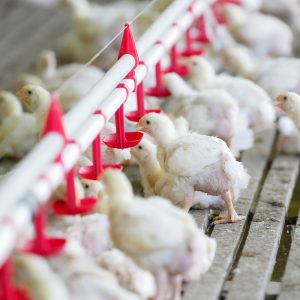
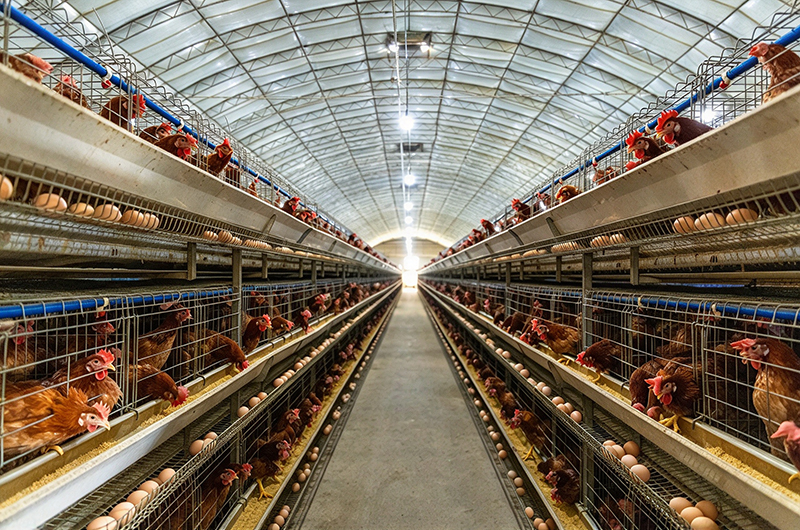
Automatic feeding lines can reduce the need for repeated manual feed distribution. Nipple drinking systems support organized water delivery, while manure belts and automatic removal equipment can reduce routine cleaning work in suitable housing systems.
Automation does not eliminate labor requirements. Farms still need workers to inspect equipment, monitor bird behavior, maintain hygiene, and respond to system faults. Equipment selection should therefore focus on reducing repetitive tasks while maintaining effective flock management.
3. How to Estimate the Payback Period
A practical calculation compares the initial automation investment with annual net operating savings.
Annual net savings = labor costs avoided + other verified savings − additional operating and maintenance costs.
The simple payback period is calculated by dividing the initial investment by annual net savings, provided that net savings are positive. For example, the calculation should use the actual number of labor hours reduced, the fully loaded labor cost, energy consumption, maintenance expenses, and equipment service life.
Share this:
Other Posts
-
Development and Application of THI Early Warning Model: A Risk-Graded Alert Mechanism for Heat Stress Based on THI Thresholds
Heat stress in poultry is closely linked to temperature-humidity index (THI). A THI-based early warning model enables farms to act before birds suffer. The model defines four risk levels: THI < 74 (safe), 74–78 (caution), 79–83 (danger), and > 83 (emergency). Each threshold triggers specific actions—from increasing ventilation to activating cooling pads and adjusting feed…
-
Managing Ammonia Emissions in Poultry Farms During El Niño: Practical Strategies for Waste and Odor Control
El Niño-related climate variability may create warmer or more humid conditions in some poultry-producing regions, increasing challenges in manure and ammonia management. This article examines practical approaches including automated manure removal, ventilation management, moisture control, and odor-treatment options. The effectiveness of each measure depends on local climate, poultry house design, manure characteristics, and operating practices.…
-
Automatic Feeding System: The “Nutrition Steward” for Broiler Farming
In large-scale broiler farming, scientific feeding is core to determining growth rate and feed conversion. Our independently developed automatic feeding system is designed for precise nutritional management. The system consists of a feed bin, conveying pipes, a drive motor, feed pans, and an intelligent controller, achieving fully automated feeding. Its advantages are significant: We provide…
-
Global Broiler Farming Equipment Market by Region: Key Trends Across Asia-Pacific, North America and Europe
The global broiler farming equipment market varies significantly by region. Differences in farm scale, climate, labor costs, production systems, and investment levels influence the demand for feeding, drinking, ventilation, climate control, and manure management equipment. Understanding these regional characteristics can help poultry producers select equipment based on actual farm requirements.
Product Categories
Subscribe To Product News
Leave your email address and receive our latest product updates