Your cart is currently empty!
+86 15863276370

Broiler production is an important part of the global poultry industry, but equipment requirements are not identical across markets. Asia-Pacific, North America, and Europe have different production structures and operating conditions, which influence automation and equipment selection.
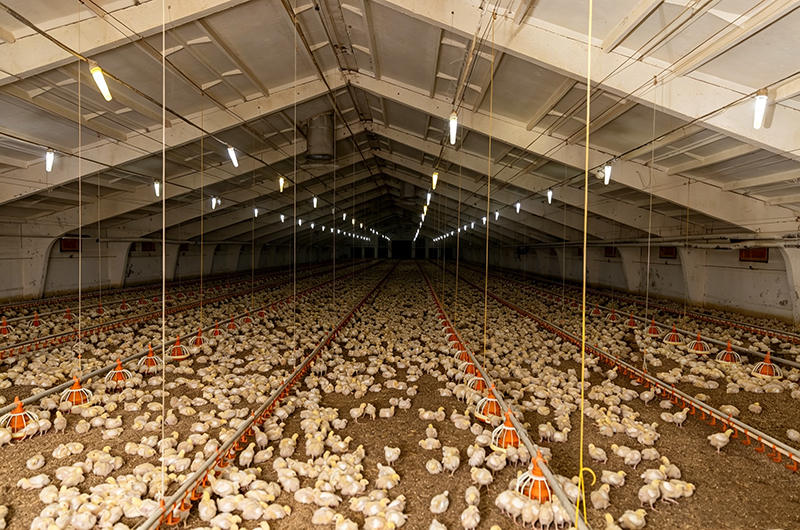
In Asia-Pacific, commercial poultry production ranges from growing medium-sized farms to highly automated large-scale operations. Automatic feeding, drinking, ventilation, cooling, and environmental control systems are commonly considered when farms seek to improve management efficiency.
In North America, large-scale production and integrated poultry operations place strong emphasis on reliable equipment, environmental control, ventilation performance, and consistent flock management. Equipment selection is often closely connected with house design and production capacity.
In Europe, farm operators may place greater emphasis on resource efficiency, manure management, animal-management requirements, and energy performance. Equipment therefore needs to work together with ventilation, feeding, lighting, and environmental systems.
Regional market share figures should always be interpreted carefully because different research reports may use different definitions, product categories, geographic boundaries, and reporting years. Instead of relying on a single percentage, poultry businesses should evaluate local climate, labor availability, farm capacity, regulations, energy costs, and production objectives when planning equipment investments.
For equipment manufacturers and poultry producers, regional analysis is most useful when it connects market trends with practical farm requirements.
Share this:
Other Posts
-
Professional Broiler Breeding Equipment, Boosting Efficient Farming
As a professional manufacturer of broiler breeding equipment, we are committed to providing advanced layer-stacked broiler cage systems for farmers. Our products are made of high-quality hot-dip galvanized steel with a service life of over 15 years, featuring corrosion resistance and anti-aging properties to ensure long-term stable operation. Core Advantages: Our equipment adopts a frame…
-
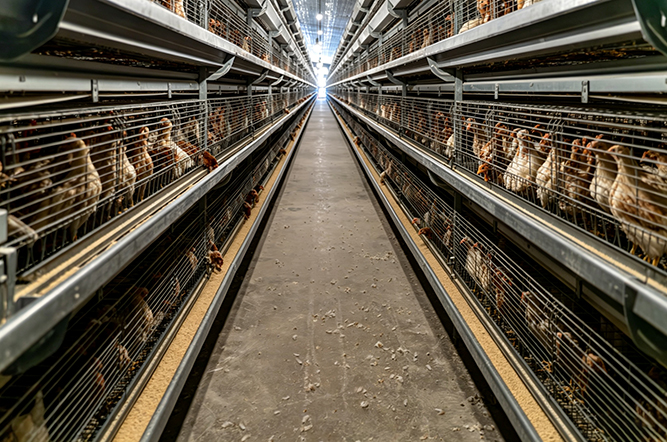
Poultry Farm Automation Trends: Why More Commercial Farms Are Adopting Automated Farming Systems
Poultry farm automation is becoming increasingly relevant as commercial farms seek greater efficiency, consistency, and better resource management. Automated feeding, drinking, ventilation, manure removal, and climate-control systems can reduce repetitive manual work and support more standardized daily operations. However, automation decisions should be based on farm scale, housing design, climate, production objectives, energy use, and…
-
Synergistic Design of Floor-Level Inlets and Ridge Outlets: An Airflow Optimization Scheme Combining Natural and Mechanical Ventilation
Effective ventilation is critical for poultry house air quality. This scheme integrates floor-level inlets with ridge outlets, blending natural and mechanical forces. Floor-level inlets, placed along side walls near the litter, allow fresh air to enter at bird level. Ridge outlets, installed at the roof peak, enable warm, stale air to rise naturally. During mild…
-
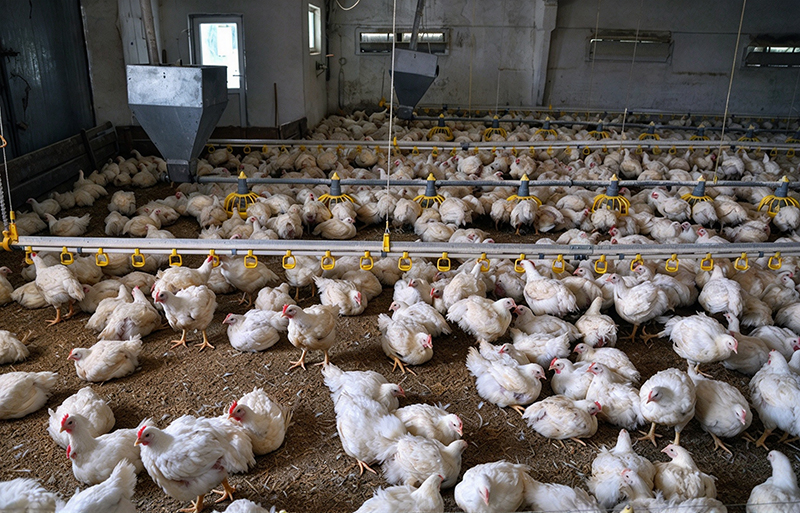
How Much Can Automatic Feeding Save on Labor Costs? A Practical Guide for Poultry Farms
Automatic feeding systems can reduce the time workers spend on repetitive feed handling and distribution. However, annual labor cost savings vary with farm size, feeding methods, local wages, and equipment requirements. A simple calculation based on actual working hours can help poultry producers assess the potential value of automation.
Product Categories
Subscribe To Product News
Leave your email address and receive our latest product updates