Your cart is currently empty!
+86 15863276370

Keeping poultry houses cool during hot weather requires more than lowering air temperature. Relative humidity and air movement also affect how effectively birds release body heat.
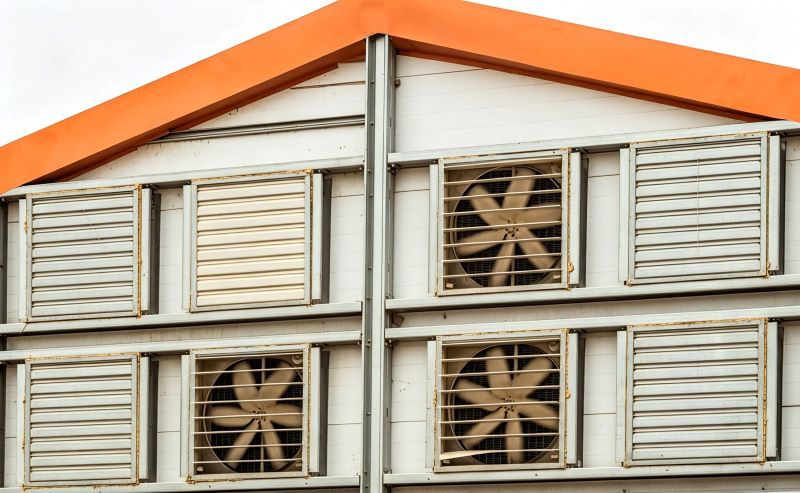
Evaporative cooling pads cool incoming air as ventilation fans draw it through wetted pads. They are widely used in mechanically ventilated poultry houses and can provide substantial cooling when properly sized and maintained. However, evaporation also increases indoor humidity, which may limit further cooling in humid weather.
High-pressure fogging systems release fine water droplets into the air. When droplets evaporate before reaching birds or litter, they absorb heat from the surrounding air. Fogging may be useful as a supplementary option during very hot, relatively dry conditions—for example, when outdoor temperatures exceed 35°C and relative humidity is below 70%. These figures are practical reference points, not universal operating thresholds.
Water use depends on nozzle flow rate, operating time, ventilation, and system design. Pad systems commonly recirculate water, while fogging systems use water according to nozzle output and control settings. Neither method has a universally lower water demand in every installation.
For safer operation, use temperature and humidity readings to control fogging intervals. A short initial cycle, such as one lasting up to three minutes, may be tested where appropriate, followed by reassessment before another cycle. Stop or reduce fogging if humidity rises excessively or litter and equipment become wet. The exact interval should follow system specifications and on-site conditions.
For most commercial poultry houses, cooling pads and tunnel ventilation provide the main cooling foundation. Fogging should be added only when climate conditions, airflow, and moisture management support its use.
Share this:
Other Posts
-
Integrated Poultry Cooling Systems: Combining Fans, Cooling Pads, Fogging and Smart Climate Control
An integrated poultry cooling system combines ventilation fans, evaporative cooling pads, fogging equipment, sensors, and climate controllers to improve environmental management. System configuration should be adapted to local climate conditions. Dry-hot regions may benefit more from evaporative cooling, while hot-humid environments require careful humidity management and sufficient ventilation. ROI evaluation should include equipment investment, energy…
-
Equipment Challenges in Hot and Humid Conditions: Technical Adaptations for Floor Rearing Systems in the Middle East
The Middle East challenges poultry farming with temperatures exceeding 50°C and high humidity. Standard floor rearing equipment requires significant adaptation. Ventilation demands oversized tunnel systems with high-capacity fans to maintain airspeed. Evaporative cooling pads need larger surface areas and regular maintenance to prevent mineral buildup. Drinking systems require higher-flow nipple drinkers for adequate hydration. Insulated…
-
From Design to Implementation: A Practical Guide to Biosecurity Layout for Floor Rearing Farms
Effective biosecurity starts with a clear layout. Separate clean and dirty zones clearly. The entry point should include a changing room, footbath, and hand sanitizer. Place sealed fences around the farm to prevent wild birds and rodents from entering. Design a one-way flow: workers move from office to changing room to house, never backward. Vehicles…
-
Why Do Nipple Drinkers Leak? (With Troubleshooting Flowchart)
Leaking nipple drinkers waste water, wet litter, and increase disease risk. Understanding common failure causes helps farm managers quickly fix issues. Primary leak sources include: worn silicone seals (normal wear after 12–18 months), debris trapped in the valve (from poor water filtration), incorrect water pressure (above 0.2–0.3 bar), damaged nipple body (cracks from freezing or…
Product Categories
Subscribe To Product News
Leave your email address and receive our latest product updates