Your cart is currently empty!
+86 15863276370

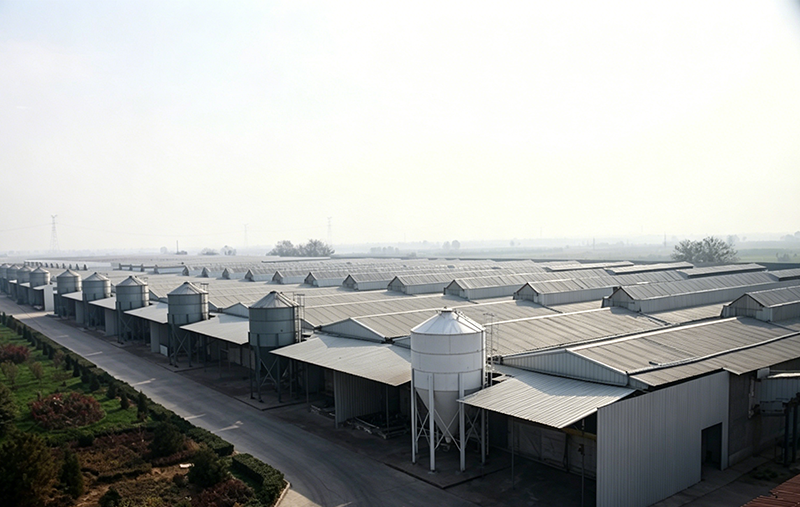
Effective biosecurity starts with a clear layout. Separate clean and dirty zones clearly. The entry point should include a changing room, footbath, and hand sanitizer. Place sealed fences around the farm to prevent wild birds and rodents from entering.
Design a one-way flow: workers move from office to changing room to house, never backward. Vehicles follow separate routes for feed delivery and manure removal. Position sealed feed silos outside the clean zone.
Implementation requires daily checks of footbaths, weekly disinfection of entry areas, and strict logbooks for visitors. Train all staff on the route map. These low‑cost measures, when consistently applied, cut disease introduction risk significantly.
Share this:
Other Posts
-
Annual Feed Savings Estimation for a 10,000-Bird Broiler Farm Using Precision Feeding
Precision feeding delivers exact feed amounts based on real-time bird weight and intake patterns, minimizing waste. For a 10,000-bird flock with a 40-day cycle and average feed conversion ratio (FCR) of 1.6, total feed consumption reaches roughly 16,000 kg per cycle. Manual feeding typically wastes 5–10% of feed due to spillage, spoilage, and uneven distribution.…
-
Manure Conveyor Belt Tracking Adjustment – Fix It Yourself Without a Service Call
Belt misalignment (tracking off) is a common issue in floor rearing houses. Most cases are caused by uneven tension, non‑parallel rollers, or uneven load distribution. Follow these three steps to fix it yourself. Step 1: Identify the direction and locationRun the belt empty and observe which side it shifts toward. If the belt runs to…
-
Input-Output Model of Automated Feeding Systems for Reducing Feed Cost
Feed constitutes 60–70% of total broiler production costs. Automated feeding systems reduce feed waste through precise portion control, creating a measurable input‑output economic model. Input (Investment) Output (Annual Savings from Feed Alone) Extended Output (Additional Savings) ROI CalculationPayback period (feed savings only) = $13,500 ÷ $2,600 = 5.2 yearsPayback (total savings) = $13,500 ÷ $14,000…
-
From Experience to AI: The Evolution of Environmental Control in Floor-Rearing Houses
Traditional poultry farming relied heavily on grower experience and manual judgment. Today, AI-driven environmental control systems are transforming this approach . Recent research demonstrates significant breakthroughs. Scientists have developed predictive models like EMD-LSTM-Attention that forecast house temperature with a mean absolute percentage error as low as 0.76%, enabling proactive rather than reactive climate management .…
Product Categories
Subscribe To Product News
Leave your email address and receive our latest product updates