Your cart is currently empty!
+86 15863276370

Temperature management is one of the key challenges in commercial poultry production. Outdoor weather can change rapidly, while birds continuously generate heat and moisture. A single cooling device may therefore be insufficient under changing conditions.
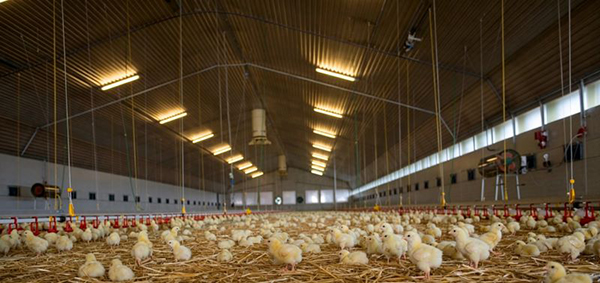
A smart poultry house climate control system can divide cooling into several operating stages. Temperature sensors continuously monitor house conditions, while the controller compares real-time data with predefined control parameters.
Under moderate conditions, the system may operate ventilation fans at an appropriate level to remove excess heat and moisture. As temperature rises, additional ventilation capacity can be activated. When conditions require evaporative cooling, the controller can activate cooling pads or other suitable equipment according to the configured control logic.
This multi-stage approach helps avoid running all equipment simultaneously when it is not necessary. It can also coordinate fans, cooling pads, inlets, and other environmental equipment to maintain more consistent airflow and temperature conditions.
However, temperature alone should not determine every control decision. Relative humidity, air velocity, bird age, stocking density, and outdoor conditions should also be considered. Evaporative cooling, in particular, depends strongly on ambient humidity and airflow.
A practical system should therefore combine sensors, control parameters, equipment response logic, alarms, and manual override functions. Historical temperature and humidity data can also be used to evaluate system performance and refine operating settings.
The goal of intelligent climate control is not simply to turn equipment on automatically, but to create a coordinated and measurable environmental management process.
Share this:
Other Posts
-
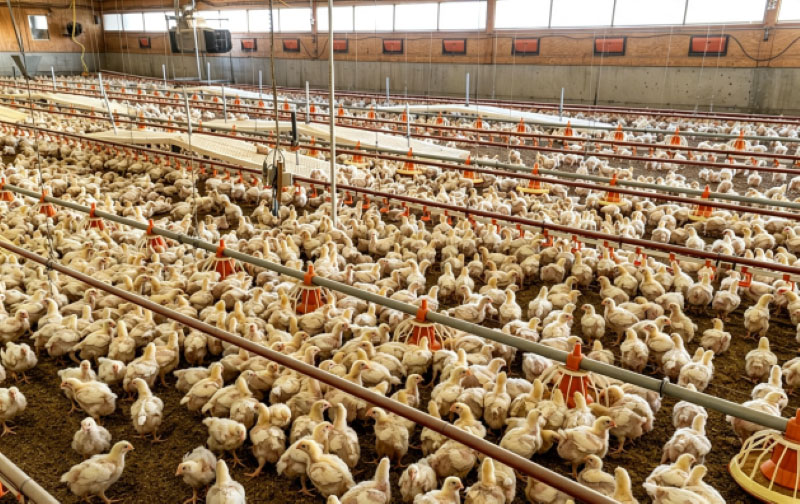
El Niño-Based Feed Storage Strategies for Poultry Farms: Preventing Mold Risk Through Climate-Adaptive Management
El Niño-related climate variations may create additional challenges for poultry feed storage, especially in humid regions where mold risk can increase. This article discusses climate-adaptive strategies including sealed feed silos, moisture control methods, and phased feed purchasing plans. By combining suitable storage equipment with scientific management practices, poultry farms can improve feed quality stability and…
-
The Future of Large-Scale Smart Poultry Farming
The outlook for large-scale smart poultry farming is exceptionally promising globally, driven by the need to feed a growing population sustainably. These technologically advanced farms represent a significant evolution from traditional methods, integrating automation, data analytics, and the Internet of Things (IoT). Key development advantages are substantial. Firstly, precision farming using sensors and AI monitors…
-
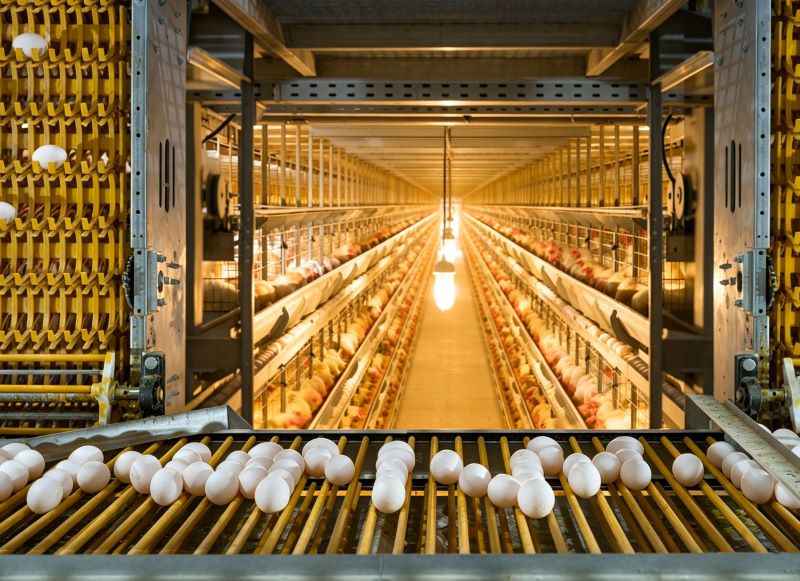
Semi-Automatic vs. Fully Automatic Poultry Farming Systems: ROI Comparison and Investment Guide
Choosing between a semi-automatic and fully automatic poultry farming system is an important investment decision. The right solution depends not only on equipment cost, but also on farm capacity, labor availability, management requirements, and long-term operating expenses.
-
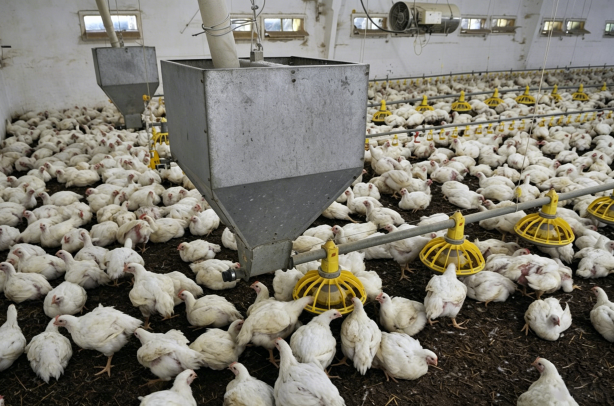
How Automatic Feeding Systems Reduce Labor Dependency in Poultry Farms: From Feed Handling to Smart Farm Management
Automatic feeding systems help poultry farms reduce labor dependency and improve feeding consistency. This article analyzes the transition from manual feeding to semi-automatic and fully automated systems, covering feed handling, transportation, distribution, and management processes. By improving operational efficiency and standardization, automation provides long-term value for modern poultry production.
Product Categories
Subscribe To Product News
Leave your email address and receive our latest product updates