Your cart is currently empty!
+86 15863276370

Feed quality does not depend only on the formulation. Storage conditions and feed handling also influence whether nutrients remain stable until the feed reaches the birds.
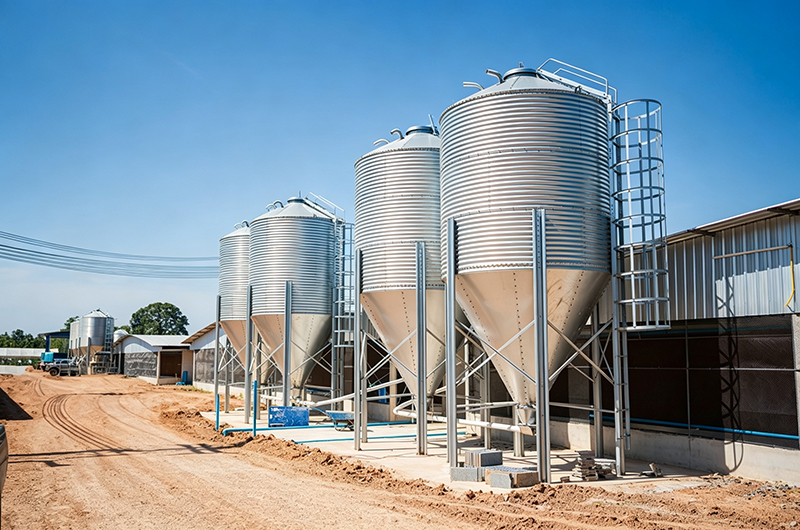
An appropriately designed sealed feed silo can help protect stored feed from rain, excessive moisture, dust, and external contamination. By reducing unnecessary exposure to the surrounding environment, it can support better feed storage conditions and help limit problems associated with moisture and deterioration.
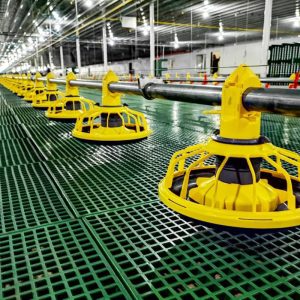
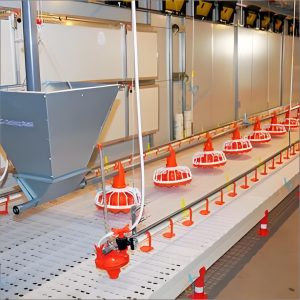
When connected to an automatic feeding system, the silo can continuously supply feed to the feeding line according to the farm’s operating requirements. This reduces the need for repeated manual handling and helps create a more controlled feed distribution process.
Better feed storage can also contribute to more consistent farm management. However, a sealed silo does not guarantee that feed will remain fresh under all conditions. Moisture control, silo inspection, cleaning, storage duration, feed quality, and local climate should all be considered.
The economic value can be evaluated by monitoring feed waste, rejected feed, storage losses, labor requirements, and flock performance. Veterinary and treatment costs should be analyzed separately because poultry health is influenced by many factors, including nutrition, biosecurity, ventilation, water quality, disease pressure, and management.
For commercial poultry farms, combining sealed feed storage with automatic feeding provides a practical approach to improving feed handling and reducing avoidable storage and distribution losses. The objective is not simply to store more feed, but to maintain a controlled and traceable feeding process from storage to the flock.
Share this:
Other Posts
-
From Experience to AI: The Evolution of Environmental Control in Floor-Rearing Houses
Traditional poultry farming relied heavily on grower experience and manual judgment. Today, AI-driven environmental control systems are transforming this approach . Recent research demonstrates significant breakthroughs. Scientists have developed predictive models like EMD-LSTM-Attention that forecast house temperature with a mean absolute percentage error as low as 0.76%, enabling proactive rather than reactive climate management .…
-
Why Do Nipple Drinkers Leak? (With Troubleshooting Flowchart)
Leaking nipple drinkers waste water, wet litter, and increase disease risk. Understanding common failure causes helps farm managers quickly fix issues. Primary leak sources include: worn silicone seals (normal wear after 12–18 months), debris trapped in the valve (from poor water filtration), incorrect water pressure (above 0.2–0.3 bar), damaged nipple body (cracks from freezing or…
-
Variable-Frequency Fans and Multi-Stage Cooling Linkage Control: Response Mechanism of Smart Environmental Control Systems to Extreme Heat
Extreme heat events threaten poultry health and productivity. Smart environmental control systems employ variable-frequency fans (VFFs) and multi-stage cooling linkage to respond effectively. VFFs automatically adjust speed based on real-time temperature, providing low airflow during mild heat and maximum speed during heatwaves. This saves energy while maintaining bird comfort. Multi-stage cooling activates sequentially: first, tunnel…
-
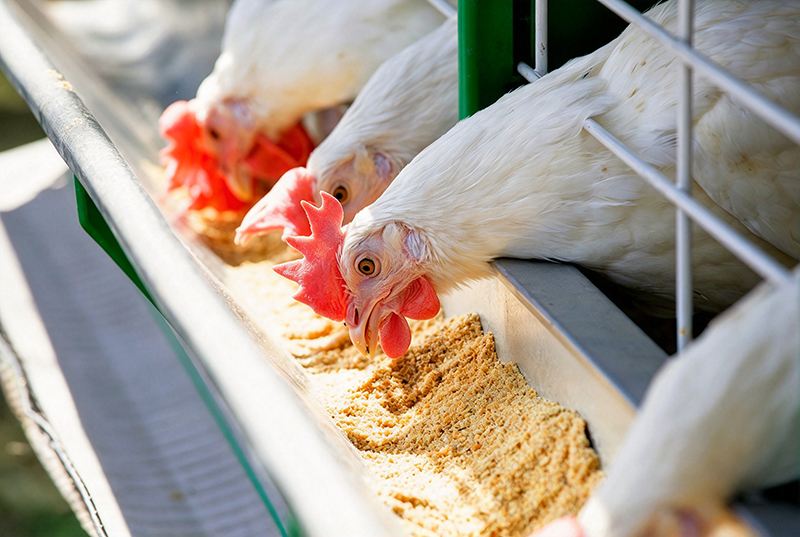
Feed Freshness and Gut Health in Broiler Chickens: Storage Risks and Management Practices
Feed quality plays an important role in broiler health and production performance. Poor storage conditions can encourage mold growth, nutrient deterioration, and mycotoxin formation. These problems may affect intestinal function and bird performance. Maintaining feed freshness is therefore an important part of poultry farm management, although intestinal disease can also result from pathogens, water quality,…
Product Categories
Subscribe To Product News
Leave your email address and receive our latest product updates