Your cart is currently empty!
+86 15863276370

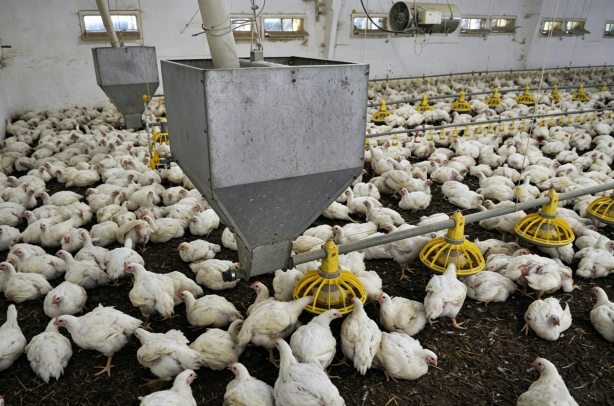
Conventional poultry houses often struggle with heat stress during summer, leading to reduced feed intake and higher mortality. Tunnel ventilation retrofitting offers a proven solution.
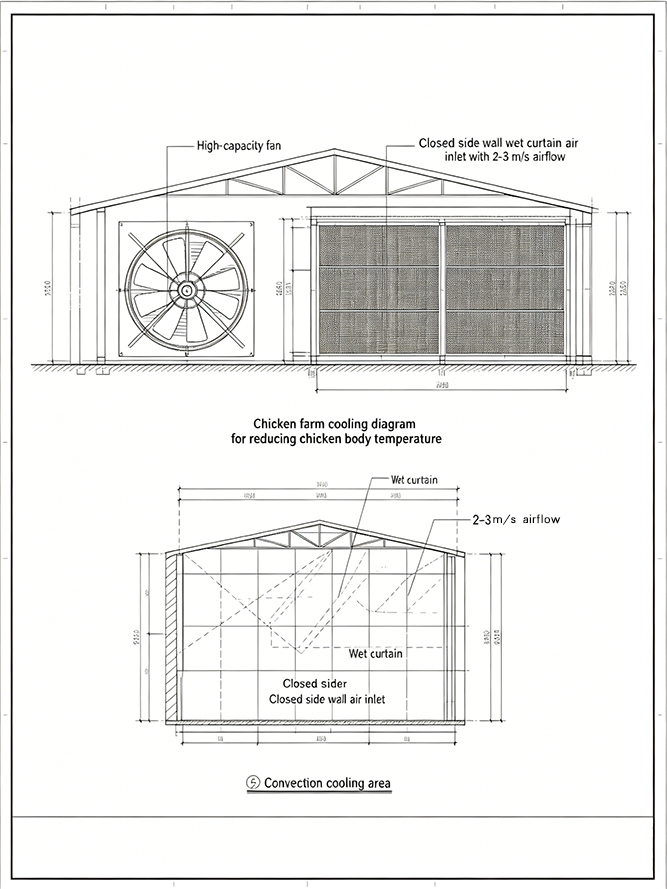
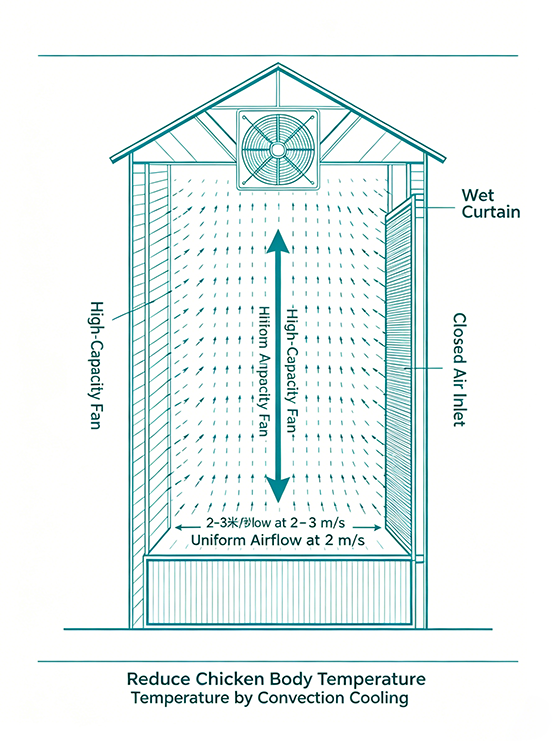
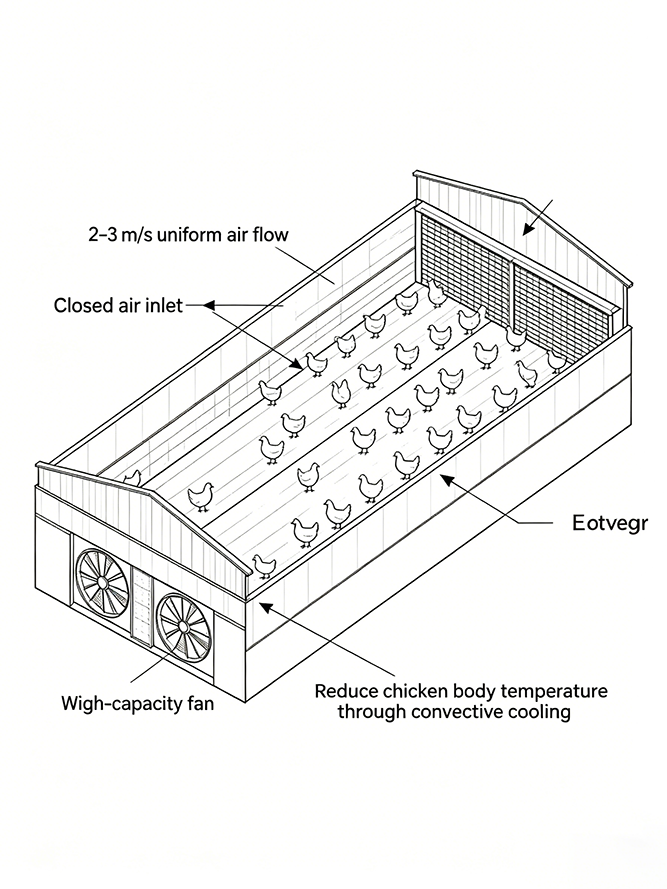
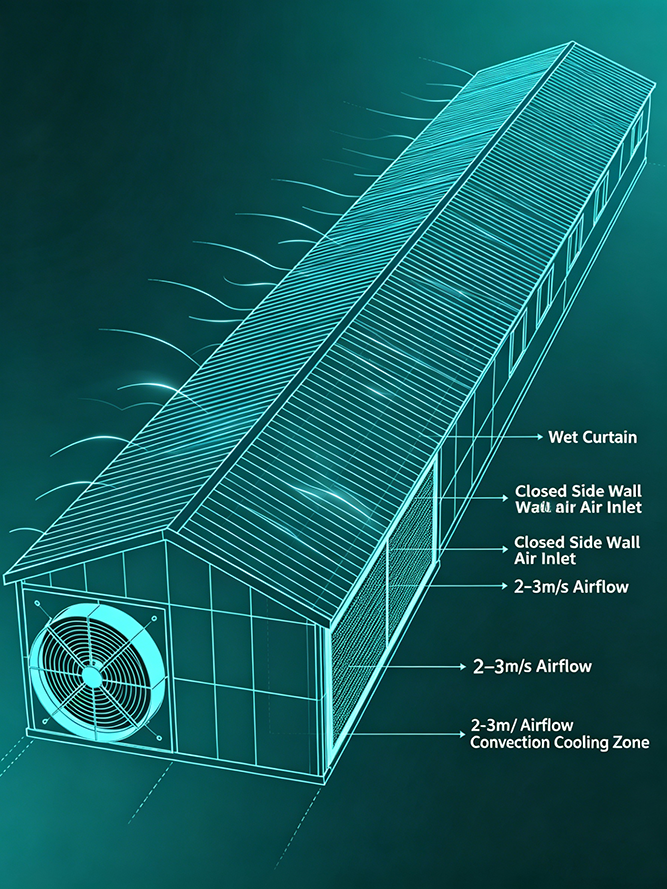
The technical pathway involves installing high-capacity fans at one end, evaporative cooling pads at the opposite end, and sealing side inlets to create uniform 2–3 m/s airflow. This system lowers bird body temperature through convective cooling.
Economically, while initial investment ranges from $8,000–$12,000 per 10,000-bird house, benefits include 15–20% lower mortality during peak summer, improved feed conversion by 0.05–0.08, and 30% reduced labor for manual cooling interventions. Payback periods typically range from 18 to 24 months.
For farms in hot climates, tunnel ventilation retrofitting represents a strategic investment that transforms summer production losses into consistent year-round performance.
Share this:
Other Posts
-
How Automatic Feeding Systems Reduce Labor Dependency in Poultry Farms: From Feed Handling to Smart Farm Management
Automatic feeding systems help poultry farms reduce labor dependency and improve feeding consistency. This article analyzes the transition from manual feeding to semi-automatic and fully automated systems, covering feed handling, transportation, distribution, and management processes. By improving operational efficiency and standardization, automation provides long-term value for modern poultry production.
-
Why Do Nipple Drinkers Leak? (With Troubleshooting Flowchart)
Leaking nipple drinkers waste water, wet litter, and increase disease risk. Understanding common failure causes helps farm managers quickly fix issues. Primary leak sources include: worn silicone seals (normal wear after 12–18 months), debris trapped in the valve (from poor water filtration), incorrect water pressure (above 0.2–0.3 bar), damaged nipple body (cracks from freezing or…
-
Equipment + Service” Model: The Next Growth Driver in Biosecurity Equipment Market
As disease outbreaks become more frequent, poultry farms are shifting from buying standalone biosecurity equipment to seeking integrated solutions. The “equipment + service” model is emerging as a key growth driver in this space. This model combines hardware—such as automated disinfection channels, air filtration systems, and smart access controls—with value-added services like biosecurity audits, sanitation…
-
Empirical Analysis of 5–10% Feed Savings in a 10,000-Broiler Farm
Feed cost accounts for the largest proportion of expenses in broiler farming, making efficiency improvements highly valuable. This study presents an empirical analysis of achieving 5–10% feed savings in a 10,000-broiler farm through optimized management and automated equipment. The research focuses on the application of precision feeding systems, uniform feed distribution, and reduced feed wastage.…
Product Categories
Subscribe To Product News
Leave your email address and receive our latest product updates