Your cart is currently empty!
+86 15863276370

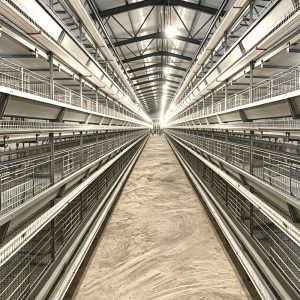
Feed cost accounts for the largest proportion of expenses in broiler farming, making efficiency improvements highly valuable. This study presents an empirical analysis of achieving 5–10% feed savings in a 10,000-broiler farm through optimized management and automated equipment.
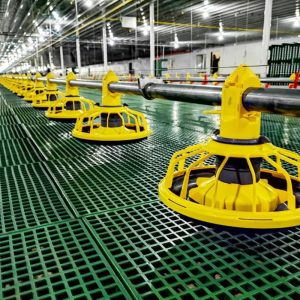
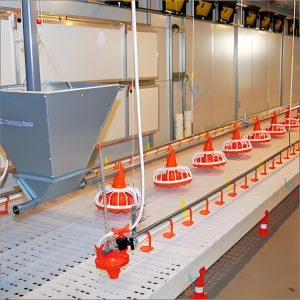
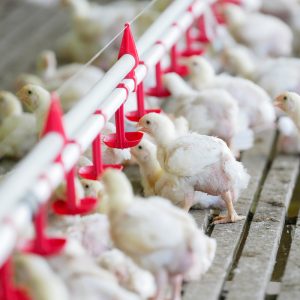
The research focuses on the application of precision feeding systems, uniform feed distribution, and reduced feed wastage. By using automated feeding lines and adjusting feed supply based on bird growth stages, the farm minimized overfeeding and spillage. Additionally, proper feeder height adjustment and regular maintenance further contributed to efficiency gains.
Data collected over a full production cycle showed that feed conversion ratios improved significantly, while overall feed consumption decreased without compromising bird growth performance. The savings translated into substantial cost reductions and improved profitability.
This case demonstrates that integrating modern equipment with refined management practices can deliver measurable economic benefits. Feed-saving strategies are therefore essential for sustainable and competitive poultry production.
Share this:
Other Posts
-
Labor Cost Estimation in the US and EU: How Automated Feeding Replaces 2–3 Workers per 10,000-Bird Broiler Farm
In the US and EU, hourly wages for farm labor range from 15to15to20. Manual feeding of a 10,000-bird house requires two to three full‑time workers. Annual labor cost per worker (2,080 hours) is 31,200–31,200–41,600. Thus, total manual feeding labor costs 62,400–62,400–124,800 per year. Automated feeding systems (silo, auger, pan feeders) reduce this to one part‑time worker (approx. 500…
-
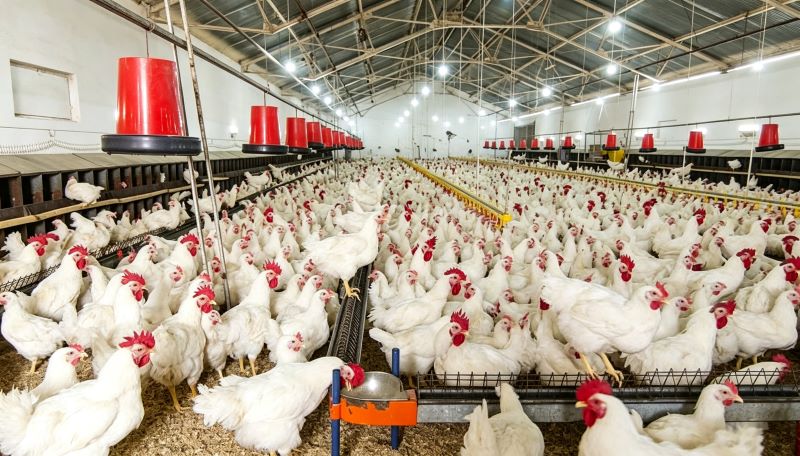
Pan vs. Chain Feeding Systems: Feed Efficiency, Waste Control, and Farm Application
This article compares pan and chain feeding systems from the perspective of feed efficiency and waste control. Both systems can support automated feeding, but their performance depends on equipment settings, farm layout, feed characteristics, and management practices. Key evaluation factors include feed spillage, distribution consistency, labor requirements, and maintenance. Selecting the appropriate system according to…
-
Equipment Depreciation and Technology Iteration: A Lifecycle Cost Analysis Model for Automated Floor Rearing Systems
Automated floor rearing systems require a lifecycle cost perspective beyond initial purchase price. Depreciation—spreading equipment cost over its usable life—and technology iteration—rapid upgrades in sensors, controls, and software—shape total ownership expense. A robust analysis model includes five phases: acquisition, installation, operation, maintenance, and residual value. Shorter technology cycles (e.g., every 3–5 years) accelerate depreciation but…
-
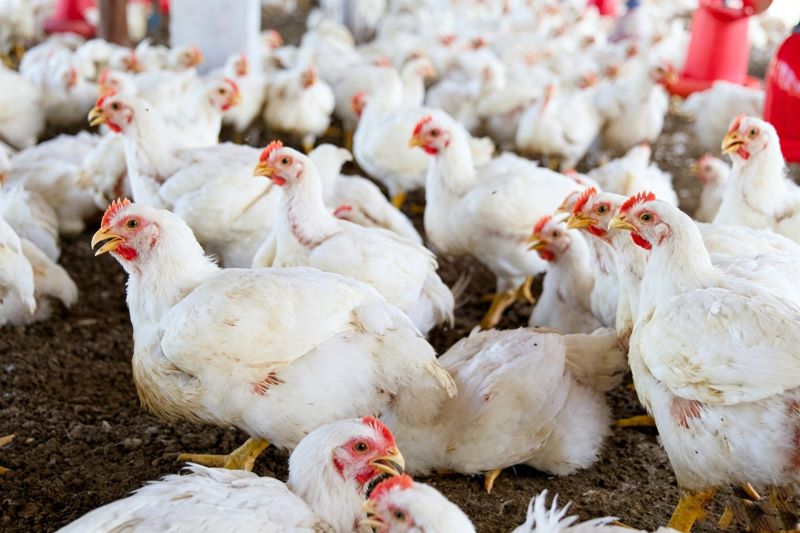
Precision Feeding Delivers 0.05 FCR Improvement – Saves 7.5 Tons of Feed per 10,000 Broilers
What if reducing your feed conversion ratio (FCR) by just 0.05 could save thousands of dollars every year? Our latest field data confirms that automated precision feeding systems consistently achieve this gain – with no extra labor or complex management. Here’s the math for a standard 10,000‑bird house: At today’s feed price of $450/ton, that’s…
Product Categories
Subscribe To Product News
Leave your email address and receive our latest product updates