Your cart is currently empty!
+86 15863276370

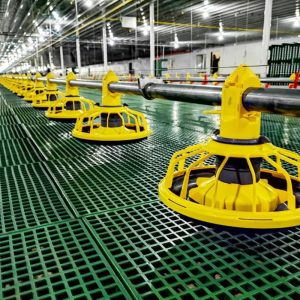
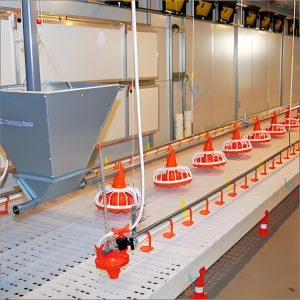
Precision feeding relies on real‑time monitoring of feed remaining in pans. Load cells or infrared sensors placed under each pan continuously measure feed weight or fill height. When the measured level drops below a preset threshold, the controller activates the auger or chain feeder to deliver a small, measured amount of feed.
This closed‑loop mechanism prevents overfilling, which causes spillage and spoilage, and avoids underfilling, which limits bird intake. By matching feed delivery to actual consumption patterns, the system maintains pans at an optimal level (30–50% full) throughout the day.
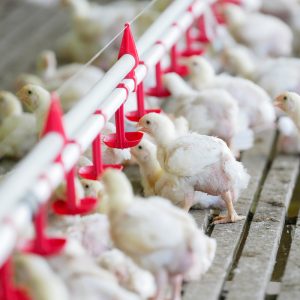
Compared to timer‑only systems, sensor‑based adjustment reduces feed waste by an additional 3–5% and improves flock uniformity. It also reduces labor for manual checks. The mechanism is particularly effective for broilers, as feed intake rises sharply during growth spurts. Real‑time adaptation ensures birds always have fresh feed without excess accumulation.
Share this:
Other Posts
-
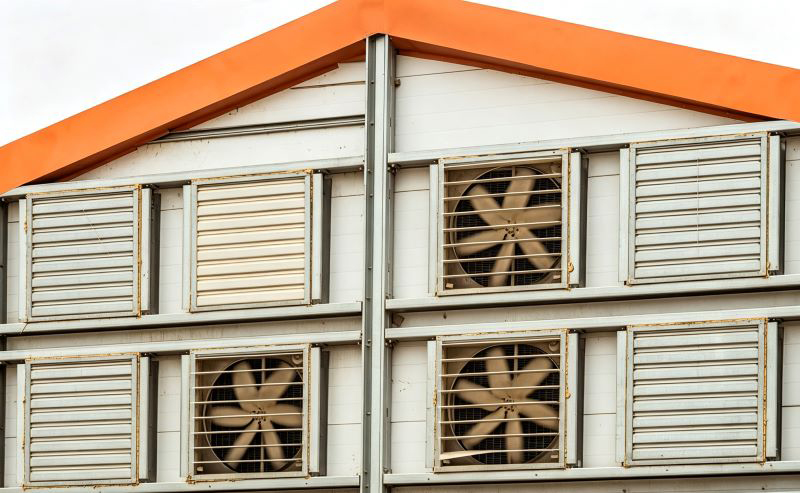
Integrated Poultry Cooling Systems: Combining Fans, Cooling Pads, Fogging and Smart Climate Control
An integrated poultry cooling system combines ventilation fans, evaporative cooling pads, fogging equipment, sensors, and climate controllers to improve environmental management. System configuration should be adapted to local climate conditions. Dry-hot regions may benefit more from evaporative cooling, while hot-humid environments require careful humidity management and sufficient ventilation. ROI evaluation should include equipment investment, energy…
-
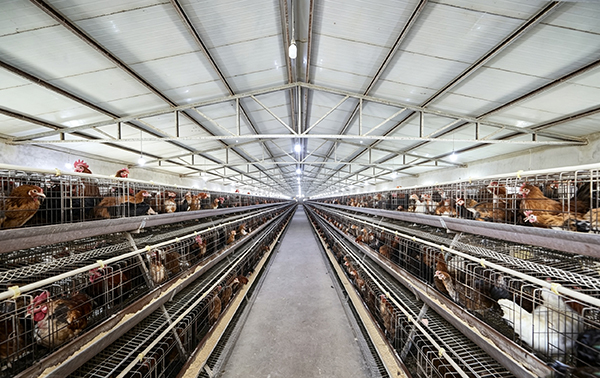
Mold Prevention in Poultry Feeding: How Feed Quality Management Can Reduce Health Risks and Operating Costs
Feed quality is closely related to poultry health and farm management costs. Poor storage conditions can increase moisture and mold risk, potentially affecting feed quality and flock performance. A preventive feeding strategy can help reduce avoidable losses, although the actual economic impact depends on farm conditions and disease management.
-
Semi-Automatic vs. Fully Automatic: Investment Payback and Decision Reference
Based on 2025-2026 international industry data, the choice between semi-automatic and fully automatic upgrades hinges on production scale and capital strategy.Semi-automatic lines offer a lower entry barrier, with initial investments typically 35-60% lower than fully automatic counterparts. For instance, in sectors like block making, semi-automatic machines cost $25,000-$50,000 versus $80,000-$150,000 for full automation. While requiring…
-

Automatic Manure Removal System ROI Analysis: Labor Cost, Ammonia Control, and Waste Management Comparison Before and After Installation
Automatic manure removal systems are becoming an important component of modern poultry farm automation. This article compares traditional manual manure handling and automated manure conveyor systems from three perspectives: labor requirements, ammonia management, and waste processing efficiency. Manual cleaning methods may increase labor dependency and create challenges in maintaining consistent environmental conditions. Automated manure removal…
Product Categories
Subscribe To Product News
Leave your email address and receive our latest product updates