Your cart is currently empty!
+86 15863276370

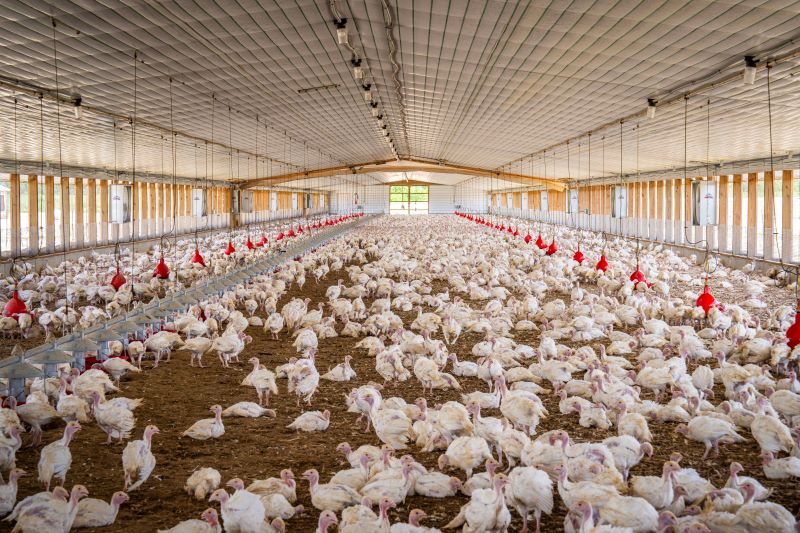
Feed waste represents a major economic loss in broiler production. Three primary sources account for most waste: spillage, spoilage, and feed refusal.
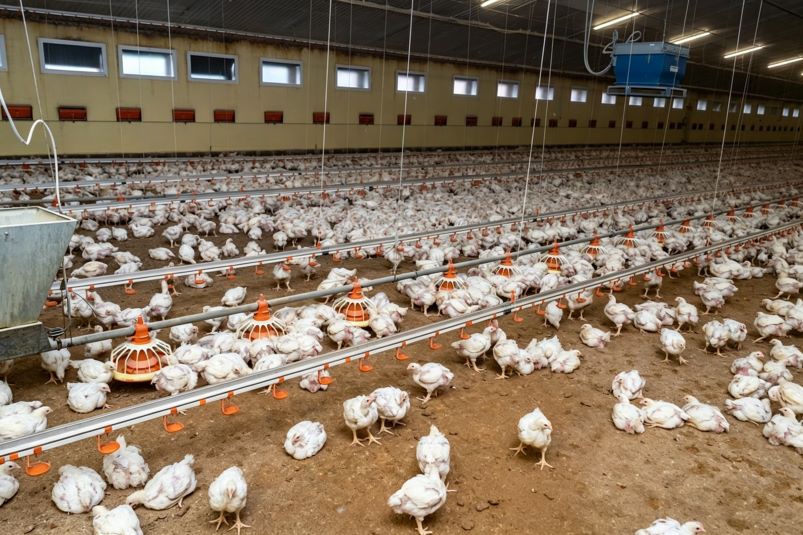
Spillage occurs during transport, loading, and at the feeder due to overfilling or bird activity. Typical losses range from 3–5% of total feed. Spoilage results from moisture in litter or humidity, causing mold and nutrient degradation, adding another 2–4% loss. Feed refusal happens when birds selectively eat or reject poor-quality pellets, wasting 1–3%.
In a 10,000-bird farm consuming 100 tons annually, total waste reaches 6–12 tons at 450/ton,costing2,700–5,400 per year. About half comes from spillage, one-third from spoilage, and the rest from refusal. Addressing each source with improved feeder design, dry litter management, and feed processing can recover 60–70% of this loss, directly improving profitability.
Share this:
Other Posts
-
All-In, All-Out, Complete Sanitization: Why Floor Rearing Systems Achieve Disease Elimination
Floor rearing systems offer a distinct advantage in disease control through the all-in, all-out management model. Unlike cage systems where birds remain in place across cycles, floor houses allow complete depopulation between flocks. This empty period enables thorough cleaning of every surface—walls, floors, feeders, and drinkers. Without cages obstructing access, disinfectants reach all areas, eliminating…
-
What Scale Makes Automation Most Cost-Effective? A Study on the Size Threshold for Floor Rearing Equipment Payback
For floor rearing farms, automation becomes cost-effective when scale passes a certain threshold. Using a 12–24 month payback benchmark, analysis shows that 10,000 birds per house is the minimum viable scale for automated feeding systems. Below 8,000 birds, labor savings do not offset equipment costs. At 15,000–20,000 birds, payback drops to 12–18 months, and automated ventilation becomes…
-
Comparative Cost Efficiency Model of Poultry Farm Labor Savings: Europe vs Middle East Market Analysis
Labor cost structure is one of the most critical variables influencing investment decisions in commercial poultry production systems. This study presents a comparative cost efficiency model for a 10,000-broiler farm, focusing on labor savings potential and automation adoption differences between Europe and the Middle East. In European poultry markets, labor costs are relatively high due…
-
Regional Customization Strategies: How Floor Rearing Equipment Suppliers Can Tailor Products and Pricing for High‑Growth Markets
High‑growth markets differ in climate, farm scale, and purchasing power, requiring suppliers to adopt regional customization. In Southeast Asia, hot and humid conditions demand corrosion‑resistant components and high‑dust‑tolerant ventilation. Basic semi‑automated feeders at competitive price points suit smallholder budgets.In the Middle East, extreme heat requires oversized tunnel fans and evaporative cooling pads. Customers prefer full…
Product Categories
Subscribe To Product News
Leave your email address and receive our latest product updates