Your cart is currently empty!
+86 15863276370

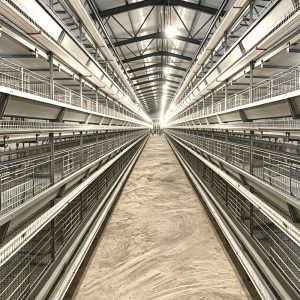
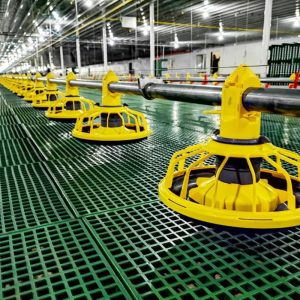
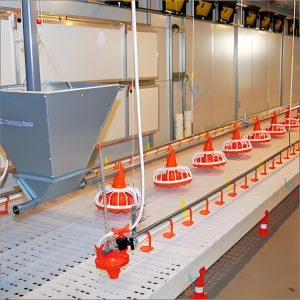
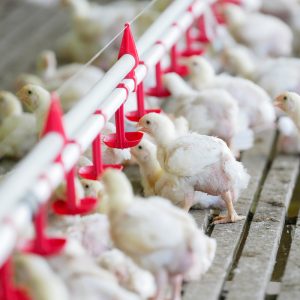
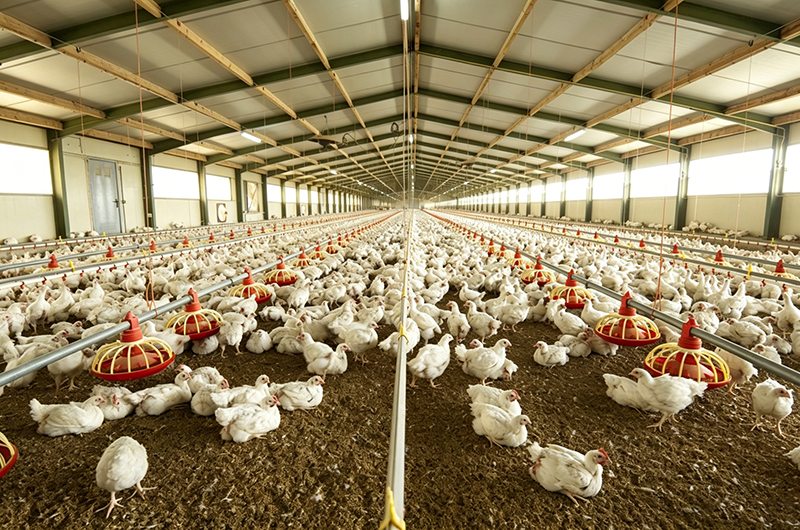
Labor cost structure is one of the most critical variables influencing investment decisions in commercial poultry production systems. This study presents a comparative cost efficiency model for a 10,000-broiler farm, focusing on labor savings potential and automation adoption differences between Europe and the Middle East.
In European poultry markets, labor costs are relatively high due to aging demographics, strict employment regulations, and limited availability of skilled agricultural workers. As a result, automation adoption is primarily driven by economic necessity. In modeled commercial operations with integrated feeding, ventilation, and environmental control systems, labor dependency may be reduced by approximately 40–60%, depending on system configuration and farm management level. This leads to significant long-term operational efficiency improvements.
In contrast, the Middle East poultry sector generally benefits from lower base labor wages but relies heavily on migrant labor. While direct wage levels are lower than in Europe, additional operational costs such as housing, visa procedures, and workforce turnover contribute to higher total employment expenditure. In a 10,000-broiler production model, automation systems typically reduce labor demand by approximately 30–50%, with efficiency gains driven primarily by improved operational stability and reduced workforce variability.
Investment feasibility is also influenced by equipment cost structure and financing accessibility. European markets often benefit from established agricultural financing systems and subsidy programs, reducing capital barriers for automation adoption. In the Middle East, higher initial capital requirements are often offset by large-scale integrated farming operations, enabling faster payback periods under optimized production cycles.
Overall, the model indicates that Europe achieves higher absolute labor cost savings, while the Middle East demonstrates stronger improvements in operational stability and risk mitigation. Both regions provide clear economic justification for adopting automated poultry farming systems.
Share this:
Other Posts
-
Empirical Analysis of 5–10% Feed Savings in a 10,000-Broiler Farm
Feed cost accounts for the largest proportion of expenses in broiler farming, making efficiency improvements highly valuable. This study presents an empirical analysis of achieving 5–10% feed savings in a 10,000-broiler farm through optimized management and automated equipment. The research focuses on the application of precision feeding systems, uniform feed distribution, and reduced feed wastage.…
-
Rainwater Harvesting and Water Recycling Systems: Evaluating a Sustainable Solution to Alleviate Water Stress in Hot Seasons
Water scarcity during hot seasons challenges poultry farms, especially for cooling pads and drinking lines. Rainwater harvesting captures runoff from roofs, stores it in tanks, and treats it for non-potable uses. When combined with recycling systems that filter and reuse water from cooling pads, overall freshwater demand drops significantly. A field study on a 50,000-bird…
-
Modern Poultry Farming Equipment: 2026 Global Trends & Market Growth
Explore how modern poultry farming equipment transforms broiler farms. Automated feeding, AI monitoring, EU cage ban, and market forecast to 2030. Read more.
-
From Experience to AI: The Evolution of Environmental Control in Floor-Rearing Houses
Traditional poultry farming relied heavily on grower experience and manual judgment. Today, AI-driven environmental control systems are transforming this approach . Recent research demonstrates significant breakthroughs. Scientists have developed predictive models like EMD-LSTM-Attention that forecast house temperature with a mean absolute percentage error as low as 0.76%, enabling proactive rather than reactive climate management .…
Product Categories
Subscribe To Product News
Leave your email address and receive our latest product updates