Your cart is currently empty!
+86 15863276370

Smart monitoring systems are increasingly used in modern poultry farming to improve production efficiency, environmental stability, and overall flock performance. In commercial broiler production environments, integrated monitoring solutions have been associated with productivity improvements of approximately 20–34%, depending on farm scale, equipment configuration, and management practices.
The main mechanism behind this improvement is real-time environmental regulation. Smart systems continuously track key parameters such as temperature, humidity, ammonia concentration, and ventilation status. When abnormal conditions are detected, the system can automatically adjust ventilation fans, cooling pads, or heating equipment to maintain stable living conditions for the birds.
Another important factor is data-driven management. Traditional poultry farms often rely on manual observation, which can lead to delayed responses and inconsistent decision-making. In contrast, smart monitoring platforms collect continuous data and provide analytical feedback, allowing managers to respond more quickly and accurately to changes in the production environment.
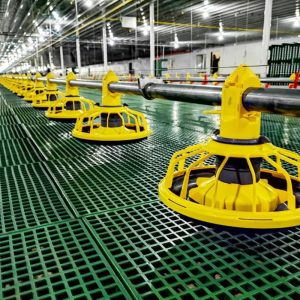
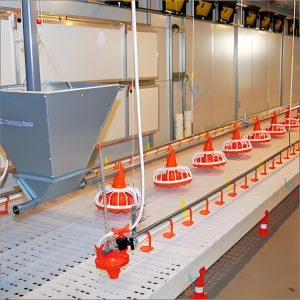
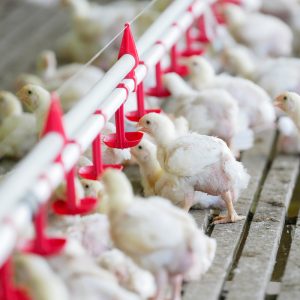
Automation in feeding and water systems further improves efficiency. By aligning feed delivery with growth stages and environmental conditions, the system reduces feed waste and improves feed conversion performance. This contributes to better flock uniformity and more stable production outcomes.
In addition, early warning and alarm functions help reduce operational risks. Equipment failures or sudden environmental changes can be detected in advance, allowing timely intervention before significant production losses occur.
Although initial investment in smart monitoring systems may be higher, long-term benefits include reduced labor dependency, improved resource utilization, and more stable production performance. These combined effects explain why smart monitoring technologies are becoming a core component of modern poultry production systems.
Share this:
Other Posts
-
The Hidden Cost of Feed Waste: A Quantitative Analysis of Spillage, Spoilage, and Feed Refusal
Feed waste represents a major economic loss in broiler production. Three primary sources account for most waste: spillage, spoilage, and feed refusal. Spillage occurs during transport, loading, and at the feeder due to overfilling or bird activity. Typical losses range from 3–5% of total feed. Spoilage results from moisture in litter or humidity, causing mold…
-
Synergistic Design of Floor-Level Inlets and Ridge Outlets: An Airflow Optimization Scheme Combining Natural and Mechanical Ventilation
Effective ventilation is critical for poultry house air quality. This scheme integrates floor-level inlets with ridge outlets, blending natural and mechanical forces. Floor-level inlets, placed along side walls near the litter, allow fresh air to enter at bird level. Ridge outlets, installed at the roof peak, enable warm, stale air to rise naturally. During mild…
-
5 Common Mistakes to Avoid When Purchasing Complete Poultry Automation Equipment: A Practical Buying Guide
The selection of complete poultry automation equipment plays a critical role in improving farm efficiency and production stability. However, improper equipment planning, insufficient compatibility analysis, and lack of technical support may increase operational challenges. This article identifies five common mistakes in poultry automation equipment purchasing, including price-focused decisions, unsuitable system matching, climate adaptation issues, insufficient…
-
Comparative Cost Efficiency Model of Poultry Farm Labor Savings: Europe vs Middle East Market Analysis
Labor cost structure is one of the most critical variables influencing investment decisions in commercial poultry production systems. This study presents a comparative cost efficiency model for a 10,000-broiler farm, focusing on labor savings potential and automation adoption differences between Europe and the Middle East. In European poultry markets, labor costs are relatively high due…
Product Categories
Subscribe To Product News
Leave your email address and receive our latest product updates