Your cart is currently empty!
+86 15863276370

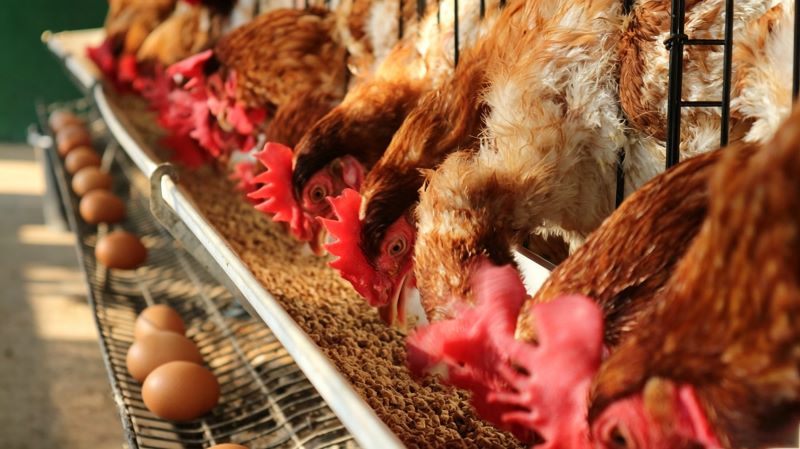
Feed management is one of the most critical factors affecting productivity and cost efficiency in poultry farming. Traditionally, manual feeding has been widely used due to its simplicity and low initial investment. However, with the development of automation technology, precision feeding systems are increasingly replacing manual operations in modern poultry houses.
Manual feeding relies heavily on human labor, which often leads to inconsistent feed distribution, timing errors, and higher feed wastage. Variations in worker experience can also affect flock uniformity and growth performance. In large-scale farms, these inefficiencies become more significant, increasing overall operational costs.
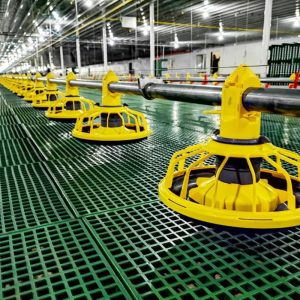
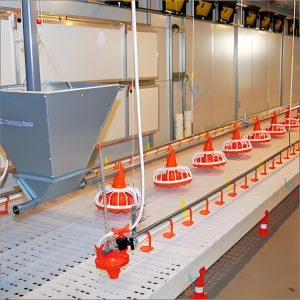
In contrast, precision feeding systems use automated equipment to deliver controlled feed quantities based on growth stages, environmental data, and production targets. These systems ensure uniform feed distribution, reduce spillage, and improve feed conversion efficiency. Data-driven control also allows real-time adjustment, improving consistency across the flock.
Field observations show that farms using precision systems can reduce feed waste by approximately 5–12% compared to manual feeding methods. Additionally, labor dependency is significantly reduced, which helps mitigate risks caused by workforce shortages and rising wages. More stable feeding patterns also contribute to better animal health and improved production outcomes.
Although initial investment in automation is higher, long-term operational savings and efficiency gains make precision feeding a more sustainable solution for modern poultry production.
Share this:
Other Posts
-
Managing Ammonia Emissions in Poultry Farms During El Niño: Practical Strategies for Waste and Odor Control
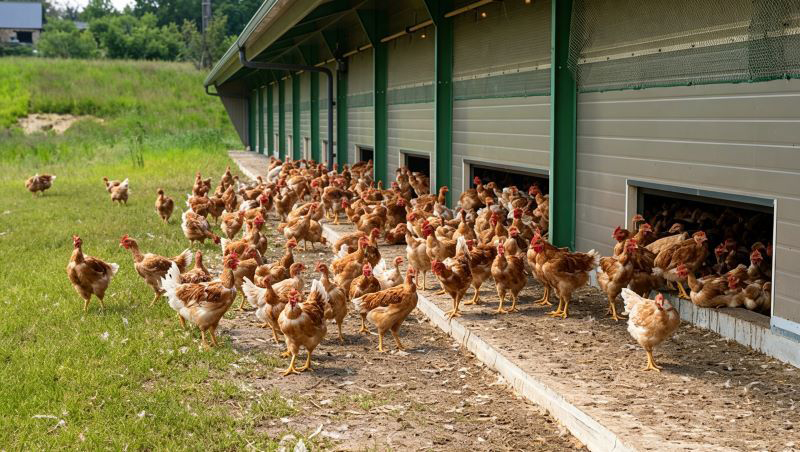
El Niño-related climate variability may create warmer or more humid conditions in some poultry-producing regions, increasing challenges in manure and ammonia management. This article examines practical approaches including automated manure removal, ventilation management, moisture control, and odor-treatment options. The effectiveness of each measure depends on local climate, poultry house design, manure characteristics, and operating practices.…
-
2026–2030 Adoption Forecast for Floor Rearing Automation: Which Technology Becomes Standard First?
Over the next five years, three automation technologies will lead floor rearing adoption. Automated feeding systems top the list. Their clear payback (12–24 months) and direct feed savings (5–10%) make them the first standard feature globally. Tunnel ventilation with evaporative cooling follows closely. Rising heat waves and climate volatility push this system from optional to essential in tropical…
-
How to Calculate Cooling Pad Area Based on Fan Airflow in Poultry Houses
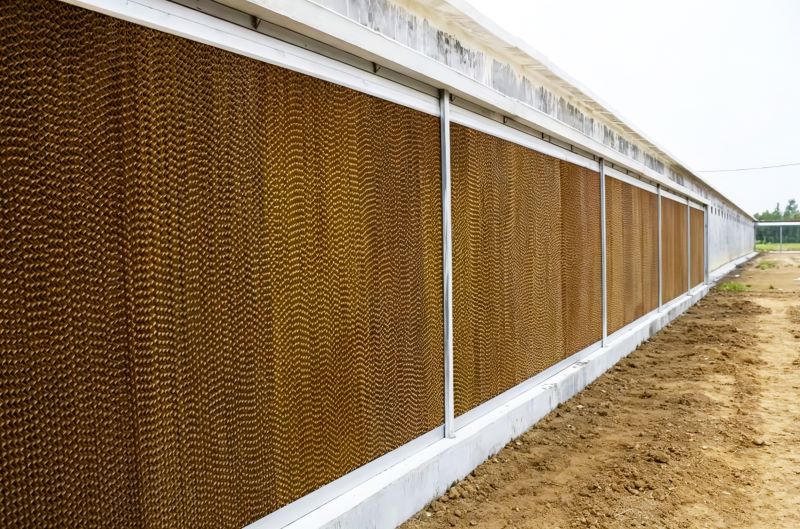
This article explains how to properly size evaporative cooling pad area based on tunnel ventilation fan airflow instead of house area, ensuring stable airflow and better cooling efficiency in poultry houses.
-
What’s the Payback Gap? An Empirical ROI Comparison of Semi‑Automated vs. Fully Automated Floor Rearing Equipment
This study compares payback periods for semi‑automated (auto feeders only) and fully automated (feeders + ventilation + manure removal) floor rearing systems in a 10,000‑bird house. Semi‑automated equipment costs $8,000–$10,000, saving 70% of feeding labor and 5% of feed waste. Fully automated systems cost $25,000–$30,000 but eliminate 90% of labor and reduce feed waste by…
Product Categories
Subscribe To Product News
Leave your email address and receive our latest product updates