Your cart is currently empty!
+86 15863276370

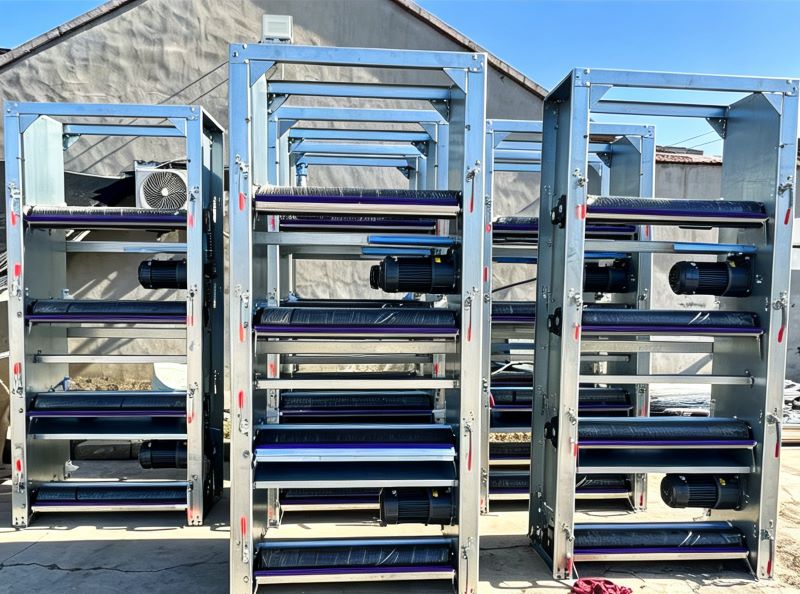
Efficient manure management is an important factor affecting labor efficiency, air quality, and operational costs in modern poultry farms. Traditional manual manure removal methods often require significant labor input and may result in inconsistent cleaning frequency. Installing an automatic manure removal system provides a more standardized approach to improving farm management.
Before automation, manure handling usually depends heavily on manual labor. The workload increases with farm size, and irregular cleaning schedules may contribute to higher ammonia accumulation inside poultry houses. Higher ammonia levels can affect air quality and create additional challenges for environmental management.
After installing a manure conveyor belt system, waste removal frequency can be adjusted according to farm operation requirements. Automated transportation reduces dependence on manual cleaning and helps maintain a cleaner house environment. Under suitable management conditions, farms can achieve improvements in labor efficiency and more stable ammonia control.
From a cost perspective, manual manure removal includes ongoing expenses related to labor availability, cleaning time, and waste transportation. Although an automatic manure removal system requires initial investment, it can reduce daily labor demand and improve long-term operational efficiency, especially in medium and large-scale poultry farms.
Ammonia concentration is influenced by multiple factors, including manure accumulation time, ventilation performance, humidity, and stocking density. Therefore, manure removal equipment should work together with proper ventilation and environmental control systems to achieve better air quality management.
Overall, the transition from manual manure handling to automatic manure removal represents an important step toward modern poultry farm automation. By comparing labor requirements, environmental conditions, and waste management efficiency, farmers can evaluate whether an automated manure system matches their production goals and long-term development plans.
Share this:
Other Posts
-
2026–2030 Adoption Forecast for Floor Rearing Automation: Which Technology Becomes Standard First?
Over the next five years, three automation technologies will lead floor rearing adoption. Automated feeding systems top the list. Their clear payback (12–24 months) and direct feed savings (5–10%) make them the first standard feature globally. Tunnel ventilation with evaporative cooling follows closely. Rising heat waves and climate volatility push this system from optional to essential in tropical…
-
Impact of El Niño on Poultry Immunity and Vaccination Programs in Temperate and Tropical Regions
El Niño events cause abnormal temperature and humidity fluctuations, which directly affect poultry immune responses. In tropical zones, prolonged heat and humidity can suppress vaccine efficacy by increasing stress hormone levels and reducing antibody production. In temperate regions, sudden warming or unseasonable cold may disrupt the stability of vaccine storage and administration, leading to uneven…
-
Comparison of Disease Risks in Open-Sided and Closed Poultry Houses under El Niño–Induced Precipitation Extremes
During El Niño events, heavy rainfall or prolonged drought alter housing microclimates, affecting disease risks differently in open-sided and closed poultry houses. In open-sided houses, heavy rainfall increases litter moisture and ammonia levels, promoting coccidiosis and pododermatitis. Dry conditions increase airborne dust, irritating the respiratory tract and increasing the incidence of colibacillosis. Closed houses with…
-
How to Improve Broiler Feed Conversion Ratio: The Synergy of Precision Feeding and Smart Environmental Control
Feed conversion ratio (FCR) is the most critical metric in broiler production—feed accounts for 60–70% of total costs. Improving FCR by just 0.1 can save over 6 tons of feed per 10,000 birds annually. This article examines how precision feeding and smart environmental control work together to achieve this gain. Precision Feeding: Right Amount, Right…
Product Categories
Subscribe To Product News
Leave your email address and receive our latest product updates