Your cart is currently empty!
+86 15863276370

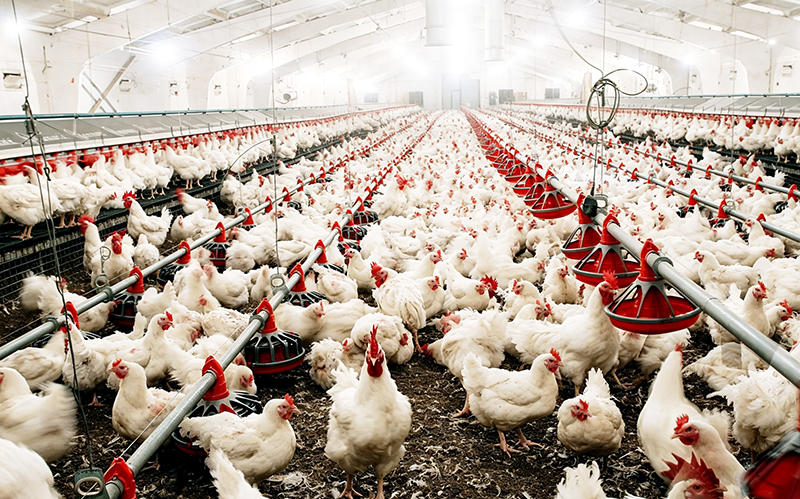
For floor rearing farms, automation becomes cost-effective when scale passes a certain threshold. Using a 12–24 month payback benchmark, analysis shows that 10,000 birds per house is the minimum viable scale for automated feeding systems. Below 8,000 birds, labor savings do not offset equipment costs.
At 15,000–20,000 birds, payback drops to 12–18 months, and automated ventilation becomes similarly viable. For smaller farms (5,000–8,000 birds), partial automation—such as pan feeders without silos—offers better returns.
Therefore, farms with ≥10,000 birds per batch should prioritize full automation. Below that, targeted semi‑automation is more economical. Scaling up by combining two small houses into one larger house can unlock automation benefits.
Share this:
Other Posts
-
Flock Uniformity and Group Management in Poultry Farms: Improving Heat Distribution and Environmental Control
Flock uniformity is an important factor in poultry house management. Significant differences in body weight can create uneven feeding requirements and differences in individual heat production. Grouping birds by size or production stage can help farmers manage these variations and improve environmental control, although the actual effect depends on flock density, climate, ventilation, and management…
-
Equipment Depreciation and Technology Iteration: A Lifecycle Cost Analysis Model for Automated Floor Rearing Systems
Automated floor rearing systems require a lifecycle cost perspective beyond initial purchase price. Depreciation—spreading equipment cost over its usable life—and technology iteration—rapid upgrades in sensors, controls, and software—shape total ownership expense. A robust analysis model includes five phases: acquisition, installation, operation, maintenance, and residual value. Shorter technology cycles (e.g., every 3–5 years) accelerate depreciation but…
-
Quantified Effect of Dynamic Feed Adjustment on Feed Conversion Ratio Optimization
This study quantifies how dynamic feed adjustment improves feed conversion ratio (FCR) in broiler production. Dynamic adjustment tailors daily feed amounts to match real-time bird weight and intake patterns, unlike fixed feeding schedules. A 35-day trial on 10,000 Ross 308 broilers compared dynamic adjustment (sensor‑based, every 2–4 hours) with conventional fixed feeding. Results showed that…
-
What Scale Makes Automation Most Cost-Effective? A Study on the Size Threshold for Floor Rearing Equipment Payback
For floor rearing farms, automation becomes cost-effective when scale passes a certain threshold. Using a 12–24 month payback benchmark, analysis shows that 10,000 birds per house is the minimum viable scale for automated feeding systems. Below 8,000 birds, labor savings do not offset equipment costs. At 15,000–20,000 birds, payback drops to 12–18 months, and automated ventilation becomes…
Product Categories
Subscribe To Product News
Leave your email address and receive our latest product updates