Your cart is currently empty!
+86 15863276370

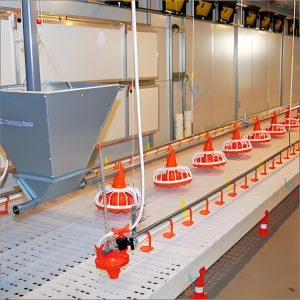
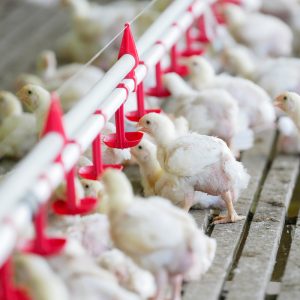
With the deep application of technologies such as the Internet of Things and artificial intelligence, the poultry farming equipment industry is undergoing an unprecedented intelligent transformation. According to the latest market data, China’s poultry farming equipment market size is expected to exceed 20 billion yuan in 2025, with a compound annual growth rate of 12.26%. Innovative products such as intelligent environmental control systems, precision feeding equipment, and robot inspection systems have become new market favorites, with the automation equipment application rate of large-scale breeding enterprises exceeding 85%。
Leading enterprises are promoting the transformation from traditional farming to digital and intelligent farming through the TMF collaborative innovation system of “technology empowerment + management efficiency + financial support”. At the policy level, the Ministry of Agriculture and Rural Affairs issued the “Guidelines for the Construction of Smart Agriculture Standard System”, providing standard support for the intelligent development of poultry farming equipment. Experts predict that the industry will show a “two-end differentiation” pattern in the next five years, with leading enterprises improving customer stickiness through technology bundled services, while small and medium-sized manufacturers turn to regional customized solutions.
2
3
Share this:
Other Posts
-
Automatic Poultry Feed Line Blocking Problems: 6 Common Causes and Troubleshooting Solutions
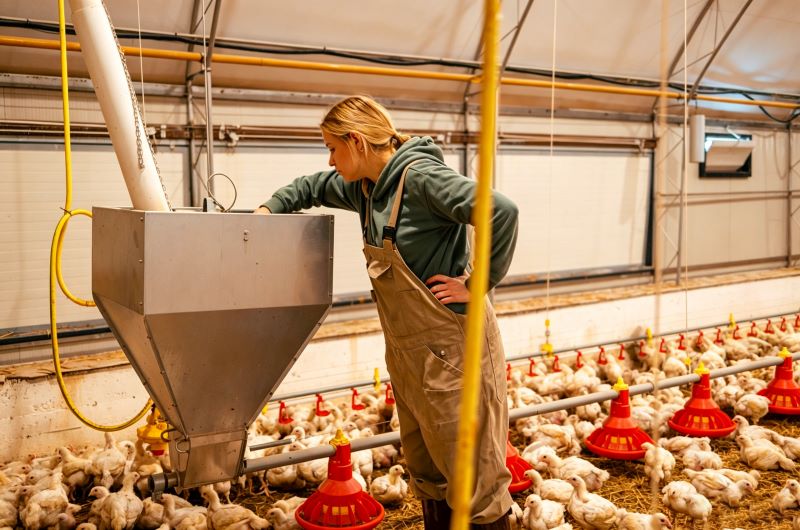
Automatic feeding systems are widely used in modern poultry farms to improve feeding efficiency and reduce labor dependency. However, feed line blockage can interrupt feeding operations and affect farm productivity. This article analyzes six common causes of automatic poultry feed line blockage, including feed quality issues, material accumulation, mechanical component wear, improper installation, electrical problems,…
-
Global Broiler Equipment Market to Reach $6.87 Billion by 2035
The global broiler farming equipment market is expanding steadily. Valued at $4.18 billion in 2025, it is projected to grow to $6.87 billion by 2035, driven by rising poultry consumption and farm automation. Key growth factors include labor shortages in developed regions, stricter animal welfare regulations favoring floor rearing systems, and climate‑resilient technologies such as…
-
Pan vs. Chain Feeding Systems: Feed Efficiency, Waste Control, and Farm Application
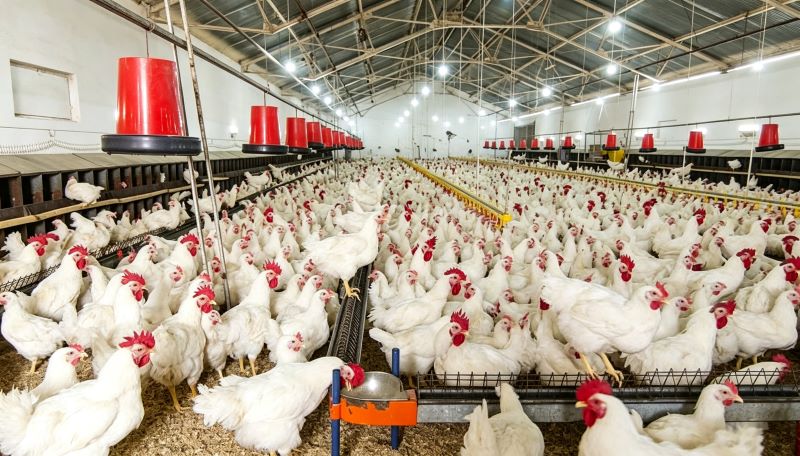
This article compares pan and chain feeding systems from the perspective of feed efficiency and waste control. Both systems can support automated feeding, but their performance depends on equipment settings, farm layout, feed characteristics, and management practices. Key evaluation factors include feed spillage, distribution consistency, labor requirements, and maintenance. Selecting the appropriate system according to…
-
Empirical Analysis of the Effect of Sealed Feed Bins on Feed Mold Control
Feed mold contamination is a major concern in poultry farming, leading to nutrient loss and health risks. This study evaluates the effectiveness of sealed feed bins in controlling mold development under practical farm conditions. A comparative trial was conducted over 90 days in two identical broiler houses. House A used conventional open feed storage, while…
Product Categories
Subscribe To Product News
Leave your email address and receive our latest product updates