Your cart is currently empty!
+86 15863276370

Feed mold contamination is a major concern in poultry farming, leading to nutrient loss and health risks. This study evaluates the effectiveness of sealed feed bins in controlling mold development under practical farm conditions.
A comparative trial was conducted over 90 days in two identical broiler houses. House A used conventional open feed storage, while House B was equipped with airtight sealed feed bins. Feed samples were collected weekly from both systems and analyzed for moisture content and mold colony count.
Results showed that feed stored in sealed bins maintained significantly lower moisture levels (11.2% ± 0.3%) compared to open storage (13.8% ± 0.5%). Mold counts in sealed bins averaged 1.2 × 10³ CFU/g, well below the safety threshold, whereas open storage exceeded 4.5 × 10⁴ CFU/g after 60 days.
These findings confirm that sealed feed bins effectively reduce moisture ingress and inhibit mold proliferation, thereby preserving feed quality and reducing health risks. Investment in sealed bins is a practical intervention for modern poultry operations aiming to enhance feed safety and farm productivity.
Share this:
Other Posts
-
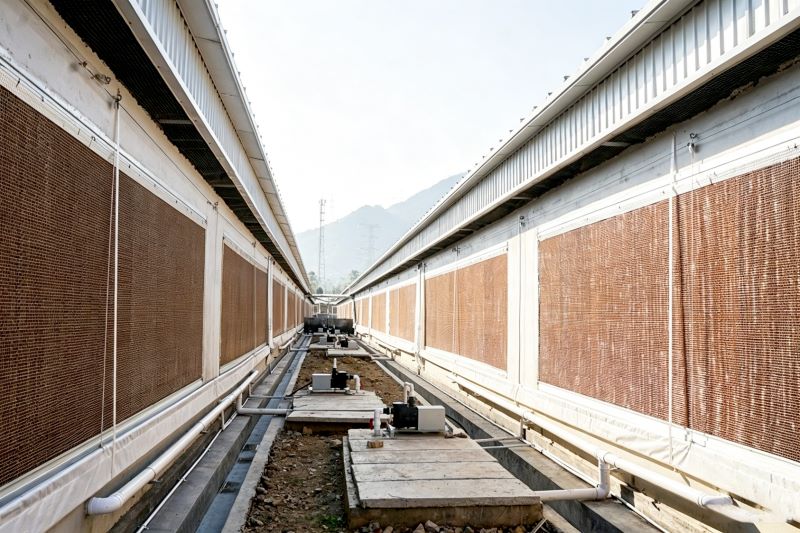
Synergistic Optimization of Cooling Pad Expansion and Water Quality Management: Strategies for Improving Evaporative Cooling Efficiency in Hot and Humid Regions
In tunnel-ventilated poultry houses, evaporative cooling pad performance directly impacts bird welfare and productivity during summer. Two critical factors determine system effectiveness: proper pad sizing and water quality management. Pad Sizing Principles Pad area should be determined by total tunnel fan capacity, not house dimensions. Industry standard recommends one square foot of six-inch pad for…
-
A New Era of Human‑Machine Collaboration: Challenges and Solutions for Deploying AI Decision Systems in Floor‑Rearing Farms
Deploying AI decision systems in floor‑rearing farms promises improved efficiency but faces practical hurdles. Three major challenges emerge: data infrastructure gaps, worker acceptance, and system maintenance cost. Many farms lack reliable sensors or stable internet, leading to incomplete data. Workers, accustomed to manual observation, often distrust AI recommendations. Solutions include phased deployment starting with basic…
-
Regional Customization Strategies: How Floor Rearing Equipment Suppliers Can Tailor Products and Pricing for High‑Growth Markets
High‑growth markets differ in climate, farm scale, and purchasing power, requiring suppliers to adopt regional customization. In Southeast Asia, hot and humid conditions demand corrosion‑resistant components and high‑dust‑tolerant ventilation. Basic semi‑automated feeders at competitive price points suit smallholder budgets.In the Middle East, extreme heat requires oversized tunnel fans and evaporative cooling pads. Customers prefer full…
-
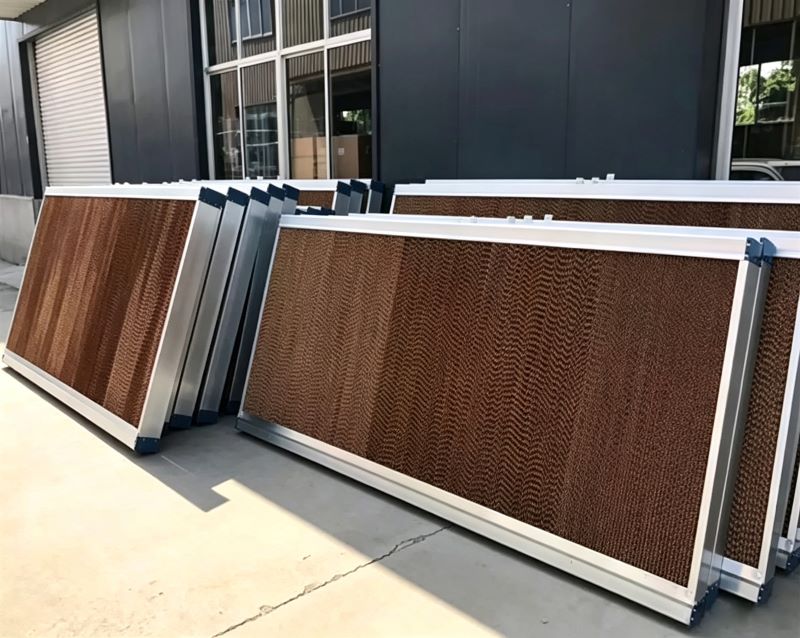
Before Installing Evaporative Cooling Pads: 3 Poultry House Conditions to Check First
Evaporative cooling pad performance depends on the entire poultry house cooling system rather than the pad alone. This article outlines three key pre-installation checks: house sealing, fan capacity, and water supply conditions. Air leakage can disrupt airflow, unsuitable fan capacity may reduce effective air movement, and unstable or poor-quality water can affect pad wetting and…
Product Categories
Subscribe To Product News
Leave your email address and receive our latest product updates