Your cart is currently empty!
+86 15863276370

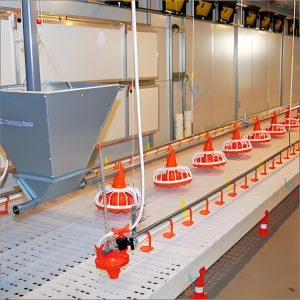
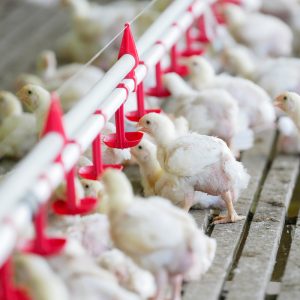
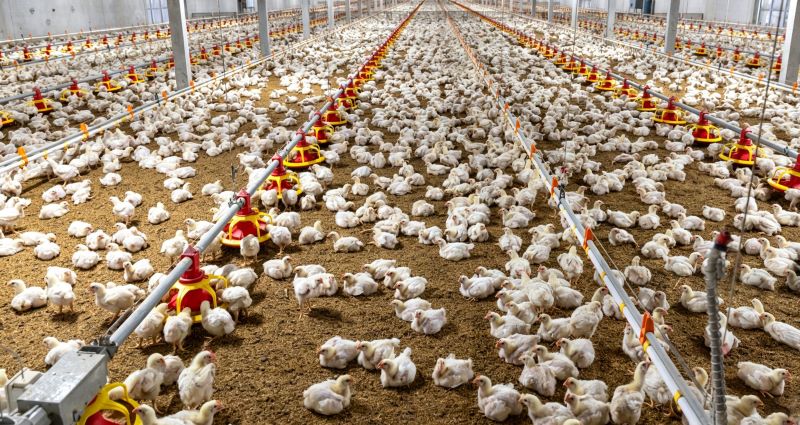
Precision feeding delivers exact feed amounts based on real-time bird weight and intake patterns, minimizing waste. For a 10,000-bird flock with a 40-day cycle and average feed conversion ratio (FCR) of 1.6, total feed consumption reaches roughly 16,000 kg per cycle.
Manual feeding typically wastes 5–10% of feed due to spillage, spoilage, and uneven distribution. Precision systems cut this waste to under 2%. Taking a conservative 6% reduction, annual savings for 6 cycles amount to 5,760 kg of feed.
At $450 per metric ton, this equals $2,592 saved yearly. Additionally, improved FCR (by 0.05–0.08) adds further savings. Precision feeding thus offers measurable economic returns while reducing environmental footprint.
Share this:
Other Posts
-
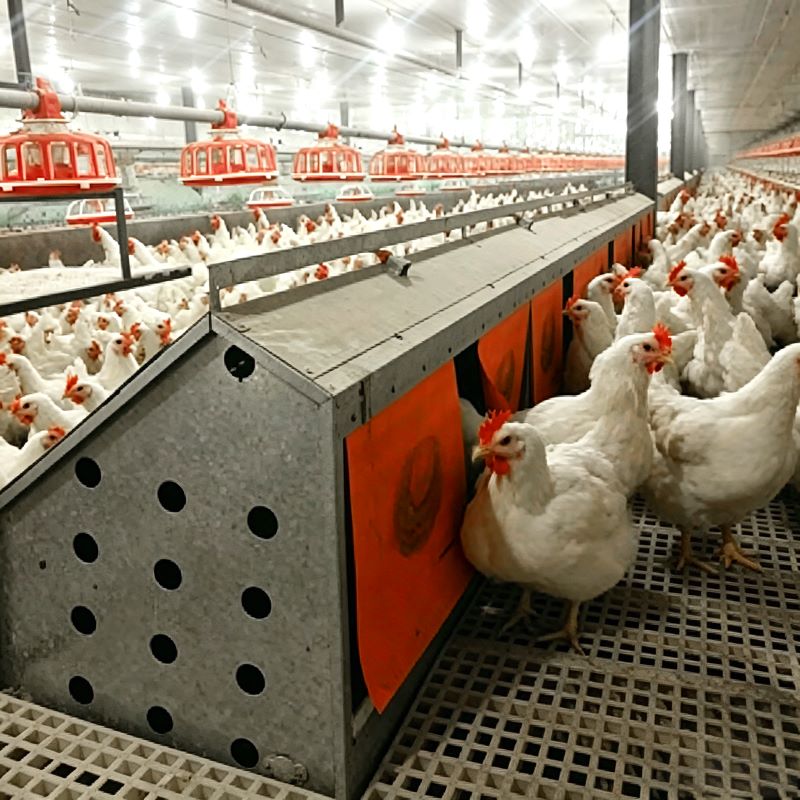
Manual Egg Collection vs. Automated Systems: How Much Labor Cost Can a Nest Box Save You?
For broiler breeder farms, egg collection remains one of the most labor-intensive tasks. Manual collection requires workers to walk through the house multiple times daily, bending and reaching into each nest. For a 10,000-bird flock, manual collection typically consumes 4–6 labor hours per day. At a farm with 50,000 breeders, that translates to 20–30 hours…
-
Synergistic Design of Floor-Level Inlets and Ridge Outlets: An Airflow Optimization Scheme Combining Natural and Mechanical Ventilation
Effective ventilation is critical for poultry house air quality. This scheme integrates floor-level inlets with ridge outlets, blending natural and mechanical forces. Floor-level inlets, placed along side walls near the litter, allow fresh air to enter at bird level. Ridge outlets, installed at the roof peak, enable warm, stale air to rise naturally. During mild…
-
Feed Loss and Quality Degradation in Poultry Farming: A Comparative Analysis of Manual Feeding vs Automated Feeding Systems
Feed loss and quality degradation are key challenges affecting efficiency in poultry production. This article compares manual and automated feeding systems in terms of feed spillage and deterioration risks. Manual feeding is often associated with uneven distribution, higher spillage rates, and increased exposure to environmental factors that may affect feed quality. Automated systems improve feeding…
-
Optimizing Maintenance and Spare Parts Inventory: Preventive Strategies to Reduce Environmental Control System Failures
Environmental control systems are critical for poultry house performance. Unplanned fan or sensor failures during heat waves can cause catastrophic losses. A preventive maintenance strategy significantly reduces this risk. Key elements include: scheduled inspections of fans, motors, and belts every 500 operating hours; calibration checks for temperature and humidity sensors monthly; and cleaning of cooling…
Product Categories
Subscribe To Product News
Leave your email address and receive our latest product updates