Your cart is currently empty!
+86 15863276370

Evaporative cooling pads can help reduce incoming air temperature in poultry houses, but their performance depends on more than the cooling pad itself. Before installation, farms should evaluate three key conditions: house sealing, fan capacity, and water supply.
1. Is the poultry house sufficiently sealed?
Evaporative cooling works best when incoming air follows the intended path through the cooling pads. Uncontrolled openings, damaged curtains, or air leakage may allow outside air to bypass the pads, reducing cooling efficiency and affecting airflow distribution. The house should therefore be inspected for unnecessary air leaks before system installation.
2. Is the fan configuration suitable?
Cooling pads must work together with properly designed exhaust fans. The fan system should create sufficient negative pressure to draw outside air evenly through the pad area and across the poultry house. Fan capacity, house dimensions, inlet area, and ventilation design should be evaluated as one system rather than as separate components.
3. Is the water supply adequate and stable?
The water system should provide sufficient flow for uniform pad wetting during operation. Water quality is also important because high mineral content or sediment can contribute to scaling and uneven water distribution over time. Farms should assess water flow, storage capacity, filtration, and basic water quality before installation.
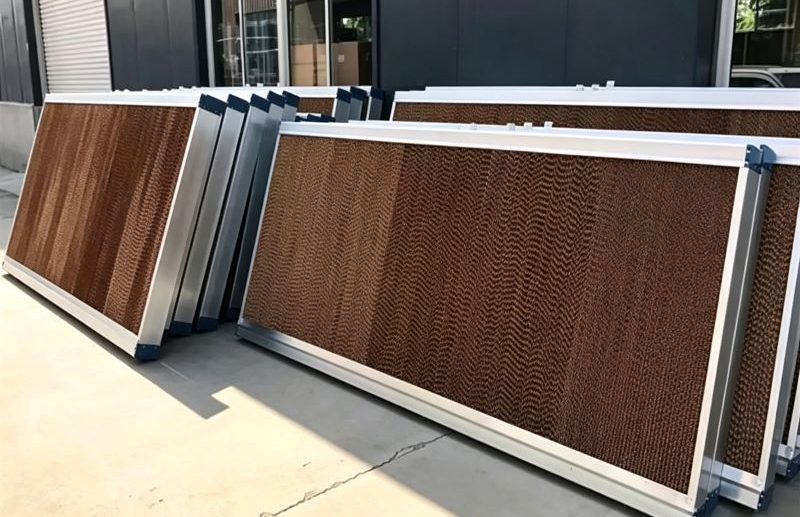
A successful evaporative cooling system is not determined by pad size alone. Proper house sealing, matched ventilation capacity, and reliable water conditions are all essential parts of system design. Evaluating these factors before installation can help farms select a configuration better suited to their climate and poultry house requirements.
Share this:
Other Posts
-
Adjusting Vaccination Programs in Hot Seasons – Timing and Stress Control Strategies Backed by Field Data
High temperatures don’t just affect bird comfort – they also impact vaccine effectiveness. Heat stress elevates corticosterone levels, which can suppress immune responses. Vaccinating during peak heat may add extra stress, reducing antibody production and increasing disease risk. Our field study on 50,000 broilers compared two vaccination schedules: morning (8–10 AM, temperature <26°C) vs. midday…
-
Rainwater Harvesting and Water Recycling Systems: Evaluating a Sustainable Solution to Alleviate Water Stress in Hot Seasons
Water scarcity during hot seasons challenges poultry farms, especially for cooling pads and drinking lines. Rainwater harvesting captures runoff from roofs, stores it in tanks, and treats it for non-potable uses. When combined with recycling systems that filter and reuse water from cooling pads, overall freshwater demand drops significantly. A field study on a 50,000-bird…
-
Quantifying Feed Waste in Manual Poultry Feeding: Spillage, Mold Contamination, and Feed Refusal Analysis
Feed efficiency is a critical factor in determining the profitability of commercial poultry production. In manual feeding systems, feed waste is often underestimated, yet it can significantly impact operational costs. This article provides a quantitative breakdown of three major feed loss channels: spillage, mold contamination, and feed refusal. Spillage is one of the most visible…
-
Optimizing Maintenance and Spare Parts Inventory: Preventive Strategies to Reduce Environmental Control System Failures
Environmental control systems are critical for poultry house performance. Unplanned fan or sensor failures during heat waves can cause catastrophic losses. A preventive maintenance strategy significantly reduces this risk. Key elements include: scheduled inspections of fans, motors, and belts every 500 operating hours; calibration checks for temperature and humidity sensors monthly; and cleaning of cooling…
Product Categories
Subscribe To Product News
Leave your email address and receive our latest product updates