Your cart is currently empty!
+86 15863276370

Poultry house orientation is a fundamental design parameter that directly affects thermal comfort, ventilation efficiency, and broiler performance. In commercial poultry production systems, improper building orientation can significantly increase solar heat gain and raise the risk of heat stress, especially in hot climate regions.
An east–west oriented poultry house is typically more exposed to direct solar radiation on its long sidewalls, particularly during afternoon hours when external temperatures are highest. This results in higher cumulative heat load inside the structure, increasing the demand on ventilation and cooling systems. Under field operation conditions, this layout can contribute to unstable internal temperatures and reduced environmental control efficiency if shading systems are not properly implemented.
In contrast, a north–south orientation distributes solar exposure more evenly throughout the day. This reduces prolonged heat accumulation on a single wall surface and helps maintain more stable internal thermal conditions. As a result, ventilation systems operate more efficiently, and overall temperature fluctuations inside the poultry house are reduced.
Quantitative field-based evaluations indicate that a properly designed north–south oriented poultry house, combined with shading and insulation measures, can reduce solar heat gain by approximately 15–30% compared to poorly protected east–west layouts. This improvement contributes to better feed intake stability, reduced heat stress incidence, and improved flock uniformity.
Additional design factors such as roof insulation, sidewall height, overhang structure, and fan placement further influence overall thermal performance. Therefore, poultry house orientation should be considered as part of an integrated environmental control system rather than a standalone design decision.
Share this:
Other Posts
-
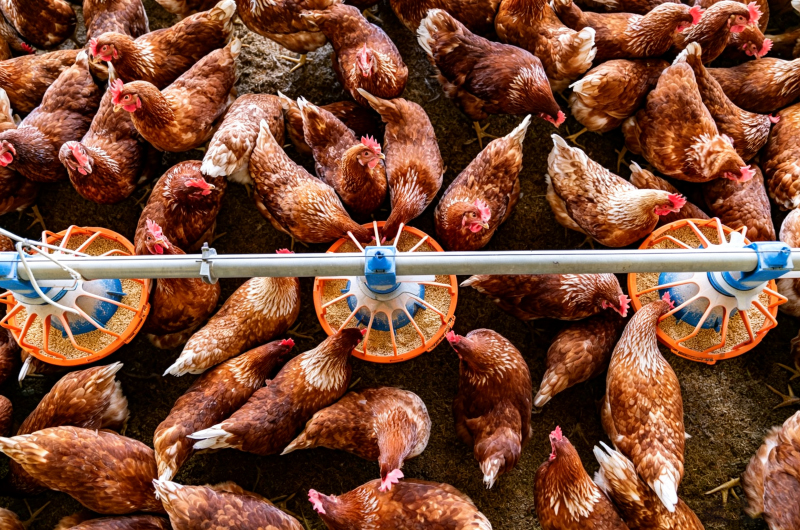
Quantifying Feed Loss in Poultry Farming: Spillage, Spoilage, and Feed Refusal Analysis
Feed loss is a key challenge in poultry production, directly affecting economic efficiency and resource utilization. This article provides a quantitative analysis of three primary sources of feed loss: spillage, spoilage, and feed refusal. By examining their causes, typical loss ratios, and influencing factors, the study highlights practical strategies for reducing waste. Optimizing feeder design,…
-
Nipple Drinker vs. Traditional Trough: Which Suits Your Poultry Farm Better?
Watering system choice impacts bird health, water consumption, and labor. Nipple drinkers provide fresh, clean water on demand, reducing spillage and litter moisture. This lowers ammonia emission and footpad dermatitis incidence. Nipples also prevent fecal contamination, improving biosecurity. However, initial cost is higher, and birds need training to use them. Traditional troughs are cheaper and…
-
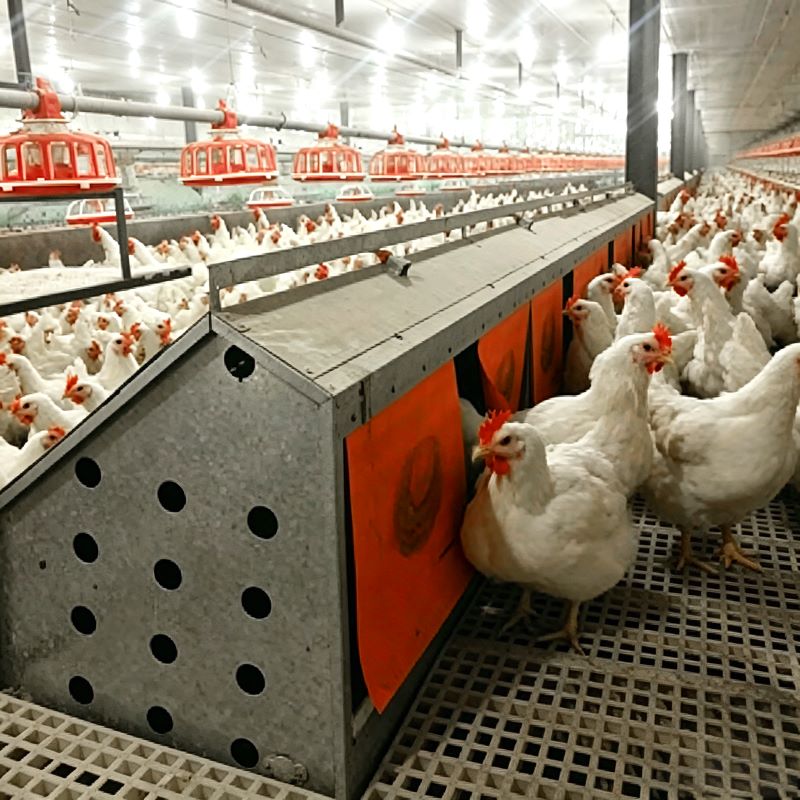
Manual Egg Collection vs. Automated Systems: How Much Labor Cost Can a Nest Box Save You?
For broiler breeder farms, egg collection remains one of the most labor-intensive tasks. Manual collection requires workers to walk through the house multiple times daily, bending and reaching into each nest. For a 10,000-bird flock, manual collection typically consumes 4–6 labor hours per day. At a farm with 50,000 breeders, that translates to 20–30 hours…
-
Variable-Frequency Fans and Multi-Stage Cooling Linkage Control: Response Mechanism of Smart Environmental Control Systems to Extreme Heat
Extreme heat events threaten poultry health and productivity. Smart environmental control systems employ variable-frequency fans (VFFs) and multi-stage cooling linkage to respond effectively. VFFs automatically adjust speed based on real-time temperature, providing low airflow during mild heat and maximum speed during heatwaves. This saves energy while maintaining bird comfort. Multi-stage cooling activates sequentially: first, tunnel…
Product Categories
Subscribe To Product News
Leave your email address and receive our latest product updates