Your cart is currently empty!
+86 15863276370

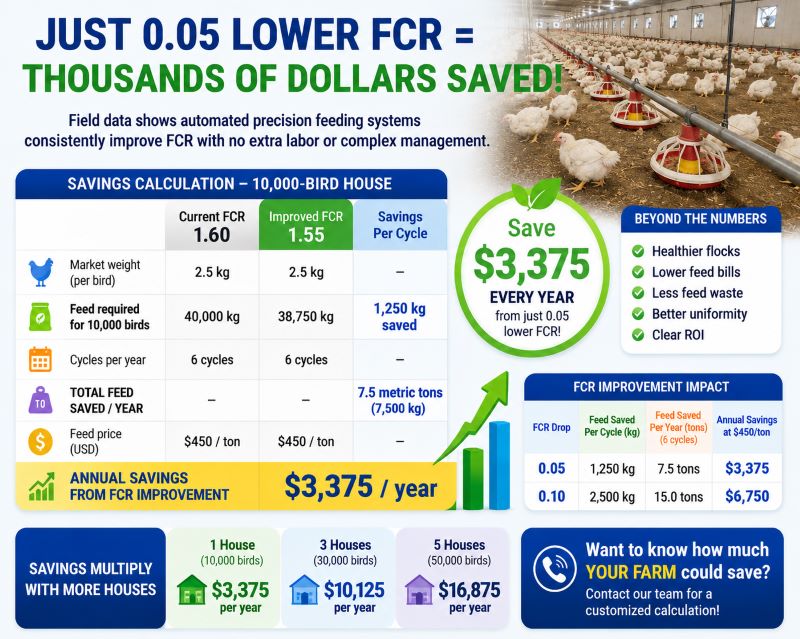
What if reducing your feed conversion ratio (FCR) by just 0.05 could save thousands of dollars every year? Our latest field data confirms that automated precision feeding systems consistently achieve this gain – with no extra labor or complex management.
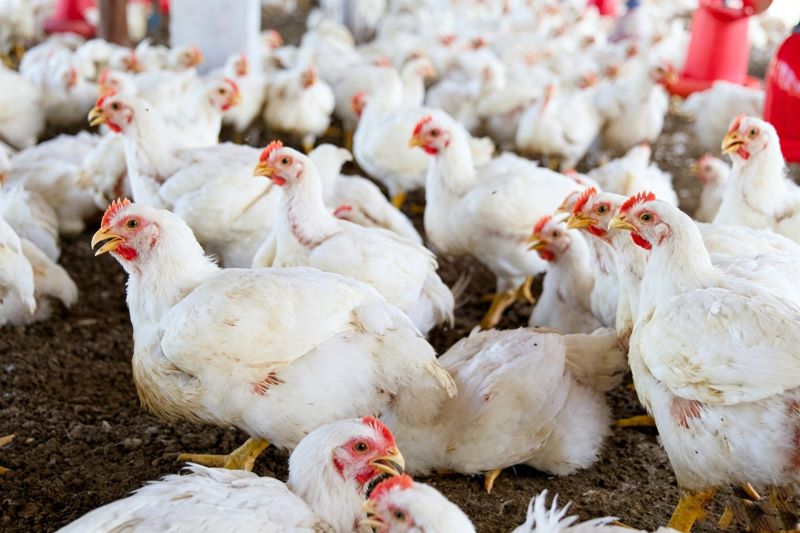
Here’s the math for a standard 10,000‑bird house:
- Average market weight: 2.5 kg per bird
- FCR drops from 1.60 to 1.55
- Feed saved per cycle: 1,250 kg
- With 6 cycles per year → 7.5 metric tons of feed saved
At today’s feed price of $450/ton, that’s **$3,375 saved annually** – from FCR improvement alone. If your farm has multiple houses, the savings multiply. And when FCR improves by 0.10, the benefit doubles.
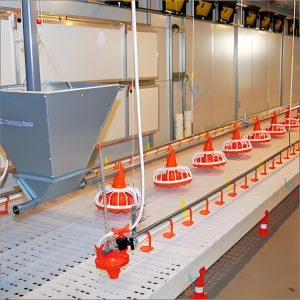
But the real story is not just math. Automated feeders adjust portions based on real bird weight and intake patterns. They eliminate overfeeding and reduce waste. The result: healthier flocks, lower feed bills, and a clear return on investment.
Want to know how much your farm could save? Contact our team for a customized calculation.
Share this:
Other Posts
-
Poultry Feed Auger Diameter: 45mm vs 60mm vs 75mm – How to Choose
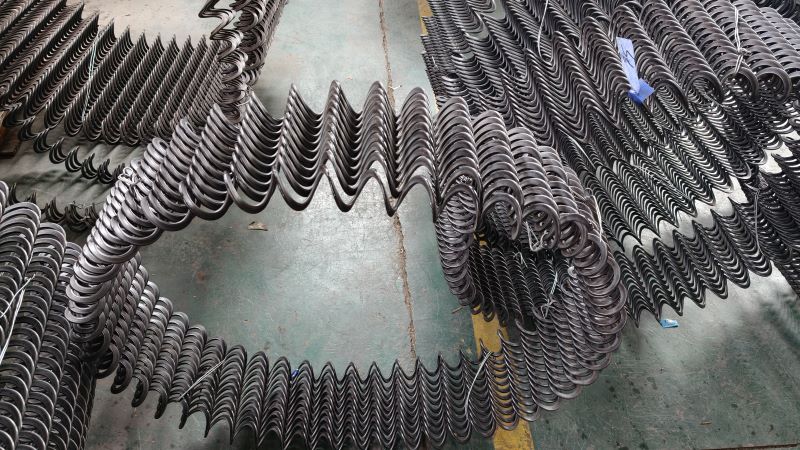
Feed augers (screw conveyors) are the core of automated feeding systems, moving feed from silos to feeder lines. The three most common diameters for poultry are 45mm, 60mm, and 75mm. Correct selection impacts delivery efficiency and system longevity. 45mm Auger – Small Farms or Main Feed LineDelivers 250–500 kg/h. Suitable for farms under 5,000 birds,…
-
Flock Uniformity and Group Management in Poultry Farms: Improving Heat Distribution and Environmental Control
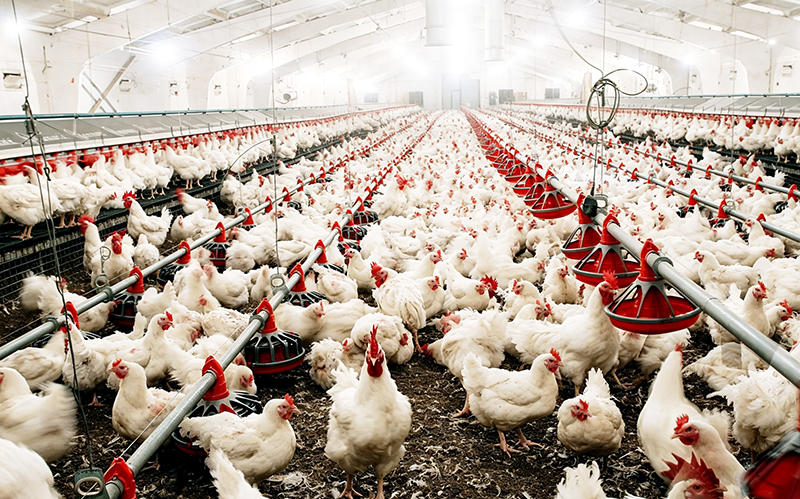
Flock uniformity is an important factor in poultry house management. Significant differences in body weight can create uneven feeding requirements and differences in individual heat production. Grouping birds by size or production stage can help farmers manage these variations and improve environmental control, although the actual effect depends on flock density, climate, ventilation, and management…
-
El Niño Impact on Broiler House Climate Control: Adaptive Ventilation and Cooling Strategies for Temperature and Humidity Management
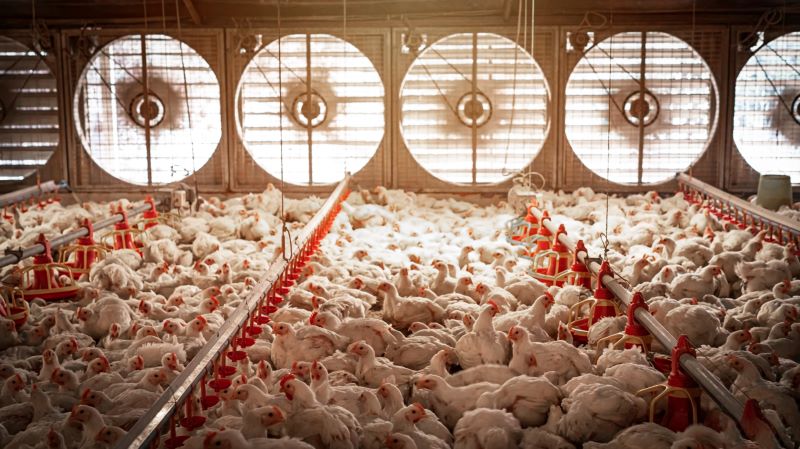
El Niño events may create additional challenges for poultry production by influencing temperature patterns, humidity levels, and precipitation conditions in some regions. This article analyzes the potential impacts of climate fluctuations on broiler house environmental management and discusses adaptive strategies including ventilation system upgrades, evaporative cooling coordination, and real-time environmental monitoring. Effective climate control requires…
-
Comparison of Disease Risks in Open-Sided and Closed Poultry Houses under El Niño–Induced Precipitation Extremes
During El Niño events, heavy rainfall or prolonged drought alter housing microclimates, affecting disease risks differently in open-sided and closed poultry houses. In open-sided houses, heavy rainfall increases litter moisture and ammonia levels, promoting coccidiosis and pododermatitis. Dry conditions increase airborne dust, irritating the respiratory tract and increasing the incidence of colibacillosis. Closed houses with…
Product Categories
Subscribe To Product News
Leave your email address and receive our latest product updates