Your cart is currently empty!
+86 15863276370

Choosing a suitable nest box system for a breeder farm involves more than comparing purchase prices. Nest design can affect how hens access nesting areas, how eggs are collected, and how efficiently the house can be maintained.
Group nest boxes provide a shared nesting area for multiple hens. Depending on the design, they can make efficient use of floor space and work well with centralized egg collection systems. Their performance depends on sufficient nesting capacity, appropriate placement, suitable internal conditions, and regular cleaning. If access or capacity is inadequate, competition for nesting space may increase.
Individual nest boxes provide separate nesting compartments. This layout can help organize nesting spaces and make individual nest locations easier to identify. However, it may require more structural components and careful planning to provide sufficient access for the flock. Cleaning and egg collection arrangements also depend on the specific design.
For breeder farms, nest selection should consider bird numbers, male-to-female ratio, nesting capacity, house dimensions, egg collection method, hygiene requirements, and labor availability. Nesting behavior and floor eggs should also be monitored after installation, because equipment alone cannot guarantee that hens will use the intended nesting areas.
There is no universally superior option for every breeder flock. A well-designed group system may suit one house, while individual compartments may be more appropriate for another. The best choice is the system that matches the farm’s production plan, supports practical daily management, and allows reliable egg handling and cleaning.
Before purchasing, compare the complete layout and operating requirements—not just the price per nest.
Share this:
Other Posts
-
How to Choose Your Poultry System
How to Choose the Right Poultry Farming System and Equipment Selecting the right farming method and equipment starts with evaluating your farm scale, climate conditions, and target market. Floor rearing is suitable for welfare-focused farms, offering lower initial investment, easier all-in/all-out sanitation management, and relatively simple litter handling. Cage systems maximize stocking density but face…
-
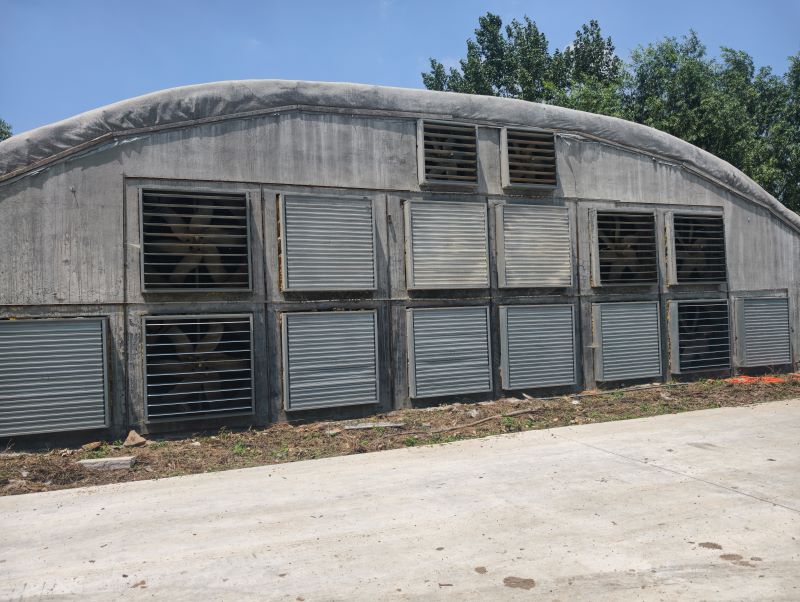
Poultry Fan Noise Suddenly Increases? 3-Step Troubleshooting Guide
A sudden increase in poultry fan noise can indicate problems with blades, bearings, motors, or mounting components. This article provides a three-step inspection method covering fan blades, moving components, and installation structures. Regular cleaning and maintenance can help identify abnormal vibration and mechanical problems early. Safe power isolation is essential before inspection, while electrical and…
-
Linking Payback Period to Feed Savings: A Model for Automated Feeding Systems
The payback period of automated feeding systems directly correlates with feed savings achieved. A simple model expresses payback (months) = equipment cost / (annual feed saving × feed price). For a 10,000-bird house, automated feeders typically cut waste by 5–10%, saving 6–12 tons of feed yearly. At $450/ton, that equals $2,700–$5,400 annual saving. With equipment…
-
2026–2030 Adoption Forecast for Floor Rearing Automation: Which Technology Becomes Standard First?
Over the next five years, three automation technologies will lead floor rearing adoption. Automated feeding systems top the list. Their clear payback (12–24 months) and direct feed savings (5–10%) make them the first standard feature globally. Tunnel ventilation with evaporative cooling follows closely. Rising heat waves and climate volatility push this system from optional to essential in tropical…
Product Categories
Subscribe To Product News
Leave your email address and receive our latest product updates