Your cart is currently empty!
+86 15863276370

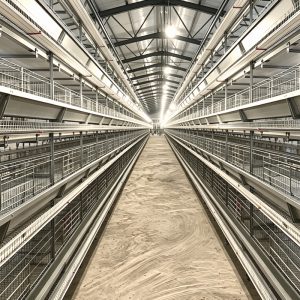
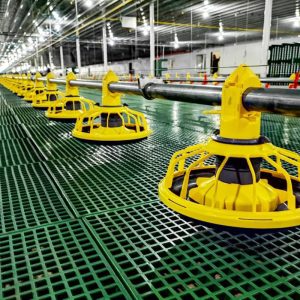
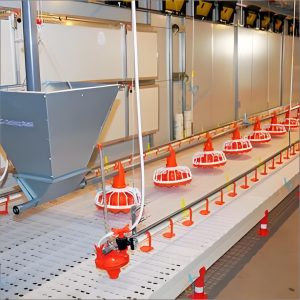
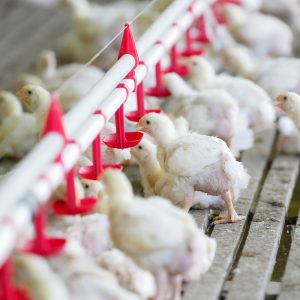
Feed is a major operating expense in poultry production, making feeding efficiency an important consideration for farms of different sizes. Precision feeding systems use equipment such as automatic feeders, feed-level sensors, timers, and control units to support consistent feed delivery and reduce repetitive manual work.
Small farms may benefit from simpler automation that addresses the most time-consuming feeding tasks. Their investment decisions should focus on equipment affordability, maintenance requirements, and whether labor savings justify the initial cost.
Medium-sized farms often need to balance feeding capacity, workforce efficiency, and system reliability. A suitable configuration may help standardize daily operations, but the benefits should be measured against electricity use, maintenance, and any additional installation costs.
Large commercial farms may gain operational advantages from integrated feeding lines and centralized control. However, higher production capacity does not automatically guarantee a better return. System design, feed management, equipment utilization, and staff training remain important.
A practical evaluation begins with measurable farm data:
Annual Net Benefit = Feed Cost Savings + Labor Cost Savings − Additional Operating Costs
The estimated payback period can then be calculated as:
Payback Period = Initial Investment ÷ Annual Net Benefit
These calculations should use actual feed consumption, local feed prices, labor hours, electricity costs, maintenance expenses, and installation costs. Feed savings should be verified rather than assumed, and the analysis should account for seasonal and production-cycle differences.
Ultimately, the most suitable precision feeding system is not necessarily the largest or most automated option. It is the configuration that matches the farm’s production scale, operating conditions, and budget while delivering measurable, sustainable benefits.
Share this:
Other Posts
-
Regional Customization Strategies: How Floor Rearing Equipment Suppliers Can Tailor Products and Pricing for High‑Growth Markets
High‑growth markets differ in climate, farm scale, and purchasing power, requiring suppliers to adopt regional customization. In Southeast Asia, hot and humid conditions demand corrosion‑resistant components and high‑dust‑tolerant ventilation. Basic semi‑automated feeders at competitive price points suit smallholder budgets.In the Middle East, extreme heat requires oversized tunnel fans and evaporative cooling pads. Customers prefer full…
-
Empirical Analysis of 5–10% Feed Savings in a 10,000-Broiler Farm
Feed cost accounts for the largest proportion of expenses in broiler farming, making efficiency improvements highly valuable. This study presents an empirical analysis of achieving 5–10% feed savings in a 10,000-broiler farm through optimized management and automated equipment. The research focuses on the application of precision feeding systems, uniform feed distribution, and reduced feed wastage.…
-
Indonesia, Vietnam, the Philippines: Opportunities and Entry Strategies for Floor Rearing Equipment in Southeast Asia’s Three Key Markets
Southeast Asia’s poultry sector is shifting from backyard farming to commercial production, creating strong demand for floor rearing equipment. Indonesia, Vietnam, and the Philippines represent the region’s most promising markets. Indonesia has the largest broiler population but faces fragmentation. Success requires affordable semi‑automated systems and local after‑sales support. Vietnam’s market is more structured, with growing…
-
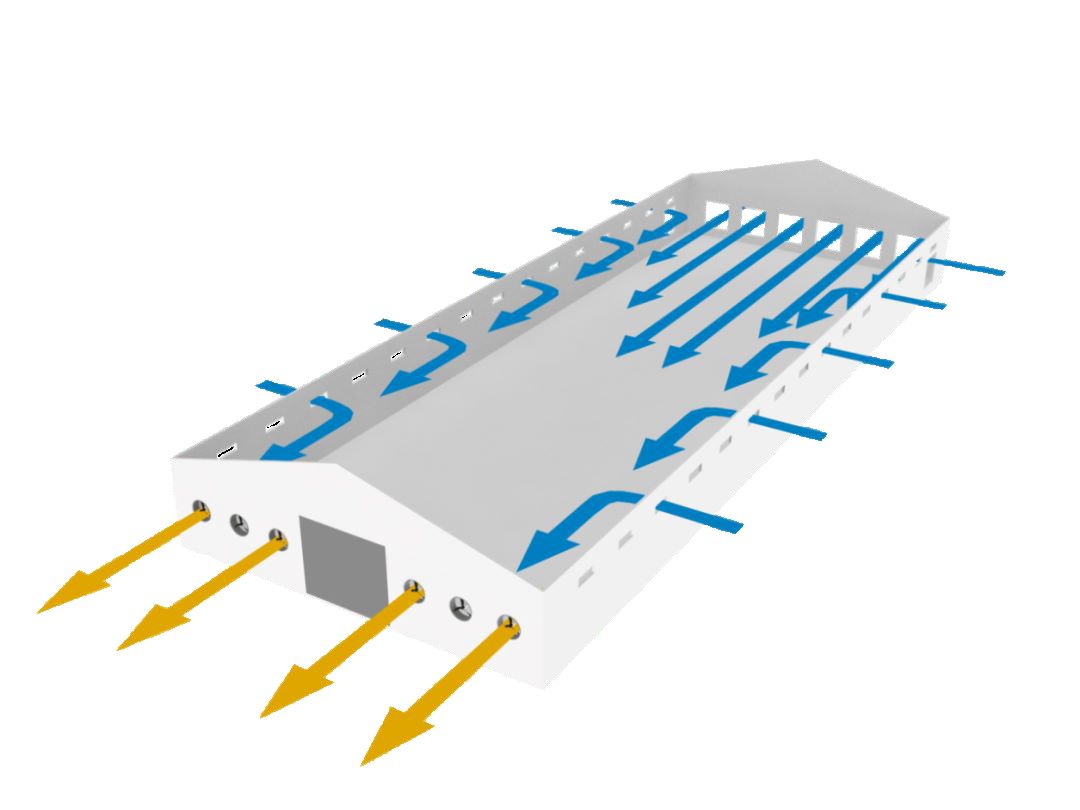
Tunnel Ventilation vs Longitudinal Ventilation in Poultry Houses: How to Select the Right Airflow System for Different Farm Designs
Ventilation system selection is one of the most important factors affecting environmental control efficiency in modern poultry houses. Different house structures, climate conditions, and production scales require different airflow strategies. Among commercial poultry ventilation solutions, tunnel ventilation and longitudinal ventilation are two widely applied systems. Tunnel ventilation works by introducing fresh air from one end…
Product Categories
Subscribe To Product News
Leave your email address and receive our latest product updates