Your cart is currently empty!
+86 15863276370

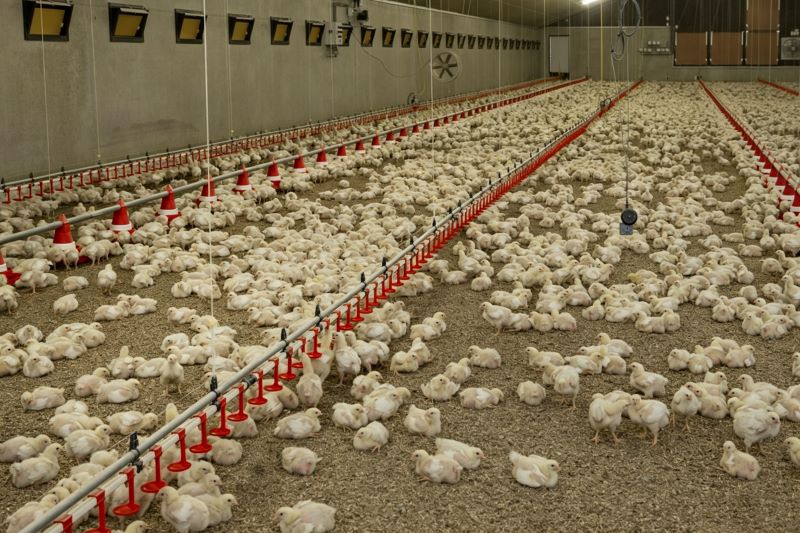
High temperatures don’t just affect bird comfort – they also impact vaccine effectiveness. Heat stress elevates corticosterone levels, which can suppress immune responses. Vaccinating during peak heat may add extra stress, reducing antibody production and increasing disease risk.
Our field study on 50,000 broilers compared two vaccination schedules: morning (8–10 AM, temperature <26°C) vs. midday (1–3 PM, >34°C). Birds vaccinated in the morning showed 22% higher antibody titers against Newcastle disease and 18% lower mortality during the following heatwave. Those vaccinated at midday had a 15% higher rate of post‑vaccination respiratory reactions.
Key recommendations for hot‑season immunization:
- Schedule vaccinations at dawn or after sunset when birds are less heat‑stressed.
- Avoid vaccinating on days with forecast temperatures above 32°C.
- Combine vaccination with electrolyte supplements (vitamin C, E) one day before and after.
- Use intranasal or drinking‑water vaccines instead of injection when possible to reduce handling stress.
Implementing these simple timing adjustments can cut vaccine failure risk by nearly one‑third, making your disease prevention program more reliable even in extreme heat.
Share this:
Other Posts
-
2026–2030 Adoption Forecast for Floor Rearing Automation: Which Technology Becomes Standard First?
Over the next five years, three automation technologies will lead floor rearing adoption. Automated feeding systems top the list. Their clear payback (12–24 months) and direct feed savings (5–10%) make them the first standard feature globally. Tunnel ventilation with evaporative cooling follows closely. Rising heat waves and climate volatility push this system from optional to essential in tropical…
-
Dynamic Feed Optimization Model Cuts Waste, Boosts Broiler Performance
A new trial shows that a dynamic feed optimization model based on age‑weight curves significantly improves broiler production. In a 35‑day test with 10,000 Ross 308 broilers, the model reduced feed waste from 8.2% to 2.2% (a 6% absolute cut), lowered feed conversion ratio (FCR) by 7.9%, and increased final body weight from 1.85 kg…
-
Empirical Estimation of 50% Labor Cost Reduction: A Cost-Saving Model for Automated Feeding in a 10,000-Bird Broiler Farm
This study quantifies labor cost savings from switching to automated feeding in a 10,000-bird broiler farm. Manual feeding requires two full-time workers for feed bag handling, transport, and daily distribution. Annual labor costs include wages (15/hour×8h/day×365days×2workers=15/hour×8h/day×365days×2workers=87,600), plus benefits, recruitment, and training overhead (estimated 25% of wages, 21,900)andmanagementsupervision(21,900)andmanagementsupervision(5,000). Total manual feeding cost: $114,500. Automated feeding uses a…
-
Poultry Fan Noise Suddenly Increases? 3-Step Troubleshooting Guide
A sudden increase in poultry fan noise can indicate problems with blades, bearings, motors, or mounting components. This article provides a three-step inspection method covering fan blades, moving components, and installation structures. Regular cleaning and maintenance can help identify abnormal vibration and mechanical problems early. Safe power isolation is essential before inspection, while electrical and…
Product Categories
Subscribe To Product News
Leave your email address and receive our latest product updates