Your cart is currently empty!
+86 15863276370

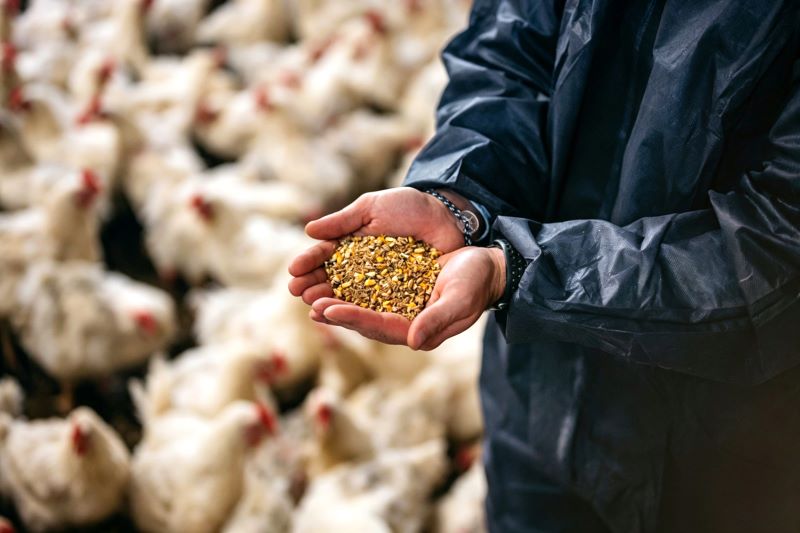
Feed constitutes 60–70% of total broiler production costs. Automated feeding systems reduce feed waste through precise portion control, creating a measurable input‑output economic model.
Input (Investment)
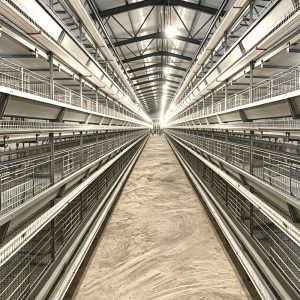
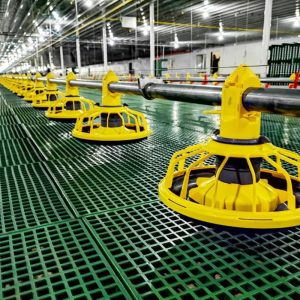
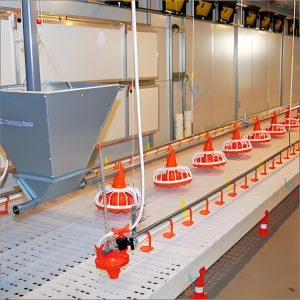
- Equipment: silo, auger/conveyor, pan feeders, sensors, controller
- 10,000‑bird house cost: $12,000–$15,000 (installed)
Output (Annual Savings from Feed Alone)
- Manual feeding waste: 8–10% of total feed
- Automated feeding waste: 2–3%
- Net feed saving: 5–7%
- Annual feed consumption (10,000 birds, 40‑day cycle, 6 cycles/year): ~96 tons
- Feed saving: 4.8–6.7 tons/year
- At $450/ton: $2,160–$3,015 saved annually from feed reduction
Extended Output (Additional Savings)
- Labor: ~$10,000/year
- Medication & mortality: ~$1,500/year
- Total annual saving: $13,660–$14,515
ROI Calculation
Payback period (feed savings only) = $13,500 ÷ $2,600 = 5.2 years
Payback (total savings) = $13,500 ÷ $14,000 ≈ 1 year (11.6 months)
The model shows that while feed savings alone justify automation over 5 years, combining labor and health benefits shortens payback dramatically. For farms with high feed prices or larger scale, payback drops below 10 months. Automated feeding is not just a cost‑cutting tool—it is a high‑return investment.
Share this:
Other Posts
-
Labor Substitution Effect of Automated Feeding Systems: Empirical Evidence of Labor Savings from Manual Bag Handling to Pneumatic Conveying
This study quantifies labor savings when replacing manual bag feeding with automated pneumatic conveying in a 10,000-bird broiler farm. Manual feeding involves lifting, carrying, tearing, and scattering 25–40 kg bags daily. Two full‑time workers spend 6–8 hours per day on these tasks, equivalent to 2,080–2,600 working hours annually per worker. Automated feeding uses a silo,…
-
The Future of Large-Scale Smart Poultry Farming
The outlook for large-scale smart poultry farming is exceptionally promising globally, driven by the need to feed a growing population sustainably. These technologically advanced farms represent a significant evolution from traditional methods, integrating automation, data analytics, and the Internet of Things (IoT). Key development advantages are substantial. Firstly, precision farming using sensors and AI monitors…
-
Linking Payback Period to Feed Savings: A Model for Automated Feeding Systems
The payback period of automated feeding systems directly correlates with feed savings achieved. A simple model expresses payback (months) = equipment cost / (annual feed saving × feed price). For a 10,000-bird house, automated feeders typically cut waste by 5–10%, saving 6–12 tons of feed yearly. At $450/ton, that equals $2,700–$5,400 annual saving. With equipment…
-
Prevent Mold, Protect Health: How Automated Feeding Reduces Gut Disease and Veterinary Costs
Manual feeding often exposes feed to moisture, leading to mold growth and mycotoxins that damage gut health. Automated feeding systems paired with sealed silos keep feed dry and fresh from storage to delivery. This reduces the risk of intestinal diseases like necrotic enteritis, lowering mortality and veterinary expenses. For a 10,000-bird house, annual savings on…
Product Categories
Subscribe To Product News
Leave your email address and receive our latest product updates