Your cart is currently empty!
+86 15863276370

Investing in complete poultry automation equipment is an important decision for modern farms seeking higher efficiency, stable production, and improved management capabilities. However, selecting the wrong equipment configuration or supplier can create unnecessary operational challenges. Understanding common purchasing mistakes helps farmers make more informed investment decisions.
1. Focusing Only on Equipment Price
Initial cost is an important consideration, but purchasing decisions should also include equipment durability, energy consumption, maintenance requirements, and long-term operating efficiency. A lower purchase price does not always represent the best overall value.
2. Ignoring Farm Design and Equipment Compatibility
Automation systems should be matched with poultry house structure, production capacity, and management requirements. Feed lines, drinking systems, ventilation equipment, and environmental controllers need to work together as an integrated solution.
3. Selecting Equipment Without Considering Local Climate Conditions
Different regions have different requirements for ventilation, cooling, and environmental control. Farms in hot or humid areas may require stronger ventilation capacity and optimized cooling solutions compared with farms in moderate climates.
4. Underestimating After-Sales Support and Technical Service
Automated farming systems require proper installation, adjustment, and maintenance. Reliable technical support, spare parts availability, and installation guidance are important factors that influence long-term equipment performance.
5. Lack of Future Expansion Planning
A poultry automation system should consider future farm development. Equipment design with flexible expansion capability can help farms adapt to increased production capacity or management upgrades.
Choosing complete poultry automation equipment requires a comprehensive evaluation of technology, farm conditions, supplier capability, and long-term operational goals. A well-planned automation solution can help poultry farms improve management efficiency and build a more stable production system.
Share this:
Other Posts
-
Quantifying Feed Waste in Manual Poultry Feeding: Spillage, Mold Contamination, and Feed Refusal Analysis
Feed efficiency is a critical factor in determining the profitability of commercial poultry production. In manual feeding systems, feed waste is often underestimated, yet it can significantly impact operational costs. This article provides a quantitative breakdown of three major feed loss channels: spillage, mold contamination, and feed refusal. Spillage is one of the most visible…
-
Equipment + Service” Model: The Next Growth Driver in Biosecurity Equipment Market
As disease outbreaks become more frequent, poultry farms are shifting from buying standalone biosecurity equipment to seeking integrated solutions. The “equipment + service” model is emerging as a key growth driver in this space. This model combines hardware—such as automated disinfection channels, air filtration systems, and smart access controls—with value-added services like biosecurity audits, sanitation…
-
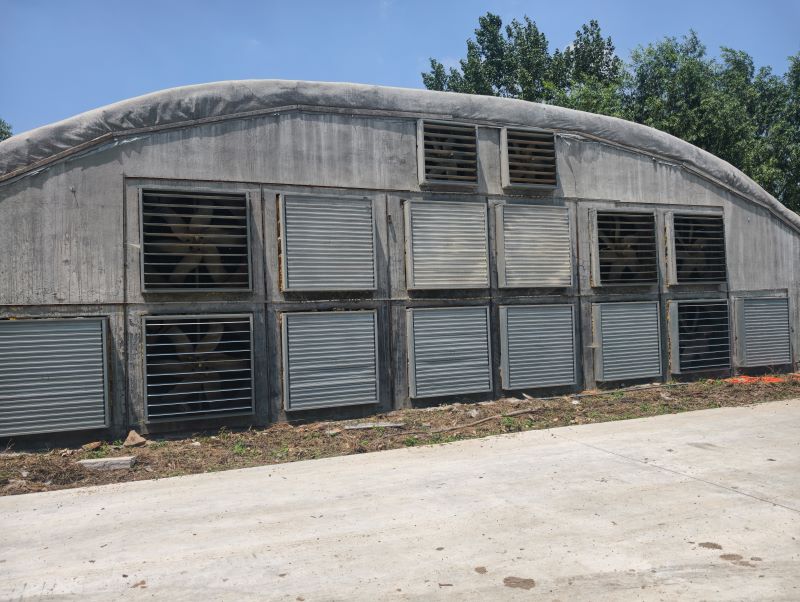
Poultry Fan Noise Suddenly Increases? 3-Step Troubleshooting Guide
A sudden increase in poultry fan noise can indicate problems with blades, bearings, motors, or mounting components. This article provides a three-step inspection method covering fan blades, moving components, and installation structures. Regular cleaning and maintenance can help identify abnormal vibration and mechanical problems early. Safe power isolation is essential before inspection, while electrical and…
-
Empirical Analysis of the Effect of Sealed Feed Bins on Feed Mold Control
Feed mold contamination is a major concern in poultry farming, leading to nutrient loss and health risks. This study evaluates the effectiveness of sealed feed bins in controlling mold development under practical farm conditions. A comparative trial was conducted over 90 days in two identical broiler houses. House A used conventional open feed storage, while…
Product Categories
Subscribe To Product News
Leave your email address and receive our latest product updates