Your cart is currently empty!
+86 15863276370

Water scarcity during hot seasons challenges poultry farms, especially for cooling pads and drinking lines. Rainwater harvesting captures runoff from roofs, stores it in tanks, and treats it for non-potable uses. When combined with recycling systems that filter and reuse water from cooling pads, overall freshwater demand drops significantly.
A field study on a 50,000-bird farm during summer showed that a 200 m³ rainwater tank supplied 70% of cooling pad needs. Recycling pad effluent through sedimentation and UV treatment reduced additional freshwater withdrawal by 40%. Total water cost decreased by 35%, while wastewater discharge fell by half.
During drought periods, the system provided a reliable buffer, preventing production losses. Initial investment (tanks, pumps, filters) was recovered within 18 months through water savings. Rainwater harvesting plus recycling offers a low-carbon, resilient solution for hot‑season water stress, suitable for regions with seasonal rainfall and rising temperatures.
Share this:
Other Posts
-
Impact of El Niño on Poultry Immunity and Vaccination Programs in Temperate and Tropical Regions
El Niño events cause abnormal temperature and humidity fluctuations, which directly affect poultry immune responses. In tropical zones, prolonged heat and humidity can suppress vaccine efficacy by increasing stress hormone levels and reducing antibody production. In temperate regions, sudden warming or unseasonable cold may disrupt the stability of vaccine storage and administration, leading to uneven…
-
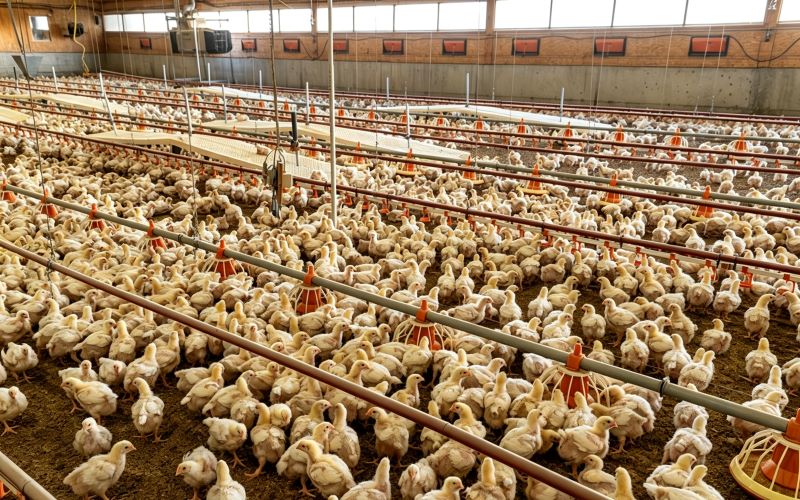
Seasonal Stocking Density Management in Poultry Farming: Dynamic Matching of Bird Density and Heat Load Under Different Temperature Conditions
Stocking density is a critical management factor affecting animal welfare, environmental control efficiency, and production performance in commercial poultry farming. During seasonal temperature changes, maintaining the appropriate bird density becomes increasingly important because heat production from flocks directly influences the internal climate of poultry houses. A seasonal stocking density adjustment model evaluates the relationship between…
-
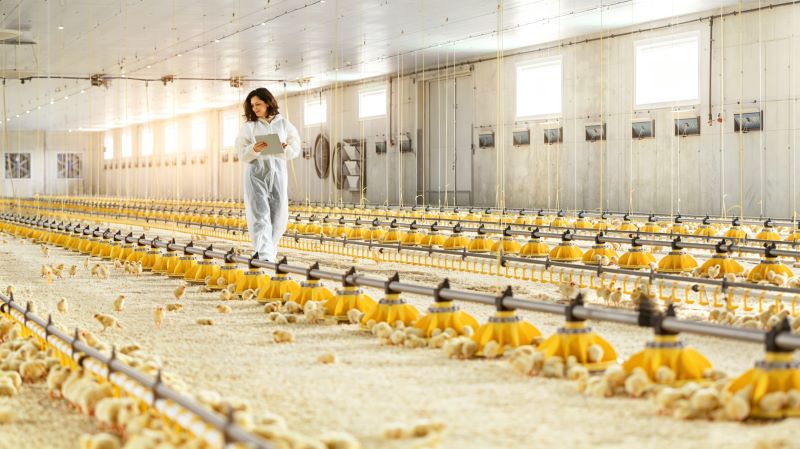
From Labor Shortage to Smart Farming: How Automated Feeding Systems Enable Long-Term Efficiency and Strategic Transformation in Poultry Production
Labor shortages are increasingly influencing poultry production systems worldwide. This article explores how automated feeding systems can reduce reliance on unstable labor while improving feeding consistency, production efficiency, and management standardization. It highlights the transition from labor-intensive to low-labor farming models and emphasizes automation as a long-term strategic investment rather than a short-term cost-saving measure.…
-
Development and Application of THI Early Warning Model: A Risk-Graded Alert Mechanism for Heat Stress Based on THI Thresholds
Heat stress in poultry is closely linked to temperature-humidity index (THI). A THI-based early warning model enables farms to act before birds suffer. The model defines four risk levels: THI < 74 (safe), 74–78 (caution), 79–83 (danger), and > 83 (emergency). Each threshold triggers specific actions—from increasing ventilation to activating cooling pads and adjusting feed…
Product Categories
Subscribe To Product News
Leave your email address and receive our latest product updates