Your cart is currently empty!
+86 15863276370

Water is the most critical nutrient for broilers during hot weather. When temperatures rise, birds can double their water intake. Yet many farms overlook three key factors: drinker density, water temperature, and electrolyte supplementation. Here’s what the data shows.
Drinker Density: Enough Points Matter
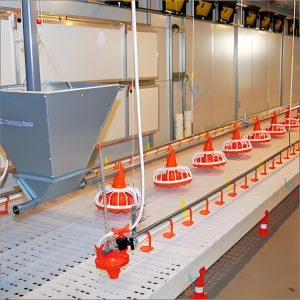
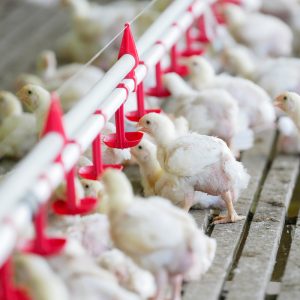
Inadequate drinker access is a primary bottleneck during heat stress. Industry guidelines recommend one nipple drinker per 8–12 birds, with a maximum of 6 meters between drinker lines. In hot regions, this ratio should be tighter—15–19 birds per nipple for broilers under 2.3 kg. Bell drinkers (40 cm diameter) should be provided at 6–8 per 1,000 birds. During peak heat, insufficient drinking points force birds to queue, reducing total water intake and worsening heat stress.
Water Temperature: Cool Water Drives Intake
Broilers consistently prefer and consume more cool water than warm water. Studies show that water temperatures between 18–29°C are generally adequate, but providing water at 15°C can significantly reduce heat stress. Heat pump systems have been shown to maintain drinking water at a consistent 15°C set point, compared to 23–28°C in untreated systems. The principle is simple: cooler water lowers core body temperature and encourages higher intake, which is essential when birds are panting and losing moisture.
Electrolytes: Supplement with Evidence
Vitamin C and electrolyte supplementation can alleviate heat stress effects in broilers. However, not all supplements deliver results—studies have found that sodium bicarbonate and potassium chloride mixtures had no significant effect on measured parameters. More promising data shows that 0.6% potassium chloride supplementation can improve body weight gain by 7.9–14.5% under severe heat stress (35–38°C).
The Bottom Line
An effective summer drinking system combines adequate nipple density, cool water delivery, and targeted electrolyte supplementation. As a poultry equipment manufacturer, we design drinking systems that deliver on all three fronts—helping your birds stay hydrated, healthy, and productive through the hottest months.
Explore our summer-ready drinking systems → [https://www.breedingmachinery.com/product-category/waterline-system/]
This article provides general farming management information and does not constitute professional veterinary advice. For specific issues, please consult a licensed veterinarian.
Share this:
Other Posts
-
From Design to Implementation: A Practical Guide to Biosecurity Layout for Floor Rearing Farms
Effective biosecurity starts with a clear layout. Separate clean and dirty zones clearly. The entry point should include a changing room, footbath, and hand sanitizer. Place sealed fences around the farm to prevent wild birds and rodents from entering. Design a one-way flow: workers move from office to changing room to house, never backward. Vehicles…
-
Top 10 Innovation Trends in Poultry Equipment for 2026: From Operational Tools to Strategic Assets
Poultry equipment is no longer just hardware—it is evolving into data-driven decision engines. Here are ten trends shaping the industry. 1. Digital Twins Go OperationalDigital twins move beyond pilot projects. They now simulate flock growth, test ventilation changes, and predict feed conversion before a single bird enters the house. Key shift: from visualization to actionable…
-
EU’s 2027 Cage Ban: How Long Will the Policy-Driven Boom for Floor Rearing Equipment Last?
The EU will ban conventional cages for laying hens and broilers by 2027. This regulation forces farms to switch to cage‑free systems, primarily floor rearing and aviaries. Consequently, demand for floor rearing equipment—feeders, drinkers, litter management, and ventilation—has surged. Market analysts estimate that the transition affects over 300 million hens in Europe alone. Replacement cycle…
-
Smart Monitoring Systems in Poultry Farming: Efficiency Improvements and Operational Mechanisms
Smart monitoring systems are increasingly used in modern poultry farming to improve production efficiency, environmental stability, and overall flock performance. In commercial broiler production environments, integrated monitoring solutions have been associated with productivity improvements of approximately 20–34%, depending on farm scale, equipment configuration, and management practices. The main mechanism behind this improvement is real-time environmental…
Product Categories
Subscribe To Product News
Leave your email address and receive our latest product updates