Your cart is currently empty!
+86 15863276370

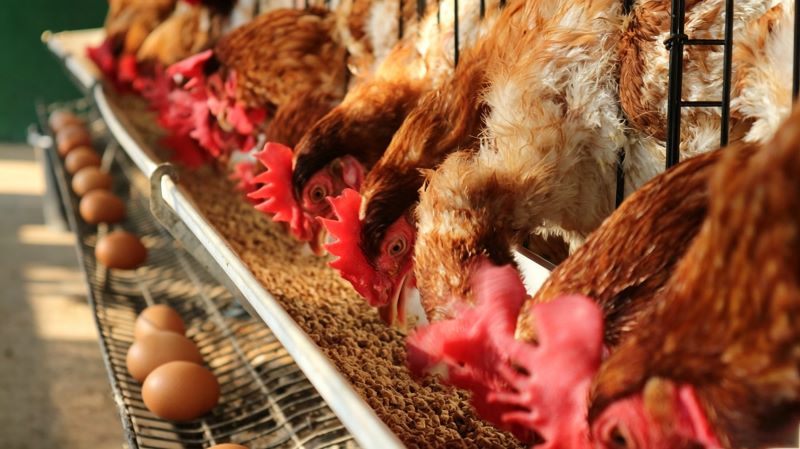
Feed management is one of the most critical factors affecting productivity and cost efficiency in poultry farming. Traditionally, manual feeding has been widely used due to its simplicity and low initial investment. However, with the development of automation technology, precision feeding systems are increasingly replacing manual operations in modern poultry houses.
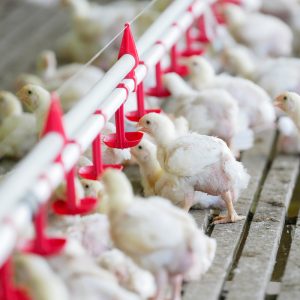
Manual feeding relies heavily on human labor, which often leads to inconsistent feed distribution, timing errors, and higher feed wastage. Variations in worker experience can also affect flock uniformity and growth performance. In large-scale farms, these inefficiencies become more significant, increasing overall operational costs.
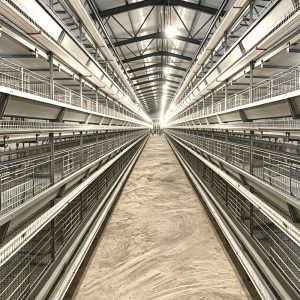
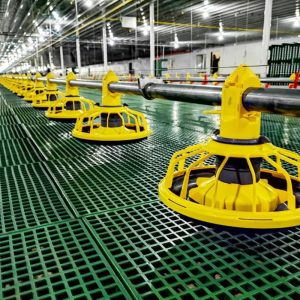
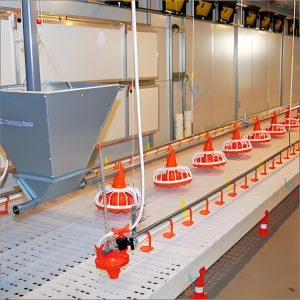
In contrast, precision feeding systems use automated equipment to deliver controlled feed quantities based on growth stages, environmental data, and production targets. These systems ensure uniform feed distribution, reduce spillage, and improve feed conversion efficiency. Data-driven control also allows real-time adjustment, improving consistency across the flock.
Field observations show that farms using precision systems can reduce feed waste by approximately 5–12% compared to manual feeding methods. Additionally, labor dependency is significantly reduced, which helps mitigate risks caused by workforce shortages and rising wages. More stable feeding patterns also contribute to better animal health and improved production outcomes.
Although initial investment in automation is higher, long-term operational savings and efficiency gains make precision feeding a more sustainable solution for modern poultry production.
Share this:
Other Posts
-
Semi-Automatic vs. Fully Automatic: Investment Payback and Decision Reference
Based on 2025-2026 international industry data, the choice between semi-automatic and fully automatic upgrades hinges on production scale and capital strategy.Semi-automatic lines offer a lower entry barrier, with initial investments typically 35-60% lower than fully automatic counterparts. For instance, in sectors like block making, semi-automatic machines cost $25,000-$50,000 versus $80,000-$150,000 for full automation. While requiring…
-
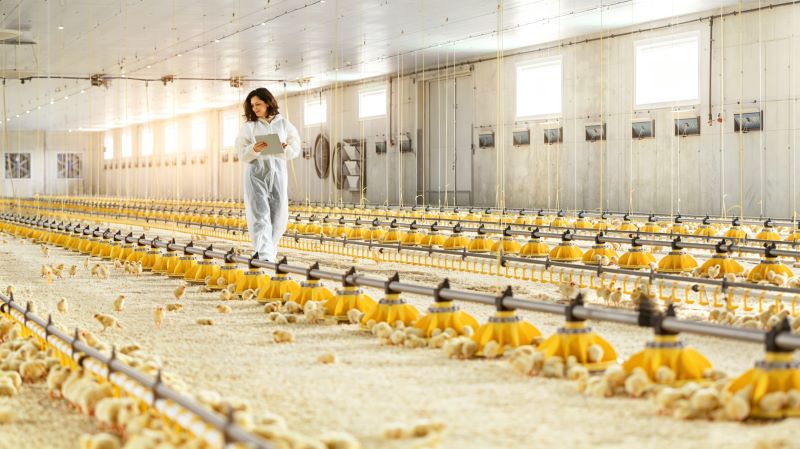
From Labor Shortage to Smart Farming: How Automated Feeding Systems Enable Long-Term Efficiency and Strategic Transformation in Poultry Production
Labor shortages are increasingly influencing poultry production systems worldwide. This article explores how automated feeding systems can reduce reliance on unstable labor while improving feeding consistency, production efficiency, and management standardization. It highlights the transition from labor-intensive to low-labor farming models and emphasizes automation as a long-term strategic investment rather than a short-term cost-saving measure.…
-
Quantitative Assessment of Dynamic Feed Adjustment in Reducing Overfeeding and Underfeeding
Dynamic feed adjustment tailors daily feed amounts to match broilers’ actual growth curves and real-time intake patterns. This study quantifies its effect on reducing overfeeding and underfeeding in a 10,000‑bird flock. Overfeeding occurs when feed supply exceeds birds’ needs, increasing feed conversion ratio (FCR) and fat deposition. Underfeeding limits growth and causes flock unevenness. Using…
-
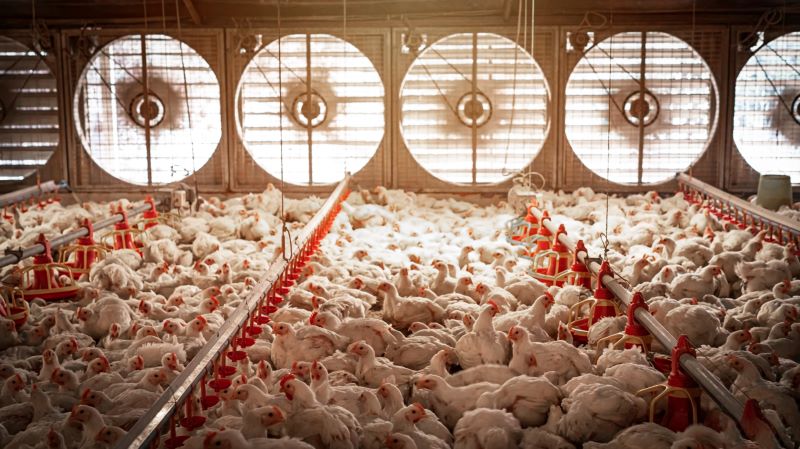
El Niño Impact on Broiler House Climate Control: Adaptive Ventilation and Cooling Strategies for Temperature and Humidity Management
El Niño events may create additional challenges for poultry production by influencing temperature patterns, humidity levels, and precipitation conditions in some regions. This article analyzes the potential impacts of climate fluctuations on broiler house environmental management and discusses adaptive strategies including ventilation system upgrades, evaporative cooling coordination, and real-time environmental monitoring. Effective climate control requires…
Product Categories
Subscribe To Product News
Leave your email address and receive our latest product updates