Your cart is currently empty!
+86 15863276370

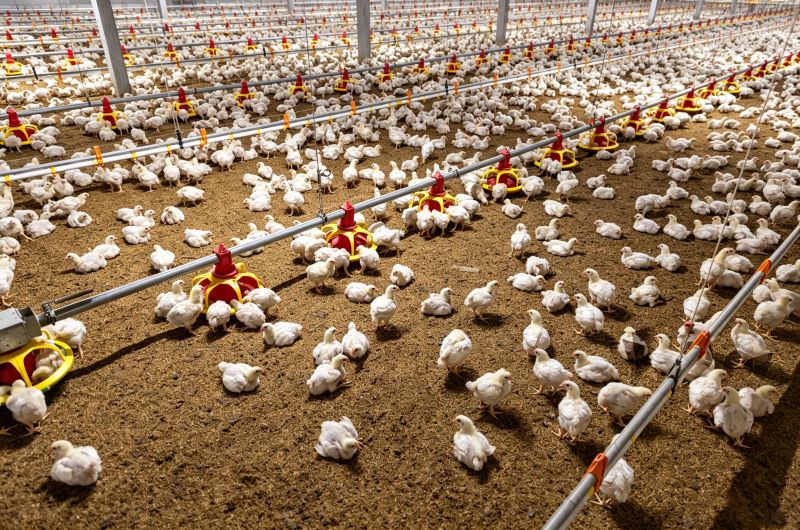
Feed management is a critical factor affecting production efficiency and cost control in poultry farming. Among various influencing factors, feed spillage and quality degradation during storage and distribution can significantly impact overall feed utilization. This study compares feed loss patterns between manual feeding and automated feeding systems, focusing on spillage rates and feed deterioration risks.
In manual feeding systems, feed is typically distributed by workers in batches, often resulting in uneven allocation. Overfilling feed trays can lead to spillage as birds scratch or move feed outside the feeding area. In addition, prolonged exposure of feed to air and moisture increases the likelihood of contamination, mold growth, and nutrient degradation, especially under high humidity conditions.
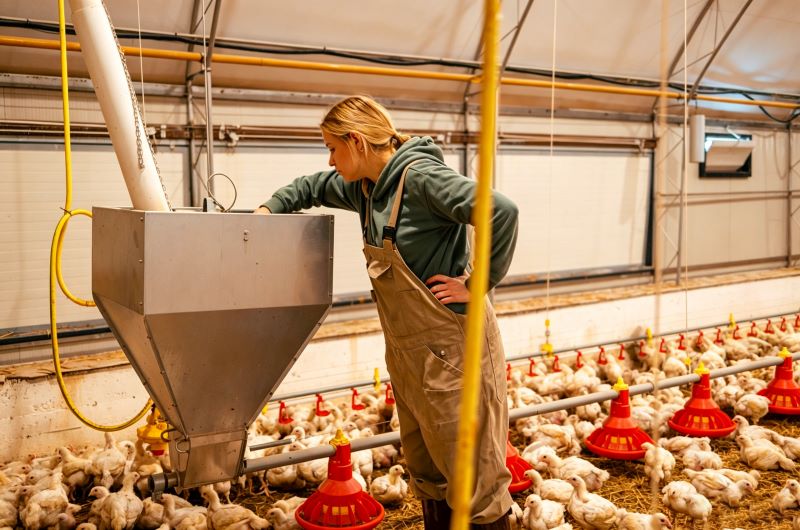
Automated feeding systems, by contrast, are designed to deliver feed in controlled quantities and at regular intervals. This reduces excessive accumulation in feeding pans and minimizes physical disturbance by birds. As a result, spillage rates are generally lower, and feed freshness is better maintained. Closed or semi-enclosed delivery systems also limit exposure to environmental moisture, which helps reduce the risk of feed spoilage.
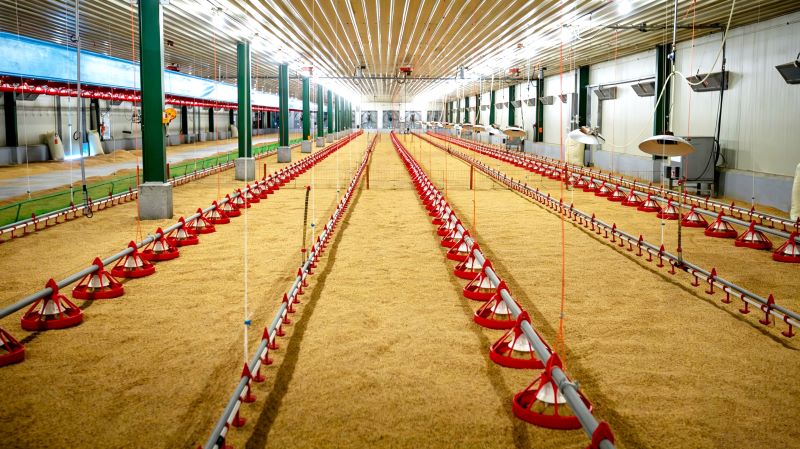
Another advantage of automated feeding is the consistency of feed distribution across the poultry house. Uniform feeding conditions contribute to more stable feed intake behavior and reduce selective feeding, which can otherwise increase waste.
The overall effectiveness of feed management depends on system design, equipment maintenance, feed quality, and environmental conditions. While automation does not eliminate all forms of feed loss, it provides a more controlled and predictable feeding process.
Optimizing feeding strategies by reducing spillage and maintaining feed quality can contribute to improved feed conversion efficiency and more stable production performance in poultry farms.
Share this:
Other Posts
-
Smart Monitoring Systems in Poultry Farming: Efficiency Improvements and Operational Mechanisms
Smart monitoring systems are increasingly used in modern poultry farming to improve production efficiency, environmental stability, and overall flock performance. In commercial broiler production environments, integrated monitoring solutions have been associated with productivity improvements of approximately 20–34%, depending on farm scale, equipment configuration, and management practices. The main mechanism behind this improvement is real-time environmental…
-
Automatic Poultry Feed Line Blocking Problems: 6 Common Causes and Troubleshooting Solutions
Automatic feeding systems are widely used in modern poultry farms to improve feeding efficiency and reduce labor dependency. However, feed line blockage can interrupt feeding operations and affect farm productivity. This article analyzes six common causes of automatic poultry feed line blockage, including feed quality issues, material accumulation, mechanical component wear, improper installation, electrical problems,…
-
Poultry House Orientation and Heat Stress Reduction: East–West vs North–South Layout Impact on Solar Heat Gain
Poultry house orientation is a fundamental design parameter that directly affects thermal comfort, ventilation efficiency, and broiler performance. In commercial poultry production systems, improper building orientation can significantly increase solar heat gain and raise the risk of heat stress, especially in hot climate regions. An east–west oriented poultry house is typically more exposed to direct…
-
Empirical Analysis of 5–10% Feed Savings in a 10,000-Broiler Farm
Feed cost accounts for the largest proportion of expenses in broiler farming, making efficiency improvements highly valuable. This study presents an empirical analysis of achieving 5–10% feed savings in a 10,000-broiler farm through optimized management and automated equipment. The research focuses on the application of precision feeding systems, uniform feed distribution, and reduced feed wastage.…
Product Categories
Subscribe To Product News
Leave your email address and receive our latest product updates