Your cart is currently empty!
+86 15863276370

Heat stress is one of the major environmental challenges affecting broiler production in tropical and subtropical regions. During El Niño-related periods, some areas may experience prolonged high temperatures and increased climate variability, creating additional pressure on poultry house management. Effective heat stress control is essential for maintaining stable growth performance and production efficiency.
High temperatures can influence broiler feeding behavior, growth rate, and overall flock performance. When birds experience heat stress, they may reduce feed intake as a natural response to lower metabolic heat production. Reduced nutrient intake can affect weight gain and feed efficiency, while prolonged environmental stress may increase management challenges.
One important strategy is improving poultry house cooling performance. Evaporative cooling pads, ventilation fans, and optimized airflow systems can help reduce indoor temperature and improve air movement. In hot and humid environments, cooling solutions should be combined with proper ventilation management to achieve better environmental control.
Adjusting stocking density is another effective management approach. Lower stocking density during extreme heat periods can reduce total heat production inside the house and improve air circulation around birds. The suitable density level should be determined based on house design, ventilation capacity, and local climate conditions.
Feeding schedule adjustment can also support heat stress management. Providing feed during cooler periods, such as early morning or evening, may encourage feed intake and reduce the additional heat load caused by digestion during peak temperatures.
Overall, managing heat stress requires an integrated approach combining cooling equipment, ventilation systems, feeding strategies, and farm management practices. By implementing adaptive solutions based on local climate conditions, poultry producers can improve environmental stability and enhance production resilience during periods of high temperature.
Share this:
Other Posts
-
Regional Customization Strategies: How Floor Rearing Equipment Suppliers Can Tailor Products and Pricing for High‑Growth Markets
High‑growth markets differ in climate, farm scale, and purchasing power, requiring suppliers to adopt regional customization. In Southeast Asia, hot and humid conditions demand corrosion‑resistant components and high‑dust‑tolerant ventilation. Basic semi‑automated feeders at competitive price points suit smallholder budgets.In the Middle East, extreme heat requires oversized tunnel fans and evaporative cooling pads. Customers prefer full…
-
Empirical Analysis of the Effect of Sealed Feed Bins on Feed Mold Control
Feed mold contamination is a major concern in poultry farming, leading to nutrient loss and health risks. This study evaluates the effectiveness of sealed feed bins in controlling mold development under practical farm conditions. A comparative trial was conducted over 90 days in two identical broiler houses. House A used conventional open feed storage, while…
-
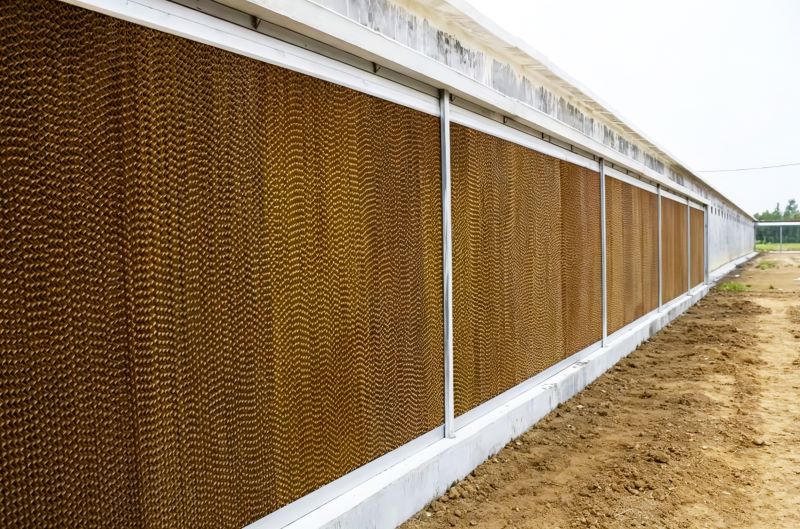
How to Calculate Cooling Pad Area Based on Fan Airflow in Poultry Houses
This article explains how to properly size evaporative cooling pad area based on tunnel ventilation fan airflow instead of house area, ensuring stable airflow and better cooling efficiency in poultry houses.
-
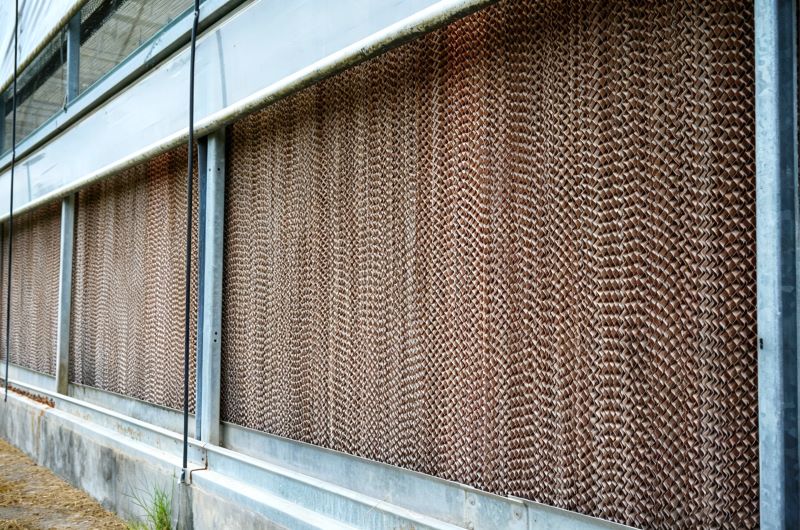
Why Poultry House Cooling Pads Underperform in Summer: Common Causes and Optimization Strategies for Better Heat Stress Control
Evaporative cooling pads are an important component of modern poultry house climate control systems, especially during high-temperature seasons. However, cooling performance may decline due to factors such as insufficient airflow, improper ventilation design, poor maintenance, water quality issues, and unsuitable house structures. This article analyzes the main causes affecting cooling pad efficiency and provides practical…
Product Categories
Subscribe To Product News
Leave your email address and receive our latest product updates