Your cart is currently empty!
+86 15863276370

Manual feeding requires workers to perform several repetitive tasks, including carrying feed, filling feeders, distributing feed across the house, checking feed levels, and correcting uneven distribution. As flock size increases, these activities can consume a significant amount of working time.
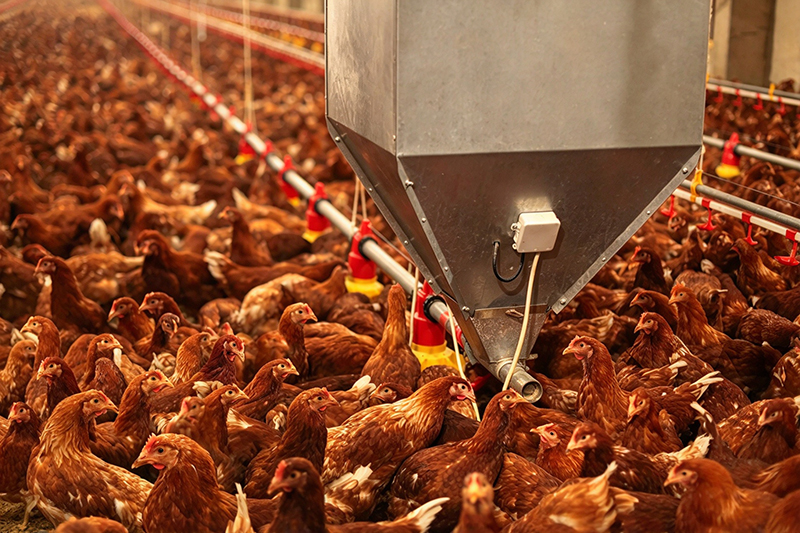
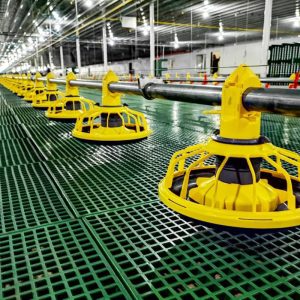
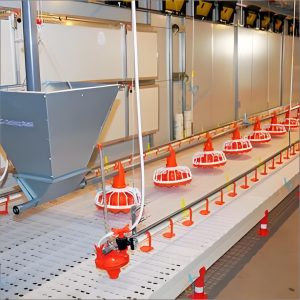
An automatic poultry feeding system transfers feed from a silo or storage point to the feeding line and distributes it along the poultry house. Depending on the system design, sensors and control components can also help manage feed delivery and reduce the need for continuous manual supervision.
The potential labor saving can be evaluated by comparing working hours before and after automation:
Labor Hours Saved = Manual Feeding Hours − Automated Feeding Hours
For example, if a farm records the actual hours required for manual feeding over several production cycles, these figures can be compared with the labor time required after installing an automatic feeding system. This provides a more reliable basis for calculating workforce requirements than applying a fixed percentage.
A reported figure such as 36% labor reduction should therefore be treated as a project-specific result rather than a universal industry standard. Farm size, house layout, feeding frequency, equipment capacity, maintenance requirements, and local labor practices can all affect the final result.
The main value of feeding automation is not simply replacing workers. It is reducing repetitive manual operations while allowing employees to focus more on flock observation, equipment inspection, cleaning, and other management tasks.
For poultry producers, measuring actual labor hours and operating conditions before and after automation provides a practical method for evaluating the economic value of an automatic feeding system.
Share this:
Other Posts
-
Input-Output Model of Automated Feeding Systems for Reducing Feed Cost
Feed constitutes 60–70% of total broiler production costs. Automated feeding systems reduce feed waste through precise portion control, creating a measurable input‑output economic model. Input (Investment) Output (Annual Savings from Feed Alone) Extended Output (Additional Savings) ROI CalculationPayback period (feed savings only) = $13,500 ÷ $2,600 = 5.2 yearsPayback (total savings) = $13,500 ÷ $14,000…
-
Precision Feeding Systems for Poultry Farms: ROI Analysis by Farm Size
Precision feeding systems can help poultry farms manage feed distribution, labor, and daily operations more consistently. However, the financial return depends on farm size, equipment configuration, feed costs, labor rates, and actual operating performance. Evaluating these factors helps producers make more informed investment decisions.
-
How Automatic Feeding Systems Reduce Labor Demand in Poultry Farms: A Practical Workforce Analysis
Labor is an important operating cost in poultry production, especially when feeding tasks are performed manually. Automatic feeding systems can reduce repetitive work by transporting and distributing feed through mechanical equipment. However, the actual labor reduction depends on farm size, feeding frequency, system design, and management practices.
-
Heat Stress Management in Tropical and Subtropical Poultry Farms: Cooling Strategies, Feeding Adjustment, and Stocking Density Optimization
Heat stress is a major challenge for poultry production in tropical and subtropical regions, especially during periods of abnormal temperature increases. This article analyzes the effects of heat stress on broiler feed intake, growth performance, and farm management efficiency. It discusses practical strategies including evaporative cooling systems, ventilation improvement, stocking density adjustment, and feeding schedule…
Product Categories
Subscribe To Product News
Leave your email address and receive our latest product updates