Your cart is currently empty!
+86 15863276370

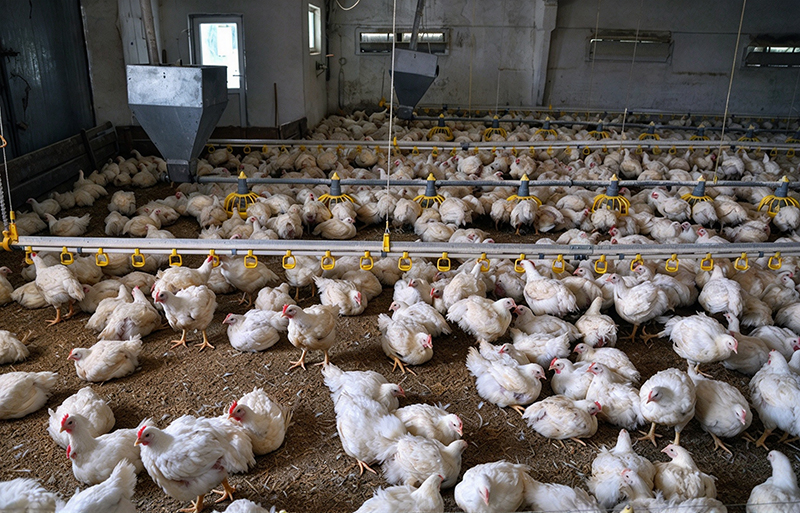
Manual feeding often involves carrying feed, filling feeders, distributing feed throughout the poultry house, and checking feed availability. These tasks require recurring labor, particularly on farms where feeding is performed several times a day.
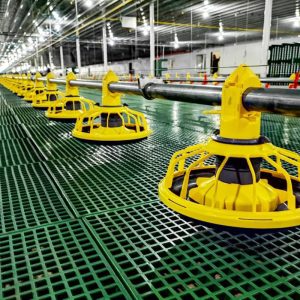
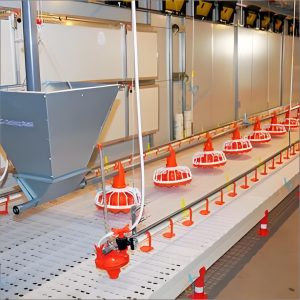
An automatic poultry feeding system transports feed from a silo or storage point to feeding lines, reducing the need for workers to distribute feed manually. Staff are still needed for inspection, cleaning, maintenance, and flock management, so automation should not be interpreted as eliminating all feeding-related labor.
To estimate annual labor savings, first record the time spent on feeding before and after automation.
Annual Labor Cost Savings = Hours Saved per Day × Operating Days per Year × Local Hourly Wage
For example, if a farm saves two labor-hours per day over 300 operating days, the annual reduction is 600 labor-hours. The financial value depends on the local wage rate. This is an illustrative calculation, not a guaranteed result for every farm.
A complete assessment should also consider equipment purchase and installation costs, electricity consumption, maintenance, and replacement parts. Comparing these costs with verified labor savings helps determine whether the investment is financially reasonable.
The actual result depends on flock size, house layout, feeding frequency, system capacity, and management practices. Farms should use their own labor records and operating conditions rather than relying on a universal savings percentage.
For poultry producers, automatic feeding is most valuable when it reduces repetitive work while maintaining reliable feed distribution and allowing staff to focus on other essential farm operations.
Share this:
Other Posts
-
Intelligent Broiler Farming Equipment: Setting a New Benchmark for Efficient Farming
With the scaling development of the poultry industry, modern broiler farming equipment has become key to improving profitability. We specialize in the R&D and production of a series of farming equipment, helping farmers achieve efficient, labor-saving, and scientific feeding management. Core equipment includes: Our equipment is characterized by durability, ease of operation, and energy efficiency.…
-
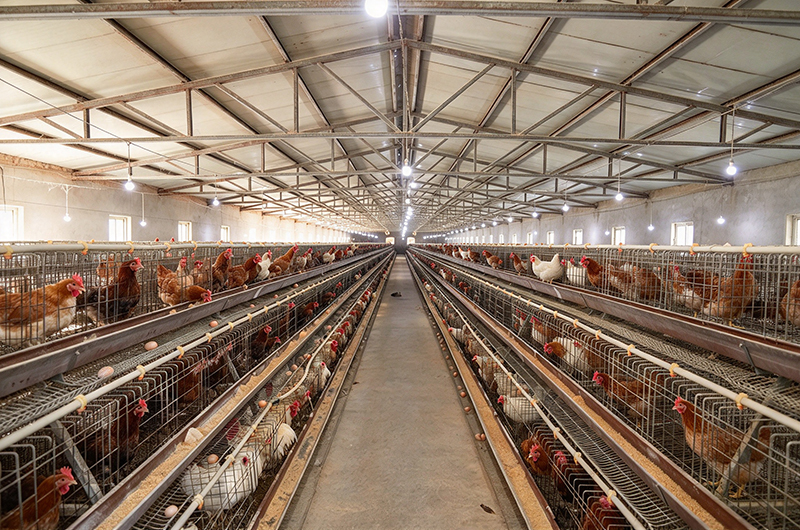
High-Pressure Fogging vs. Evaporative Cooling Pads: Which Is Better for Poultry Houses?
High-pressure fogging and evaporative cooling pads both use water evaporation to reduce heat, but they operate differently. Choosing the right system depends on outdoor humidity, ventilation capacity, water management, and flock conditions. In some hot, dry climates, fogging can complement pad cooling when carefully controlled.
-
Nighttime Feeding and Light Regulation Strategies: Behavioral Intervention to Avoid High-Temperature Periods and Impacts on Growth Performance
High ambient temperatures suppress feed intake in broilers, reducing growth and feed efficiency. Nighttime feeding combined with adjusted light schedules offers an effective solution. By shifting feeding to cooler evening and early morning hours, birds consume more feed when heat stress is minimal. A light regimen of 4 hours light, 2 hours dark during nighttime…
-
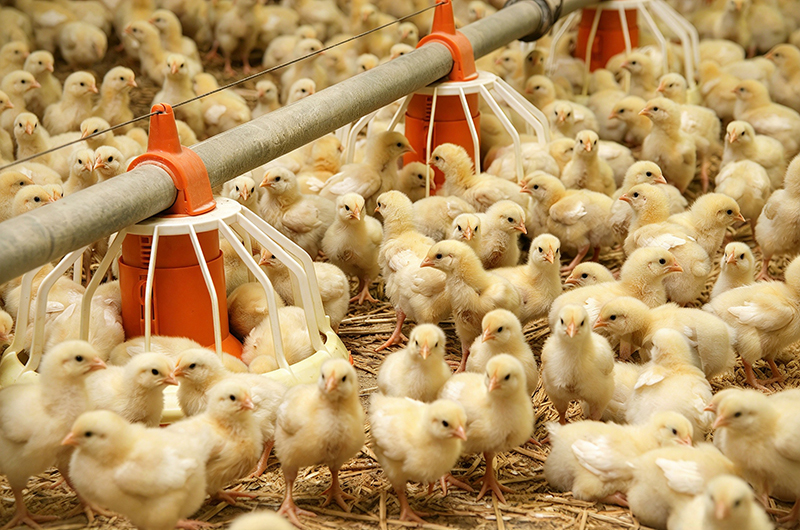
How Sensors and Timers Enable Precision Feeding in Poultry Farms: Understanding Automatic Feed Distribution
Precision feeding in poultry farming is not simply about delivering feed automatically. It involves controlling when feed is supplied and monitoring whether the feeding system meets the flock’s requirements. By combining sensors, timers, controllers, and mechanical feeding equipment, farms can create a more consistent and manageable feed distribution process.
Product Categories
Subscribe To Product News
Leave your email address and receive our latest product updates