Your cart is currently empty!
+86 15863276370

Feed cost accounts for the largest proportion of expenses in broiler farming, making efficiency improvements highly valuable. This study presents an empirical analysis of achieving 5–10% feed savings in a 10,000-broiler farm through optimized management and automated equipment.
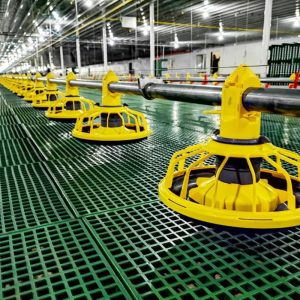
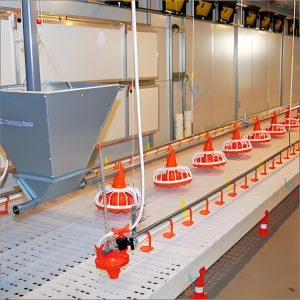
The research focuses on the application of precision feeding systems, uniform feed distribution, and reduced feed wastage. By using automated feeding lines and adjusting feed supply based on bird growth stages, the farm minimized overfeeding and spillage. Additionally, proper feeder height adjustment and regular maintenance further contributed to efficiency gains.
Data collected over a full production cycle showed that feed conversion ratios improved significantly, while overall feed consumption decreased without compromising bird growth performance. The savings translated into substantial cost reductions and improved profitability.
This case demonstrates that integrating modern equipment with refined management practices can deliver measurable economic benefits. Feed-saving strategies are therefore essential for sustainable and competitive poultry production.
Share this:
Other Posts
-
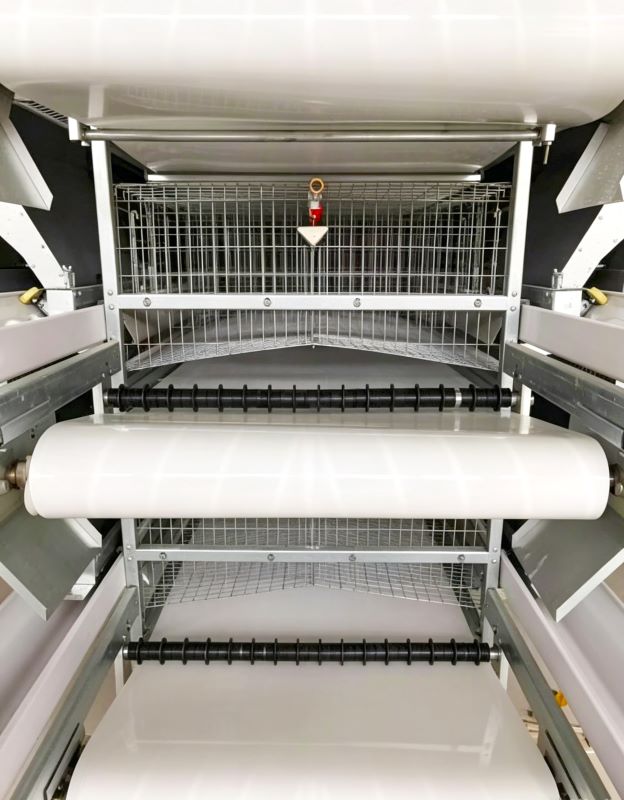
Manure Conveyor Belt Tracking Adjustment – Fix It Yourself Without a Service Call
Belt misalignment (tracking off) is a common issue in floor rearing houses. Most cases are caused by uneven tension, non‑parallel rollers, or uneven load distribution. Follow these three steps to fix it yourself. Step 1: Identify the direction and locationRun the belt empty and observe which side it shifts toward. If the belt runs to…
-
Labor Substitution Effect of Automated Feeding Systems: Empirical Evidence of Labor Savings from Manual Bag Handling to Pneumatic Conveying
This study quantifies labor savings when replacing manual bag feeding with automated pneumatic conveying in a 10,000-bird broiler farm. Manual feeding involves lifting, carrying, tearing, and scattering 25–40 kg bags daily. Two full‑time workers spend 6–8 hours per day on these tasks, equivalent to 2,080–2,600 working hours annually per worker. Automated feeding uses a silo,…
-
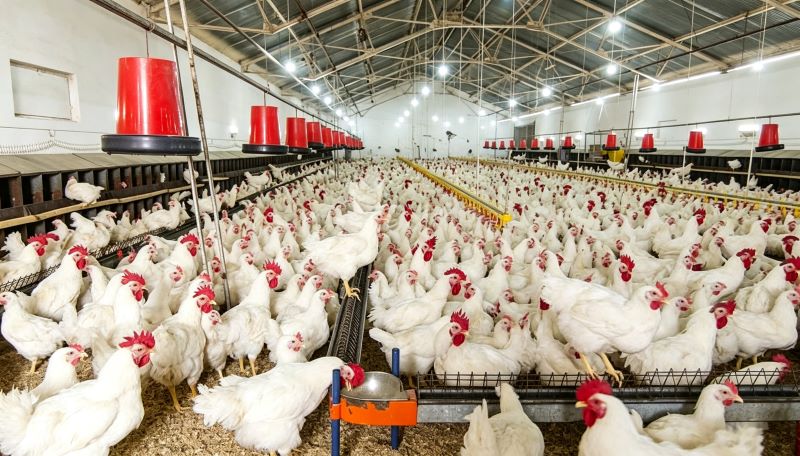
Pan vs. Chain Feeding Systems: Feed Efficiency, Waste Control, and Farm Application
This article compares pan and chain feeding systems from the perspective of feed efficiency and waste control. Both systems can support automated feeding, but their performance depends on equipment settings, farm layout, feed characteristics, and management practices. Key evaluation factors include feed spillage, distribution consistency, labor requirements, and maintenance. Selecting the appropriate system according to…
-
A New Era of Human‑Machine Collaboration: Challenges and Solutions for Deploying AI Decision Systems in Floor‑Rearing Farms
Deploying AI decision systems in floor‑rearing farms promises improved efficiency but faces practical hurdles. Three major challenges emerge: data infrastructure gaps, worker acceptance, and system maintenance cost. Many farms lack reliable sensors or stable internet, leading to incomplete data. Workers, accustomed to manual observation, often distrust AI recommendations. Solutions include phased deployment starting with basic…
Product Categories
Subscribe To Product News
Leave your email address and receive our latest product updates