Your cart is currently empty!
+86 15863276370

This study compares payback periods for semi‑automated (auto feeders only) and fully automated (feeders + ventilation + manure removal) floor rearing systems in a 10,000‑bird house. Semi‑automated equipment costs $8,000–$10,000, saving 70% of feeding labor and 5% of feed waste. Fully automated systems cost $25,000–$30,000 but eliminate 90% of labor and reduce feed waste by 9%, besides improving environment and mortality.
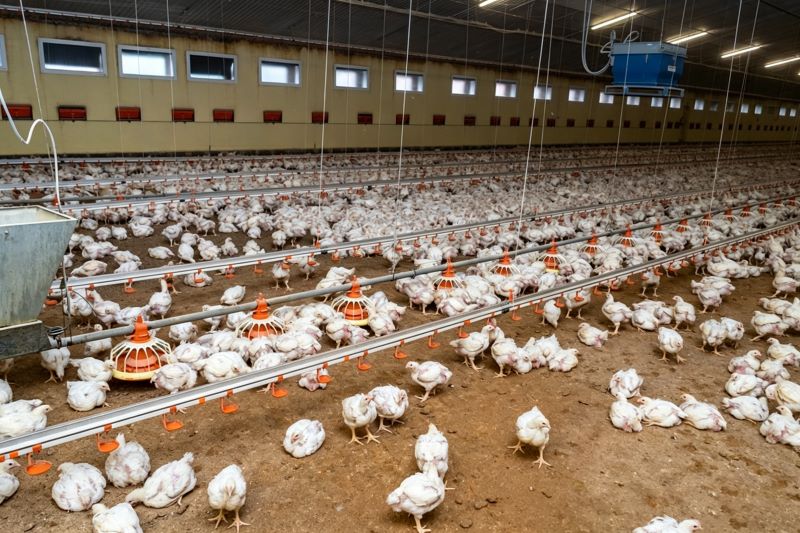
Annual savings: semi‑automated = $10,500 (labor $8,000 + feed $2,500); fully automated = $19,200 (labor $12,000 + feed $4,500 + mortality/medication $2,700). Payback: semi‑automated = 10 months; fully automated = 17 months.
The payback gap is about 7 months. Despite higher upfront cost, fully automated offers larger long‑term savings (83% more annually) after breakeven. For farms with capital and technical support, full automation yields superior lifetime value.
Share this:
Other Posts
-
From Labor Shortage to Smart Farming: How Automated Feeding Systems Enable Long-Term Efficiency and Strategic Transformation in Poultry Production
Labor shortages are increasingly influencing poultry production systems worldwide. This article explores how automated feeding systems can reduce reliance on unstable labor while improving feeding consistency, production efficiency, and management standardization. It highlights the transition from labor-intensive to low-labor farming models and emphasizes automation as a long-term strategic investment rather than a short-term cost-saving measure.…
-
Global Broiler Equipment Market to Reach $6.87 Billion by 2035
The global broiler farming equipment market is expanding steadily. Valued at $4.18 billion in 2025, it is projected to grow to $6.87 billion by 2035, driven by rising poultry consumption and farm automation. Key growth factors include labor shortages in developed regions, stricter animal welfare regulations favoring floor rearing systems, and climate‑resilient technologies such as…
-
Automatic Feeding System: The “Nutrition Steward” for Broiler Farming
In large-scale broiler farming, scientific feeding is core to determining growth rate and feed conversion. Our independently developed automatic feeding system is designed for precise nutritional management. The system consists of a feed bin, conveying pipes, a drive motor, feed pans, and an intelligent controller, achieving fully automated feeding. Its advantages are significant: We provide…
-
Semi-Automatic vs. Fully Automatic: Investment Payback and Decision Reference
Based on 2025-2026 international industry data, the choice between semi-automatic and fully automatic upgrades hinges on production scale and capital strategy.Semi-automatic lines offer a lower entry barrier, with initial investments typically 35-60% lower than fully automatic counterparts. For instance, in sectors like block making, semi-automatic machines cost $25,000-$50,000 versus $80,000-$150,000 for full automation. While requiring…
Product Categories
Subscribe To Product News
Leave your email address and receive our latest product updates