Your cart is currently empty!
+86 15863276370

Modern poultry farming equipment has evolved far beyond traditional manual tools. Today’s integrated systems include automated feeders, tunnel ventilation with cooling pads, smart drinking lines, manure handling units, and AI‑driven health monitors. These technologies reduce labor dependence, improve biosecurity, and maximize bird welfare and productivity.
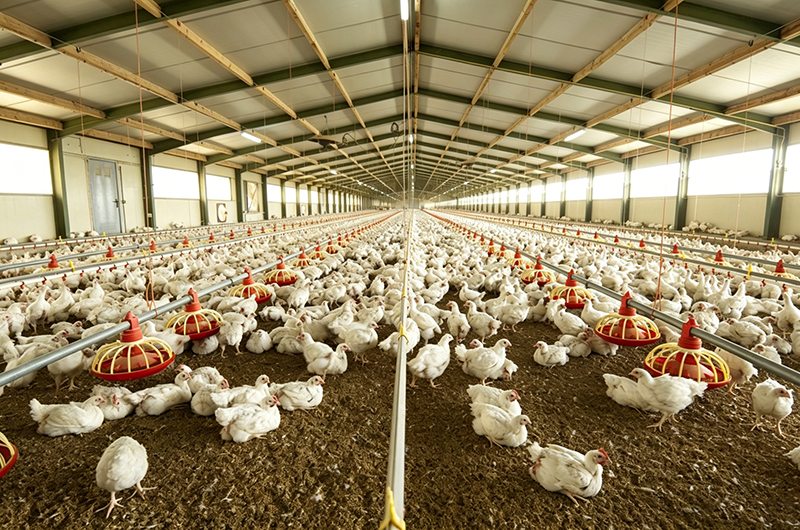
The global market for modern poultry farming equipment reflects this transformation. Valued at $5.03 billion in 2025, it is projected to reach $6.84 billion by 2030, growing at a 6.3% CAGR. Key drivers are rising protein demand, labor shortages, and precision livestock farming.
Several major trends shape the industry. First, automated feeding systems are becoming standard, cutting feed waste by 5–10% and improving feed conversion ratios, with payback within 12–18 months. Second, climate control equipment—tunnel ventilation and cooling pads—prevents heat stress, increasingly essential as extreme weather events become frequent.
Third, the EU’s 2027 cage ban and similar US state laws accelerate the shift to floor rearing and cage‑free systems, boosting demand for welfare‑friendly modern poultry farming equipment such as litter management systems. Fourth, AI and IoT enable real‑time flock monitoring and disease prediction; the AI in precision livestock market grows at 27.9% CAGR. Fifth, tighter environmental regulations drive demand for manure management systems that convert waste into compost or biogas. Sustainability trends also promote solar‑powered ventilation and rainwater harvesting.
For suppliers, investing in modern poultry farming equipment is no longer optional—it is essential to remain competitive. Automation, welfare compliance, and digitalization are redefining farm management worldwide.
Share this:
Other Posts
-

Before Installing Evaporative Cooling Pads: 3 Poultry House Conditions to Check First
Evaporative cooling pad performance depends on the entire poultry house cooling system rather than the pad alone. This article outlines three key pre-installation checks: house sealing, fan capacity, and water supply conditions. Air leakage can disrupt airflow, unsuitable fan capacity may reduce effective air movement, and unstable or poor-quality water can affect pad wetting and…
-
Impact of El Niño on Poultry Immunity and Vaccination Programs in Temperate and Tropical Regions
El Niño events cause abnormal temperature and humidity fluctuations, which directly affect poultry immune responses. In tropical zones, prolonged heat and humidity can suppress vaccine efficacy by increasing stress hormone levels and reducing antibody production. In temperate regions, sudden warming or unseasonable cold may disrupt the stability of vaccine storage and administration, leading to uneven…
-
Intelligent Broiler Farming Equipment: Setting a New Benchmark for Efficient Farming
With the scaling development of the poultry industry, modern broiler farming equipment has become key to improving profitability. We specialize in the R&D and production of a series of farming equipment, helping farmers achieve efficient, labor-saving, and scientific feeding management. Core equipment includes: Our equipment is characterized by durability, ease of operation, and energy efficiency.…
-
Automatic Feeding System: The “Nutrition Steward” for Broiler Farming
In large-scale broiler farming, scientific feeding is core to determining growth rate and feed conversion. Our independently developed automatic feeding system is designed for precise nutritional management. The system consists of a feed bin, conveying pipes, a drive motor, feed pans, and an intelligent controller, achieving fully automated feeding. Its advantages are significant: We provide…
Product Categories
Subscribe To Product News
Leave your email address and receive our latest product updates