Your cart is currently empty!
+86 15863276370

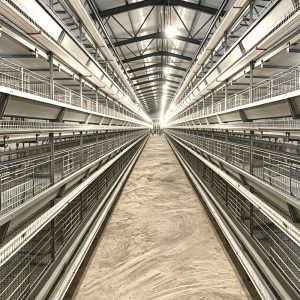
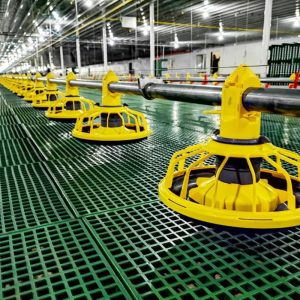
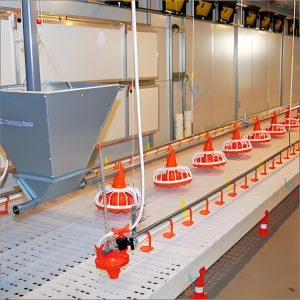
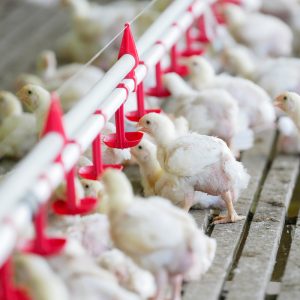
Automated floor rearing systems are revolutionizing the poultry industry. Unlike traditional cage systems, floor rearing allows birds to move freely on litter, improving leg health and reducing breast blisters. When combined with automation, these systems deliver even greater benefits for modern broiler farms.
First, automated feeding and drinking lines cut labor costs by up to 70%. A single worker can manage multiple houses, as feeders and drinkers operate on timers and sensors. Second, precision feeding reduces feed waste by 5–10%, directly lowering the largest production cost. Third, automated ventilation and cooling systems maintain optimal temperature and humidity, preventing heat stress and reducing mortality.
Fourth, floor rearing supports all-in/all-out sanitation. Without cages blocking access, houses can be emptied, cleaned, and disinfected thoroughly, breaking disease cycles effectively. Fifth, automated manure management keeps litter dry, lowering ammonia emissions and improving bird welfare.
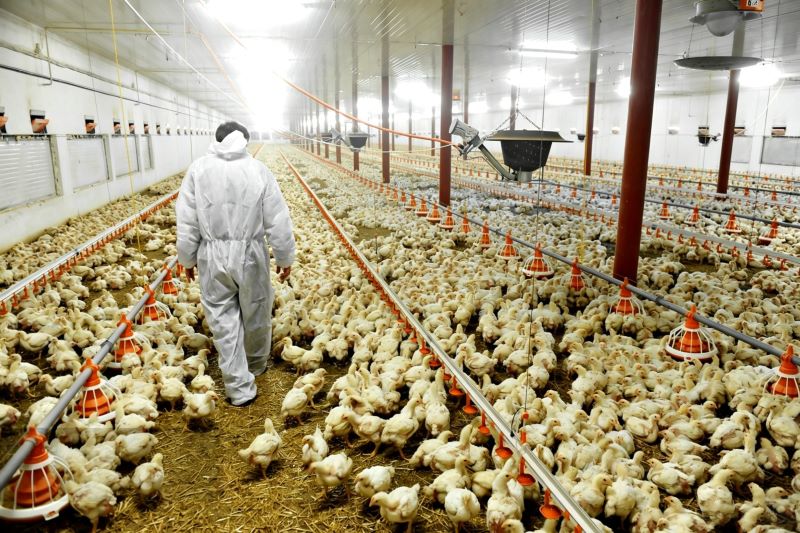
For farms targeting welfare-certified markets, automated floor systems help meet EU and RSPCA standards. The return on investment is compelling: most farms recover costs within 12–24 months through labor, feed, and medication savings. As the industry moves toward cage-free and data-driven production, automated floor rearing is becoming the new standard for sustainable, profitable poultry farming.
Share this:
Other Posts
-
Manual Egg Collection vs. Automated Systems: How Much Labor Cost Can a Nest Box Save You?
For broiler breeder farms, egg collection remains one of the most labor-intensive tasks. Manual collection requires workers to walk through the house multiple times daily, bending and reaching into each nest. For a 10,000-bird flock, manual collection typically consumes 4–6 labor hours per day. At a farm with 50,000 breeders, that translates to 20–30 hours…
-
Why Do Nipple Drinkers Leak? (With Troubleshooting Flowchart)
Leaking nipple drinkers waste water, wet litter, and increase disease risk. Understanding common failure causes helps farm managers quickly fix issues. Primary leak sources include: worn silicone seals (normal wear after 12–18 months), debris trapped in the valve (from poor water filtration), incorrect water pressure (above 0.2–0.3 bar), damaged nipple body (cracks from freezing or…
-
Empirical Estimation of 50% Labor Cost Reduction: A Cost-Saving Model for Automated Feeding in a 10,000-Bird Broiler Farm
This study quantifies labor cost savings from switching to automated feeding in a 10,000-bird broiler farm. Manual feeding requires two full-time workers for feed bag handling, transport, and daily distribution. Annual labor costs include wages (15/hour×8h/day×365days×2workers=15/hour×8h/day×365days×2workers=87,600), plus benefits, recruitment, and training overhead (estimated 25% of wages, 21,900)andmanagementsupervision(21,900)andmanagementsupervision(5,000). Total manual feeding cost: $114,500. Automated feeding uses a…
-
Variable-Frequency Fans and Multi-Stage Cooling Linkage Control: Response Mechanism of Smart Environmental Control Systems to Extreme Heat
Extreme heat events threaten poultry health and productivity. Smart environmental control systems employ variable-frequency fans (VFFs) and multi-stage cooling linkage to respond effectively. VFFs automatically adjust speed based on real-time temperature, providing low airflow during mild heat and maximum speed during heatwaves. This saves energy while maintaining bird comfort. Multi-stage cooling activates sequentially: first, tunnel…
Product Categories
Subscribe To Product News
Leave your email address and receive our latest product updates