Your cart is currently empty!
+86 15863276370

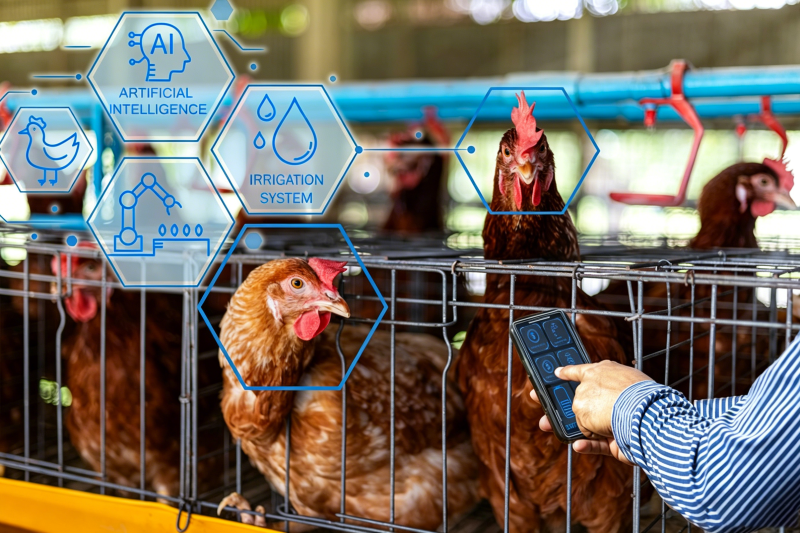
Poultry equipment is no longer just hardware—it is evolving into data-driven decision engines. Here are ten trends shaping the industry.
1. Digital Twins Go Operational
Digital twins move beyond pilot projects. They now simulate flock growth, test ventilation changes, and predict feed conversion before a single bird enters the house. Key shift: from visualization to actionable prediction, reducing trial-and-error costs.
2. AI Health Flags Behavioral Red Flags
Computer vision now spots lameness and respiratory stress days before physical symptoms appear. Acoustic sensors detect cough frequency shifts. The value is not detection—it is buying farmers intervention time.
3. Predictive Biosecurity Rather Than Reaction
AI-powered risk models combine on-farm data with regional epidemiology. Farms receive preemptive alerts when nearby disease pressure rises. This shifts biosecurity from reactive disinfection to predictive defense.
4. Autonomous Robots Join Daily Operations
Robots now handle litter assessment, feed bin inventory, and automated bird weighing. They reduce human entry, cutting disease vectors while standardizing data collection across large houses.
5. Precision Feeding Adjusts to Weight, Not Calendar
Feeding systems link to real-time weight estimates. Algorithms recalibrate rations daily, reducing overfeeding in late cycles and underfeeding in early growth. Feed accounts for 70% of costs—this optimization directly hits the bottom line.
6. Energy Management Becomes a Profit Center
Solar-integrated houses with variable-speed fans and heat recovery exchangers are proving ROI. Waste heat from exhaust ventilates fresh incoming air, lowering winter heating bills by up to 30%.
7. Edge Computing Cuts Cloud Dependency
Instead of sending all sensor data to the cloud, edge devices process urgent parameters (temperature spikes, fan failures) locally. This enables real-time automated responses even with intermittent internet.
8. Blockchain Moves from Buzzword to Compliance
Retailers demand verifiable welfare claims. Blockchain now tracks feed origin, medication records, and environmental logs—immutably. For exporters, this is becoming an entry ticket to premium markets.
9. Waste-to-Value Turns Manure into Revenue
On-farm biogas and pelletizing units convert litter into sellable fertilizer or energy. Advanced filtration cuts ammonia by 80%. Environmental compliance shifts from cost center to revenue stream.
10. Modular Automation Lowers Entry Barriers
Pre-configured automation pods (feed control + basic sensors + simple dashboards) are emerging for smaller farms. They offer 50–70% of full automation’s benefits at 30% of the cost, democratizing smart farming.
The Bottom Line
The question is no longer whether to automate, but how to sequence these innovations for measurable payback. In 2026, smart equipment is not just about replacing labor—it is about creating a farm that learns, predicts, and adapts.
Share this:
Other Posts
-
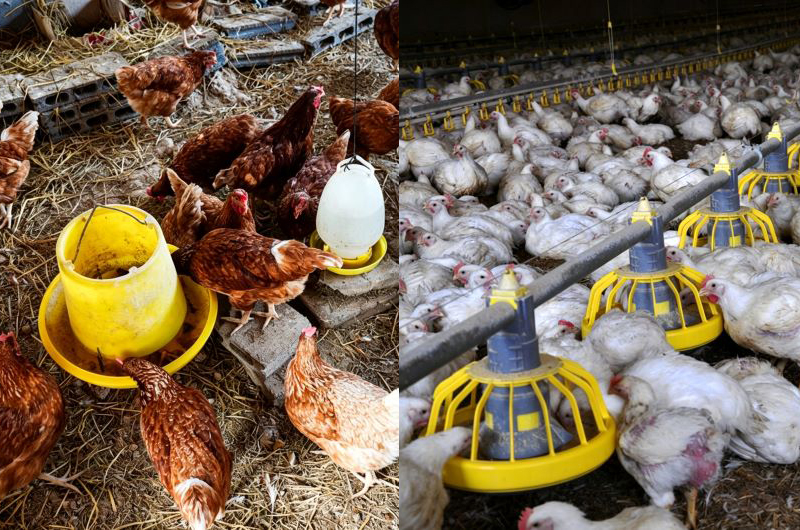
From Feed Waste to Precision Feeding: How Better Feed Management Can Improve Broiler FCR and ROI
Feed is one of the major operating costs in broiler production, making feed efficiency an important factor in farm profitability. Precision feeding and well-designed feeding equipment can help reduce unnecessary feed waste and improve feeding consistency. However, the return on investment depends on farm conditions and should be evaluated using actual production data.
-
Impact of El Niño on Poultry Immunity and Vaccination Programs in Temperate and Tropical Regions
El Niño events cause abnormal temperature and humidity fluctuations, which directly affect poultry immune responses. In tropical zones, prolonged heat and humidity can suppress vaccine efficacy by increasing stress hormone levels and reducing antibody production. In temperate regions, sudden warming or unseasonable cold may disrupt the stability of vaccine storage and administration, leading to uneven…
-

Before Installing Evaporative Cooling Pads: 3 Poultry House Conditions to Check First
Evaporative cooling pad performance depends on the entire poultry house cooling system rather than the pad alone. This article outlines three key pre-installation checks: house sealing, fan capacity, and water supply conditions. Air leakage can disrupt airflow, unsuitable fan capacity may reduce effective air movement, and unstable or poor-quality water can affect pad wetting and…
-
Quantified Effect of Dynamic Feed Adjustment on Feed Conversion Ratio Optimization
This study quantifies how dynamic feed adjustment improves feed conversion ratio (FCR) in broiler production. Dynamic adjustment tailors daily feed amounts to match real-time bird weight and intake patterns, unlike fixed feeding schedules. A 35-day trial on 10,000 Ross 308 broilers compared dynamic adjustment (sensor‑based, every 2–4 hours) with conventional fixed feeding. Results showed that…
Product Categories
Subscribe To Product News
Leave your email address and receive our latest product updates