Your cart is currently empty!
+86 15863276370

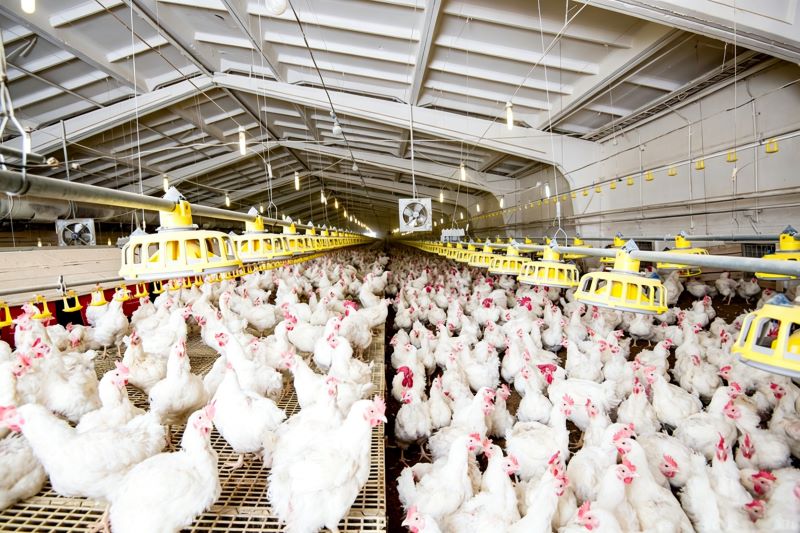
Feed conversion ratio (FCR) is the most critical metric in broiler production—feed accounts for 60–70% of total costs. Improving FCR by just 0.1 can save over 6 tons of feed per 10,000 birds annually. This article examines how precision feeding and smart environmental control work together to achieve this gain.
Precision Feeding: Right Amount, Right Time
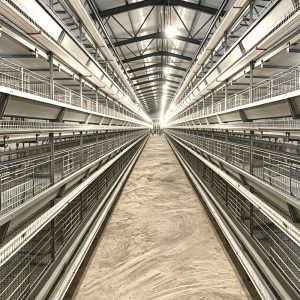
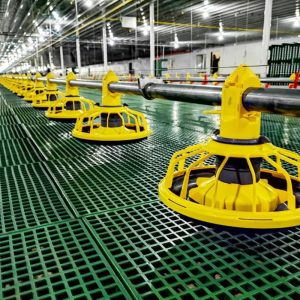
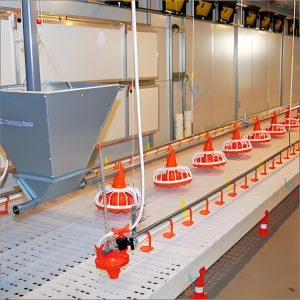
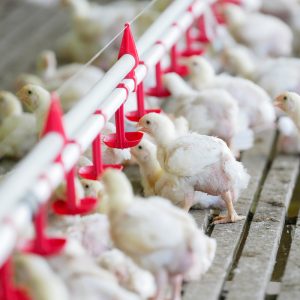
Precision feeding systems use sensors and algorithms to adjust daily feed portions based on real-time bird weight and intake patterns. Unlike fixed schedules, they eliminate overfeeding in late cycles and underfeeding during early growth. A 42-day study demonstrated that birds on precision-adjusted diets achieved significantly better weight-corrected FCR than those on standard commercial diets. By matching feed delivery to actual consumption, these systems reduce waste and improve nutrient utilization.
Smart Environmental Control: Optimizing Conditions for Efficiency
Broilers are highly sensitive to temperature and humidity. Heat stress is known to reduce feed intake and impair FCR. Smart environmental control systems maintain optimal temperature (±1°C accuracy) and ventilation, keeping birds in their thermoneutral zone—where feed conversion is most efficient. Proper humidity management also reduces heat stress, improving appetite and nutrient absorption.
The Synergy: 1 + 1 > 2
Precision feeding and smart environmental control reinforce each other. When birds are thermally comfortable, their appetite and digestion are optimal—making precision feeding more effective. Conversely, precision feeding reduces metabolic heat from overfeeding, easing cooling system loads. Integrated systems also support other tools such as genomic selection and optimized lighting to further improve FCR.
European industry data shows farms integrating automated feeding with microclimate control achieve FCR below 1.55, compared to 1.70–1.80 in less automated systems. For broiler producers, the path to FCR improvement lies not in choosing between feeding and environmental control—but in integrating both as a unified system.
Share this:
Other Posts
-
Linking Payback Period to Feed Savings: A Model for Automated Feeding Systems
The payback period of automated feeding systems directly correlates with feed savings achieved. A simple model expresses payback (months) = equipment cost / (annual feed saving × feed price). For a 10,000-bird house, automated feeders typically cut waste by 5–10%, saving 6–12 tons of feed yearly. At $450/ton, that equals $2,700–$5,400 annual saving. With equipment…
-
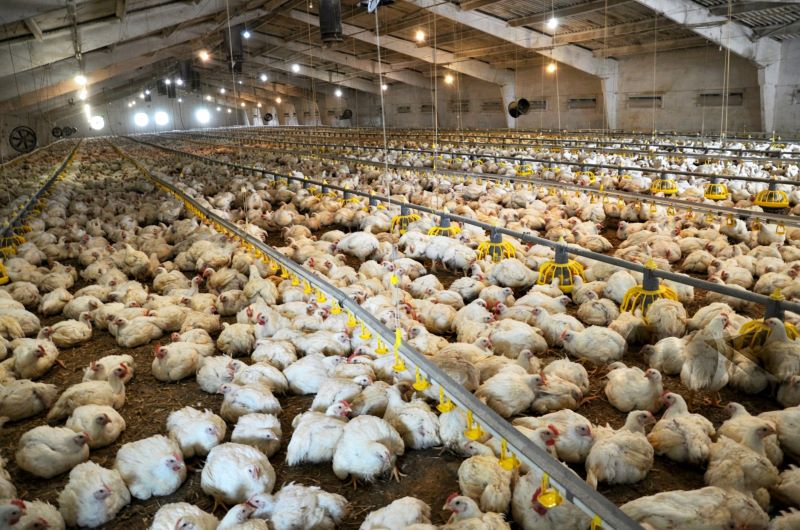
Global Cage-Free Poultry Equipment Market Outlook 2026–2030: Growth Opportunities in the Middle East and Southeast Asia
The global poultry industry is entering a new stage of modernization, with increasing demand for efficient, automated, and sustainable farming solutions. This article analyzes the development opportunities of cage-free poultry equipment markets from 2026 to 2030, focusing on the Middle East and Southeast Asia. It explores regional differences in production needs, climate challenges, labor conditions,…
-
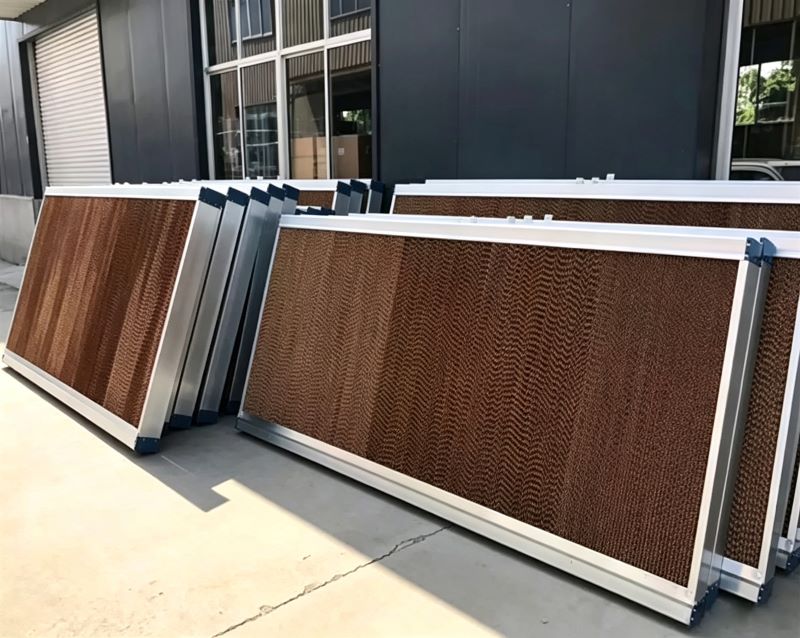
Before Installing Evaporative Cooling Pads: 3 Poultry House Conditions to Check First
Evaporative cooling pad performance depends on the entire poultry house cooling system rather than the pad alone. This article outlines three key pre-installation checks: house sealing, fan capacity, and water supply conditions. Air leakage can disrupt airflow, unsuitable fan capacity may reduce effective air movement, and unstable or poor-quality water can affect pad wetting and…
-
Global Broiler Equipment Market to Reach $6.87 Billion by 2035
The global broiler farming equipment market is expanding steadily. Valued at $4.18 billion in 2025, it is projected to grow to $6.87 billion by 2035, driven by rising poultry consumption and farm automation. Key growth factors include labor shortages in developed regions, stricter animal welfare regulations favoring floor rearing systems, and climate‑resilient technologies such as…
Product Categories
Subscribe To Product News
Leave your email address and receive our latest product updates