Your cart is currently empty!
+86 15863276370

Labor shortages have become a critical challenge in the global poultry industry, particularly across Europe, the Middle East, and Southeast Asia. The main drivers include population aging, declining interest among younger generations in agricultural work, and increasingly strict immigration policies that limit access to foreign labor.
In Europe, many farms face difficulty replacing retiring workers, leading to higher wage competition and increased reliance on automation. In the Middle East, rapid industry expansion combined with limited local labor supply has significantly raised recruitment costs. In Southeast Asia, although labor is relatively abundant, rural-to-urban migration is reducing the availability of skilled farm workers.
The impact of labor shortages is both measurable and structural. Many poultry farms report a 15–40% increase in recruitment difficulty compared to five years ago. At the same time, average labor costs have risen by 10–25% annually in high-demand regions. This directly increases production expenses and reduces profit margins.
Operational risks are also becoming more pronounced. Insufficient staffing often leads to delayed feeding, inconsistent environmental control, and lower biosecurity standards, which can negatively affect flock performance and survival rates. In large-scale farms, even small disruptions in labor availability may cause cascading production inefficiencies.
As a result, the industry is increasingly turning to automation solutions such as automatic feeding systems, ventilation control, and centralized management platforms. These technologies help reduce dependency on manual labor while improving consistency and efficiency.
Overall, labor shortages are reshaping the global poultry industry. Companies that invest early in automation and integrated equipment systems are better positioned to maintain stability, reduce risks, and achieve long-term competitiveness.
Share this:
Other Posts
-
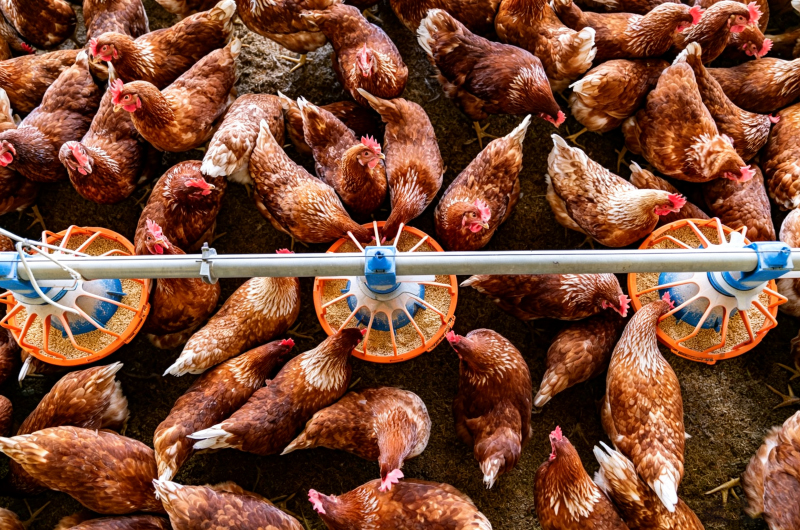
Quantifying Feed Loss in Poultry Farming: Spillage, Spoilage, and Feed Refusal Analysis
Feed loss is a key challenge in poultry production, directly affecting economic efficiency and resource utilization. This article provides a quantitative analysis of three primary sources of feed loss: spillage, spoilage, and feed refusal. By examining their causes, typical loss ratios, and influencing factors, the study highlights practical strategies for reducing waste. Optimizing feeder design,…
-
From Design to Implementation: A Practical Guide to Biosecurity Layout for Floor Rearing Farms
Effective biosecurity starts with a clear layout. Separate clean and dirty zones clearly. The entry point should include a changing room, footbath, and hand sanitizer. Place sealed fences around the farm to prevent wild birds and rodents from entering. Design a one-way flow: workers move from office to changing room to house, never backward. Vehicles…
-
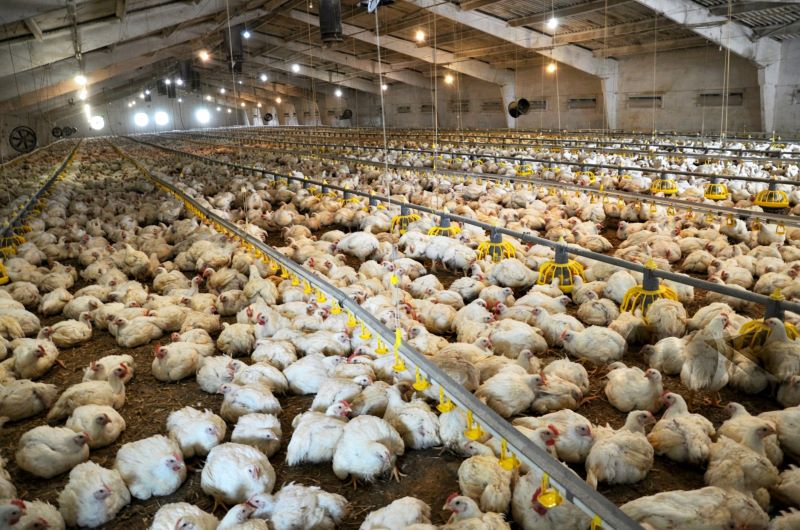
Global Cage-Free Poultry Equipment Market Outlook 2026–2030: Growth Opportunities in the Middle East and Southeast Asia
The global poultry industry is entering a new stage of modernization, with increasing demand for efficient, automated, and sustainable farming solutions. This article analyzes the development opportunities of cage-free poultry equipment markets from 2026 to 2030, focusing on the Middle East and Southeast Asia. It explores regional differences in production needs, climate challenges, labor conditions,…
-
Equipment Challenges in Hot and Humid Conditions: Technical Adaptations for Floor Rearing Systems in the Middle East
The Middle East challenges poultry farming with temperatures exceeding 50°C and high humidity. Standard floor rearing equipment requires significant adaptation. Ventilation demands oversized tunnel systems with high-capacity fans to maintain airspeed. Evaporative cooling pads need larger surface areas and regular maintenance to prevent mineral buildup. Drinking systems require higher-flow nipple drinkers for adequate hydration. Insulated…
Product Categories
Subscribe To Product News
Leave your email address and receive our latest product updates