Your cart is currently empty!
+86 15863276370

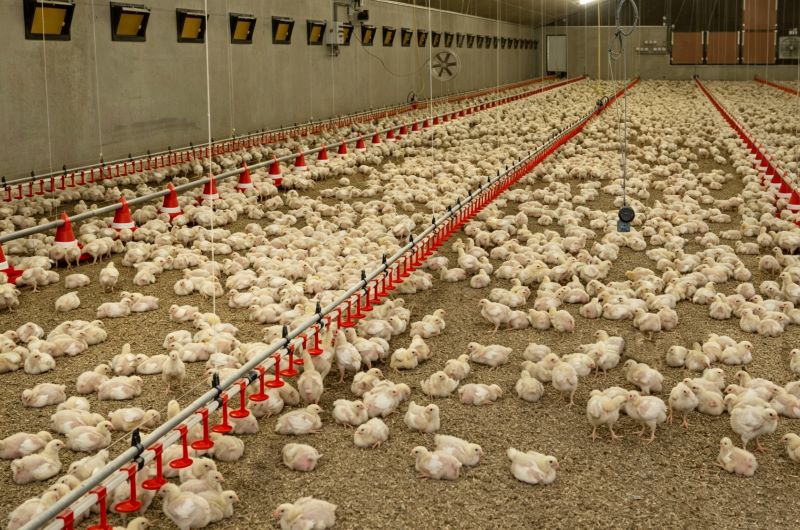
Climate variability has become an important consideration in modern poultry production. During El Niño events, some temperate regions may experience unusual temperature increases, changes in humidity patterns, and abnormal precipitation conditions. These environmental changes can influence poultry house temperature stability, ventilation requirements, and overall climate management strategies.
Higher-than-normal temperatures during El Niño periods can increase heat load inside broiler houses, especially during peak daytime hours. Increased humidity may reduce the efficiency of evaporative cooling systems and affect birds’ ability to release body heat. In addition, extreme rainfall events can create challenges related to moisture control, litter quality, and indoor air management.
To adapt to these changing conditions, poultry farms can improve environmental control through upgraded ventilation systems and intelligent management strategies. Increasing fan capacity, optimizing air inlet design, and improving airflow distribution can help maintain more stable internal conditions. During high-temperature periods, the coordinated operation of evaporative cooling pads and ventilation fans can enhance cooling efficiency while reducing heat stress risks.
Environmental monitoring systems also play an important role in adaptive management. Real-time monitoring of temperature, humidity, and air quality allows farmers to adjust equipment operation according to actual house conditions rather than relying only on fixed settings.
The effectiveness of climate control strategies depends on multiple factors, including poultry house structure, insulation performance, stocking density, local climate characteristics, and equipment configuration. Therefore, El Niño adaptation requires an integrated approach combining building design, ventilation technology, cooling systems, and daily management practices.
As climate uncertainty increases, flexible environmental control solutions will become increasingly important for sustainable poultry production. By improving ventilation efficiency and implementing coordinated cooling strategies, broiler farms can better maintain stable production conditions under changing weather patterns.
Share this:
Other Posts
-
Rainwater Harvesting and Water Recycling Systems: Evaluating a Sustainable Solution to Alleviate Water Stress in Hot Seasons
Water scarcity during hot seasons challenges poultry farms, especially for cooling pads and drinking lines. Rainwater harvesting captures runoff from roofs, stores it in tanks, and treats it for non-potable uses. When combined with recycling systems that filter and reuse water from cooling pads, overall freshwater demand drops significantly. A field study on a 50,000-bird…
-
Comparison of Disease Risks in Open-Sided and Closed Poultry Houses under El Niño–Induced Precipitation Extremes
During El Niño events, heavy rainfall or prolonged drought alter housing microclimates, affecting disease risks differently in open-sided and closed poultry houses. In open-sided houses, heavy rainfall increases litter moisture and ammonia levels, promoting coccidiosis and pododermatitis. Dry conditions increase airborne dust, irritating the respiratory tract and increasing the incidence of colibacillosis. Closed houses with…
-
Variable-Frequency Fans and Multi-Stage Cooling Linkage Control: Response Mechanism of Smart Environmental Control Systems to Extreme Heat
Extreme heat events threaten poultry health and productivity. Smart environmental control systems employ variable-frequency fans (VFFs) and multi-stage cooling linkage to respond effectively. VFFs automatically adjust speed based on real-time temperature, providing low airflow during mild heat and maximum speed during heatwaves. This saves energy while maintaining bird comfort. Multi-stage cooling activates sequentially: first, tunnel…
-
Equipment Depreciation and Technology Iteration: A Lifecycle Cost Analysis Model for Automated Floor Rearing Systems
Automated floor rearing systems require a lifecycle cost perspective beyond initial purchase price. Depreciation—spreading equipment cost over its usable life—and technology iteration—rapid upgrades in sensors, controls, and software—shape total ownership expense. A robust analysis model includes five phases: acquisition, installation, operation, maintenance, and residual value. Shorter technology cycles (e.g., every 3–5 years) accelerate depreciation but…
Product Categories
Subscribe To Product News
Leave your email address and receive our latest product updates