Your cart is currently empty!
+86 15863276370

Evaporative cooling pads are widely used in poultry houses to reduce incoming air temperature through water evaporation. However, cooling performance depends not only on pad design and airflow but also on water quality and regular maintenance.
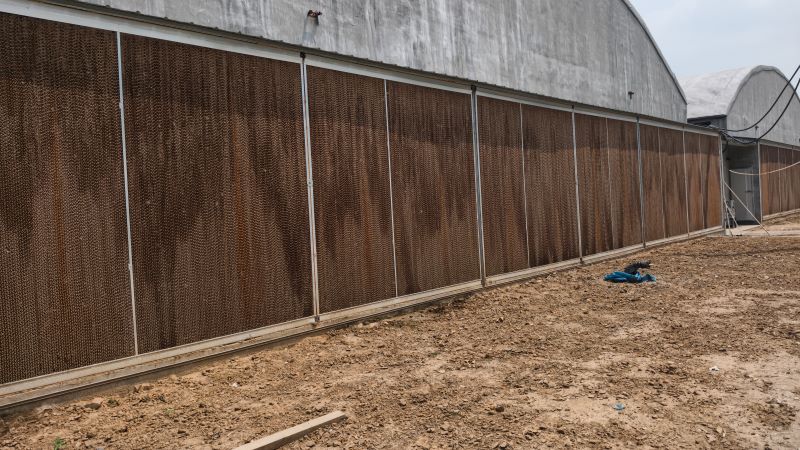
Water with high mineral content can gradually leave deposits on the pad surface. Calcium and other dissolved minerals may accumulate as water evaporates, reducing the ability of the pad material to absorb and distribute water evenly. Uneven wetting can reduce effective evaporation and may create dry areas within the cooling pad.
Water hardness and pH should therefore be monitored as part of routine maintenance. The appropriate management range may vary according to the water source, pad material, and local water chemistry, so farms should avoid relying on a single universal setting.
Regular bleed-off or controlled water discharge can help limit the concentration of dissolved minerals in the recirculating system. Periodic flushing of pipes, pumps, and cooling pads can also remove sediment and reduce the risk of blockage. Water testing provides useful information for determining whether additional treatment or adjusted maintenance procedures are needed.
Maintenance should also include checking water distribution, pump performance, pad wetting uniformity, and visible mineral buildup. Cleaning methods should be compatible with the pad material and equipment manufacturer’s recommendations.
Effective water management does not simply mean using more water. The goal is to maintain clean circulation, uniform pad wetting, and suitable water quality. With regular monitoring and preventive maintenance, poultry farms can help maintain stable evaporative cooling performance and extend the service life of cooling equipment.
Share this:
Other Posts
-
Evaporative Cooling Pad Water Quality and Maintenance: How Hardness, pH, and Mineral Scale Affect Cooling Performance
Water quality is an important factor affecting the performance and maintenance of evaporative cooling pads in poultry houses. High mineral content, unsuitable pH conditions, and accumulated scale can interfere with water distribution and evaporation efficiency. This article examines practical maintenance strategies, including water testing, controlled bleed-off, periodic flushing, and routine inspection. Effective water management can…
-
Cage vs. Floor Rearing for 1,000 Birds: A Side‑by‑Side Comparison
For a 1,000‑bird flock, the choice between cage and floor systems affects costs, labor, and risk. For small farms with 1,000 birds, floor rearing is often more practical due to lower entry cost and simpler biosecurity. However, if space is extremely limited and local regulations allow, cages may boost output. Choose based on your target…
-
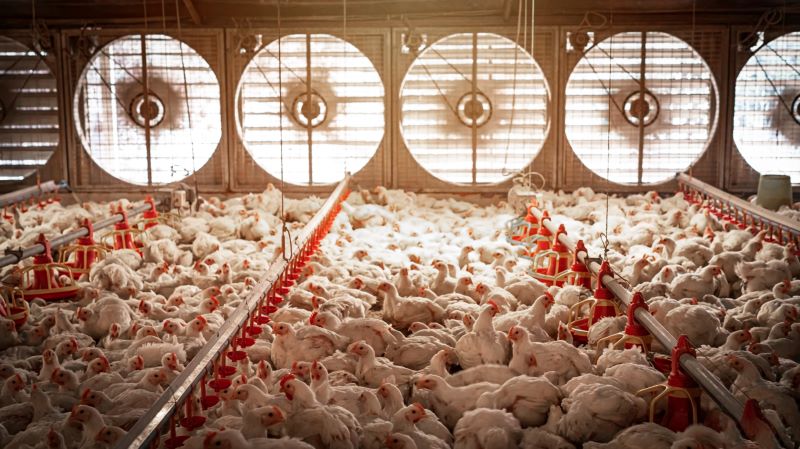
El Niño Impact on Broiler House Climate Control: Adaptive Ventilation and Cooling Strategies for Temperature and Humidity Management
El Niño events may create additional challenges for poultry production by influencing temperature patterns, humidity levels, and precipitation conditions in some regions. This article analyzes the potential impacts of climate fluctuations on broiler house environmental management and discusses adaptive strategies including ventilation system upgrades, evaporative cooling coordination, and real-time environmental monitoring. Effective climate control requires…
-
Equipment Challenges in Hot and Humid Conditions: Technical Adaptations for Floor Rearing Systems in the Middle East
The Middle East challenges poultry farming with temperatures exceeding 50°C and high humidity. Standard floor rearing equipment requires significant adaptation. Ventilation demands oversized tunnel systems with high-capacity fans to maintain airspeed. Evaporative cooling pads need larger surface areas and regular maintenance to prevent mineral buildup. Drinking systems require higher-flow nipple drinkers for adequate hydration. Insulated…
Product Categories
Subscribe To Product News
Leave your email address and receive our latest product updates